
08 Oct 2026

By PRAVEEN S
AI Website Development in 2026: What Makes a Website Truly Intelligent?
Many websites now carry an AI chatbot in the corner, yet still leave visitors confused about pricing, next steps, or which service fits them. Adding a feature is easy. Building a website that behaves intelligently is harder. An intelligent website is judged by outcomes, not by how much AI it contains. This guide explains what AI website development means in 2026, which qualities separate an intelligent website from one that merely has AI features, and how to decide what your business actually needs before you invest.
What Is an Intelligent Website?
An intelligent website understands context, responds to what a visitor needs, and helps the business reach measurable outcomes. The difference is easiest to see in three tiers:
- Traditional website: displays information.
- AI-enhanced website: adds AI features, such as a chatbot or generated text.
- Intelligent website: understands context, personalizes experiences, supports decisions, and automates useful actions.
What Makes a Website Truly Intelligent?
It Understands User Intent
A visitor arriving from a pricing search needs different content than one reading a guide. Page context, search queries, and on-site behaviour can shape what appears next. Good implementation stays privacy-conscious: clear consent, minimal data, and no hidden tracking.
It Personalizes Sensibly
Useful personalization includes relevant recommendations, returning-visitor shortcuts, and location-aware details such as service areas. An online furniture store, for example, can surface items that match what a shopper viewed, instead of showing the same bestsellers to everyone. Personalization should reduce effort, not feel intrusive.
It Answers and Guides
Intelligent search, helpful FAQs, and guided navigation help people decide faster. A chatbot alone does not make a website intelligent. It must draw on accurate content and know when to hand over to a human.
It Automates Useful Actions
Enquiry routing, appointment workflows, form processing, and internal notifications save time when they solve a real bottleneck. An interior design studio might ask two qualifying questions on its enquiry form, then route residential and commercial leads to different team members with a summary attached.
It Is Built for Humans and Machines
Clear information architecture, semantic HTML, descriptive headings, accessible navigation, crawlable content, accurate business details, and appropriate structured data help both visitors and AI systems. No special "AI markup" is required. Google's guidance is that standard SEO fundamentals still underpin visibility in AI search features.
It Learns from Outcomes
Analytics reveal where users drop off, which services attract interest, which calls to action work, and which journeys produce leads. Teams then improve the site deliberately.
AI Website Development vs Traditional Website Development
Traditional sites publish static information, offer a generic experience, rely on manual follow-up, and provide basic navigation. Intelligent sites deliver context-aware experiences, personalization, smarter search, selective automation, data-informed optimization, and better readiness for AI-assisted discovery.
Does Every Business Need an AI-Powered Website?
No. A local service business often gains more from fast performance, clear service pages, strong local SEO, accurate listings, and a simple enquiry form. Larger or e-commerce businesses may benefit from AI recommendations, intelligent search, support automation, and workflow automation. Choose technology based on what your business needs to solve, rather than following the latest trend.
Choosing a Website Development Partner
Findway Digital, a web development and digital marketing company based in Madurai, approaches websites this way: business goals first, then user experience, technical SEO, performance, scalability, conversion paths, and AI readiness. If you're planning a website that needs to support both today's customers and tomorrow's AI-driven digital experiences, Findway Digital can help you plan and build a solution around your business goals.
Conclusion
A truly intelligent website is not simply an AI-powered website. It combines useful intelligence with strong technical foundations, good UX, relevant personalization, practical automation, trustworthy information, and measurable business objectives. The best AI website development is not the one with the most features. It is the one that solves the right customer and business problems. Whether you start with performance and SEO or add automation later, build on purpose. Findway Digital can help you map that path.
FAQs
What is AI website development?
It is the process of designing and building websites that use AI and data to improve search, personalization, support, or automation, on top of solid development and SEO foundations. The goal is better user outcomes, not AI for its own sake.
What features make a website intelligent?
Look for intent-aware content, sensible personalization, intelligent search, guided assistance, useful automation, clean structure, fast performance, and analytics that inform improvements. Features matter only when they solve a real visitor or business problem.
Does every business need an AI-powered website?
No. Many small service businesses are better served by fast pages, clear content, local SEO, and simple enquiry forms. AI features make sense when they solve a specific problem, such as product discovery, support volume, or lead handling.
05 Oct 2026
By PRAVEEN S
How Search Behaviour Is Changing in 2026: From Google Searches to AI Conversations
Not long ago, a business owner in Madurai searching for support might have typed “best digital marketing agency Madurai.” Now the same person is far more likely to write or I’m looking for a digital marketing agency in Madurai to help my small business generate more relevant leads. What factors should I consider before selecting a digital marketing agency?
That contrast captures the real change in search behaviour in 2026. People are not searching less. They are searching differently. They expect systems to grasp context, intent and follow-up questions rather than rely only on short keyword strings.
Search Is Becoming More Conversational
Users now prefer full questions over isolated keywords. Google’s reporting on AI Mode shows that the average query in this mode runs about three times longer than a typical traditional search. People add details, ask clarifying questions and treat the process as an ongoing exchange.
Conversational interfaces make this possible because users no longer have to invent the “right” keywords. They can simply describe their situation — location, goals, constraints — and let the system interpret it. What used to be a single search often becomes a short journey of related questions and refinements.
From Finding Links to Getting Answers
Classic search behaviour followed a clear sequence: enter keywords, scan a list of results, open multiple sites and compare the information yourself. In AI-assisted experiences the process often begins with a synthesized response. Users then refine their request, weigh options and visit selected sources when they need more depth or want to take action.
Websites still matter a great deal. Both search engines and AI systems depend on accurate, original information, clear business details and trustworthy content. The shift is that visibility now includes ranking in traditional results and also being useful enough to inform or appear in synthesized answers. People continue to click through when they need proof, local specifics or a way to make contact.
Search Is Becoming Multimodal
Typed text is no longer the only input. Voice queries, image searches and combinations of text with visuals are increasingly common. Google notes that more than one in six searches in the United States already involve voice or images, and image-based queries have grown quickly. A potential customer might photograph something, ask a spoken follow-up or blend a visual with a written question. Sites and content built only for typed keywords miss part of how people now look for information.
What This Means for Businesses
Simply targeting a list of keywords is no longer enough. Understanding search intent has become central. Content that answers genuine customer questions, shows real experience and demonstrates clear topical depth performs better across both classic and AI-powered search.
The practical foundations remain important: well-structured pages, logical internal links, accurate and consistent business information (especially for local visibility), sound technical SEO and reliable local signals. Practices sometimes called GEO or AEO build on traditional SEO. They help content become easier for AI systems to interpret and surface, without replacing the need for rankings, crawlability or a good user experience.
The New Search Journey
A common path today looks like this:
Question → AI or search answer → further exploration → comparison → website visit → enquiry or conversion.
Visibility across the entire sequence is more valuable than ranking for one isolated keyword. A business that appears only at the final click may miss earlier moments when influence is formed.
What Businesses Should Do in 2026
- Build content around the real questions customers ask, not only short keyword phrases.
- Place clear, direct answers near the top of relevant pages.
- Demonstrate genuine experience and expertise instead of generic statements.
- Keep website and business details accurate and consistent everywhere online.
- Continue strengthening traditional SEO while shaping content so it can also support AI-powered search experiences.
Conclusion
Search is moving from a primarily link-finding activity toward an environment where people ask, explore, compare and decide. Traditional SEO has not lost its value. The opportunity lies in understanding how audiences now search and how information is discovered, interpreted and presented.
Findway Digital supports businesses in improving digital visibility through SEO, content, websites and approaches that address both established search and newer AI-assisted experiences.
FAQs
Is traditional Google search still relevant in 2026?
Yes. Classic results and rankings continue to generate traffic and conversions. AI features expand the ways people search; they do not fully replace link-based discovery.
How do SEO, AEO and GEO differ?
SEO centres on discoverability and rankings in search results. AEO and GEO describe methods that make content clearer and more useful for answer-focused and generative AI experiences. They complement traditional SEO efforts instead of replacing them.
Do longer conversational queries require a completely new keyword list?
Concentrate on the problems and questions your customers actually express. Cover those topics thoroughly and clearly instead of chasing every long variation.
Will AI search eliminate website visits?
Some queries are resolved without a click. Users still visit sites for deeper information, verification, local details or to make contact. Authoritative original content remains necessary.
19 Sep 2026
By PRAVEEN S
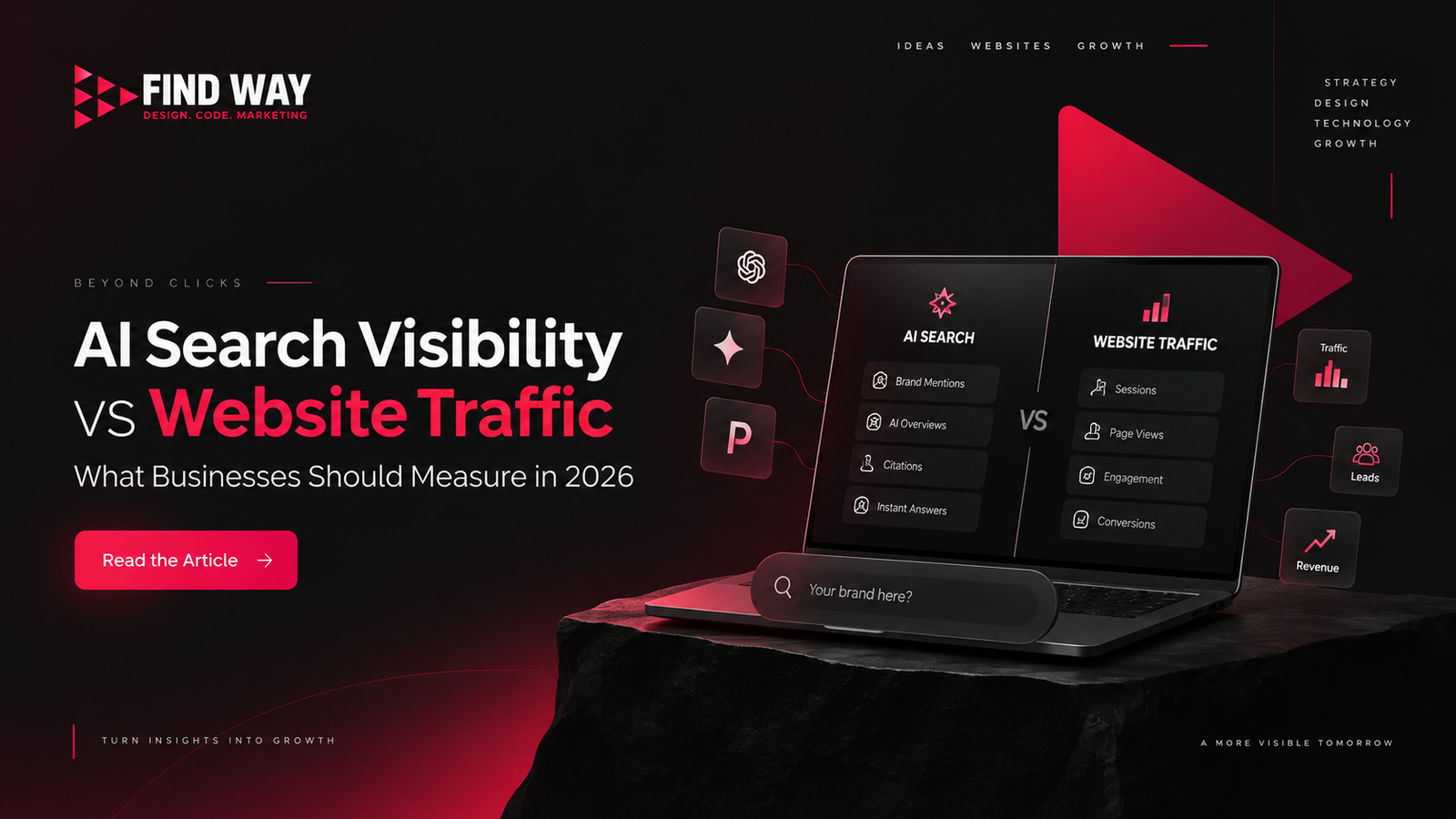
AI Search Visibility vs Website Traffic: What Businesses Should Measure in 2026
Your Google Analytics dashboard shows organic traffic climbing month over month. Campaigns are running. Content is publishing. Yet the phone isn't ringing any more than it was six months ago.
This disconnect is becoming common in 2026. Search behaviour has shifted: users increasingly receive answers directly inside search engines and AI assistants, sometimes without ever clicking through to a website. That raises a central question for business owners and marketing managers: is website traffic still the most important SEO metric in 2026?
The answer is nuanced. Traffic still matters, but it no longer tells the full story of how your brand is being discovered and considered.
Website Traffic Still Matters — But It Tells Only Part of the Story
Organic traffic remains a vital signal. It shows you how many people are visiting your site, which landing pages are performing, how users are engaging, and where conversion opportunities exist. Google Analytics continues to measure sessions, engaged sessions, and conversions from organic search, giving you a clear picture of on-site behaviour.
But traffic alone cannot reveal whether your brand is visible earlier in the journey. A page can be cited as a trusted source inside a Google AI Overview or mentioned by an AI assistant like ChatGPT or Perplexity without every user clicking through. In those cases, your brand gains awareness and credibility even if the session never registers in Analytics.
Clicks are one part of the customer journey, not the whole journey.
What Is AI Search Visibility?
AI search visibility refers to how often your business, brand, website, product, service, or content appears or is cited in AI-powered search experiences. These include Google AI Overviews, Google AI Mode, ChatGPT, Perplexity, and other generative search interfaces.
For example, someone might ask an AI assistant: "Best digital marketing agency in Madurai for SEO and website development." The response could list recommendations or cite sources without showing a traditional list of ten blue links. If your agency is mentioned or linked in that answer, you have AI search visibility—even if no click occurs.
This creates a new visibility layer that sits alongside traditional organic rankings.
AI Search Visibility vs Website Traffic
Different metrics answer different business questions. The table below outlines what each tells you and why it matters.
|
Metric |
What it tells you |
Why it matters |
|
Organic traffic |
Visits to your site from search |
Shows on-site engagement and conversion potential |
|
Search impressions |
How often your URL appears in search results |
Indicates raw visibility in traditional search |
|
Click-through rate (CTR) |
Percentage of impressions that become clicks |
Reflects how compelling your listing is |
|
AI search mentions |
Brand name appears in AI-generated answers |
Builds awareness and trust without a click |
|
AI citations |
Your URL is linked as a source in AI answers |
Signals authority and can drive qualified traffic |
|
Engagement |
Time on site, pages per session, return visits |
Shows whether visitors find your content useful |
|
Leads/conversions |
Form submissions, calls, purchases |
Ties search activity to business outcomes |
|
Revenue |
Sales attributed to organic and AI-driven paths |
The ultimate measure of search ROI |
No single metric is "best." Together, they form a complete picture.
What Should Businesses Measure in 2026?
A practical measurement framework organizes metrics into three levels:
1. Visibility
- Organic impressions and rankings
- AI Overview and AI Mode impressions (via Google Search Console's Generative AI report)
- Brand mentions and citations in AI search answers
- Coverage of relevant commercial and informational queries
2. Engagement
- Organic clicks and CTR
- Engaged sessions and key landing pages
- Returning visitors and time on site
3. Business Outcomes
- Leads, calls, and form submissions
- Qualified enquiries and sales
- Revenue and conversion rate
The goal is to connect visibility → engagement → conversions → revenue.
How SEO Is Changing in 2026
Traditional SEO has not disappeared. Instead, it now needs to support both human readers and AI systems. That means:
- Clear, useful content that answers real customer questions
- Strong technical foundations and crawlability
- Structured data and entity clarity where appropriate
- Authoritative, first-hand information
- Helpful answers to specific questions
- Strong internal linking and consistent local business information
GEO (Generative Engine Optimization) and AEO (Answer Engine Optimization) describe practices that make content easier for AI systems to retrieve, understand, and cite. There is no guaranteed formula for appearing in AI-generated answers, but high-quality, well-structured content improves your chances.forbes+1
A Practical Measurement Framework for Businesses
Here is a concise, actionable approach:
- Track traditional organic performance in Google Search Console and Analytics.
- Identify important commercial and informational queries for your business.
- Monitor whether your brand or content appears in relevant AI search experiences (AI Overviews, AI Mode, ChatGPT, Perplexity).
- Track citations, mentions, and referring pages where reliable data is available.
- Connect search activity to leads, enquiries, customers, and revenue.
- Review the data monthly instead of focusing on one metric.
Conclusion
Businesses should not choose between "AI visibility" and "website traffic." Instead, build a measurement system that connects search visibility → AI visibility → website engagement → leads → customers → revenue.
Modern SEO is an ongoing process, not a one-time ranking exercise. Want to understand whether your business is being discovered through traditional search and AI-powered search? Findway Digital can help you build a measurement strategy that connects search visibility with meaningful business results.
15 Sep 2026
By PRAVEEN S
How AI Agents Will Change Business Websites in 2026: What Companies Need to Prepare For
For years, business websites were built mainly for people. Visitors arrived, scanned pages, compared options, filled forms, and clicked through to contact or buy. Search engines indexed those pages so humans could find them.
In 2026, that picture is expanding. AI systems and AI agents now interpret websites, extract facts, compare businesses, navigate interfaces, and help users complete tasks. Google’s AI Mode has passed one billion monthly users, with queries growing longer and more action-oriented. AI Overviews routinely surface synthesized answers drawn from web content. At the same time, computer-use agents and browser agents can interact with pages on a user’s behalf.
Websites are not becoming obsolete. They are becoming more important as trusted, structured, actionable sources of information for both people and the AI systems that assist them. Companies that treat their sites only as human-facing marketing pages risk falling behind.
What Is an AI Agent?
An AI agent goes beyond a simple chatbot that answers one question at a time. It can accept a goal, reason about the steps required, use tools, and carry out multi-step work.
A traditional chatbot might reply to “What services do you offer?” An AI assistant might pull a summary from a website. An AI agent can take a request such as “Find a reliable digital marketing firm that handles technical SEO, compare three options, check their contact process, and draft an enquiry to the strongest match.” It then navigates sites, evaluates information, and may initiate contact.
Your website becomes part of that process. Clear structure and explicit actions make it easier for the agent to succeed on the customer’s behalf.
How AI Agents Will Change Business Websites
Websites Will Need to Be Machine-Readable
Agents often rely on the HTML, the accessibility tree, or rendered content rather than visual design alone. Semantic HTML, descriptive headings, meaningful link text, properly labelled forms, and consistent structure help both assistive technologies and AI systems understand what a page contains and what it can do.
Structured data (JSON-LD) remains useful for clarifying entities, services, and FAQs. There is no single “AI SEO” formula that guarantees visibility inside AI answers. Strong technical foundations plus clear content still matter most.
Websites Will Become More Actionable
Agents increasingly look for ways to complete tasks: request a quote, book a call, check availability, submit an enquiry, or start a purchase. A visually polished site that hides these actions behind ambiguous buttons or complex JavaScript can frustrate both users and agents. Explicit labels, simple flows, and accessible interactive elements reduce friction.
SEO Will Expand Beyond Traditional Rankings
Technical SEO, helpful content, authority, and user experience remain essential. At the same time, AI-powered search experiences can surface information and citations without every user following the classic “search → click → website” path. Visibility now includes both traditional rankings and presence within AI-generated results and overviews. The practical response is the same quality work that has always worked: accurate content, solid technical SEO, structured data where appropriate, and accessible design.
Website Content Will Need to Answer Real Questions
Generic marketing language is less useful when an agent or AI Overview needs specific facts. Pages that clearly state what the company offers, who it serves, pricing ranges or process steps, geographic coverage, requirements, and differentiators give both humans and machines reliable material to work with. Factual, specific, up-to-date content builds trust.
Trust, Security and Accuracy Will Matter More
When agents interact with forms or initiate actions, permissions, authentication, data accuracy, and secure handling become critical. Sensitive steps should still require human confirmation. Companies must protect against unauthorized actions and maintain customer trust. Accuracy of the information agents read is equally important—outdated or inconsistent details can lead to poor recommendations.
What Businesses Should Prepare for in 2026
Practical steps any company can take:
- Write content that is clear, specific, and easy to understand.
- Improve semantic HTML and accessibility so both people and agents can navigate confidently.
- Keep core business information accurate and consistent across the site.
- Apply appropriate structured data for organization, services, and FAQs.
- Make key customer actions simple, visible, and clearly labelled.
- Review forms, booking or enquiry flows, integrations, and security controls.
- Continue publishing high-quality, people-first content that supports strong technical SEO.
- Monitor how the brand appears in AI-powered search experiences and adjust where needed.
These improvements benefit human visitors as much as emerging agent systems.
The Future Website Will Serve More Than One Audience
Companies should no longer ask only whether a customer will like the website. They should also ask whether a customer’s AI assistant can understand and usefully interact with it.
Human visitors still need trust, clear design, speed, and intuitive navigation. AI agents need clear structure, machine-readable information, explicit actions, consistent data, and accessible interfaces. The good news is that the same practices—semantic markup, accurate content, straightforward flows, and solid accessibility—serve both audiences well.
AI agents are not making business websites irrelevant. They are raising the standard for what a high-performing website needs to be. Businesses that invest in clear information, strong SEO foundations, accessibility, structured content, actionable interfaces, and trustworthy data will be better prepared for the next phase of the web. Teams that already focus on modern website development, technical SEO, and user experience—such as those at Findway Digital are well positioned to help companies adapt their digital presence to this evolving environment.

11 Sep 2026
By PRAVEEN S
Bespoke Development vs. WordPress Themes: The Real Cost of Website Ownership
A business owner in Madurai receives two quotations for a new website. One is noticeably lower because it uses a ready-made WordPress theme. The other is higher because the site will be designed and developed specifically for the company’s workflows, branding and growth plans. The cheaper option feels like the obvious choice. But is it?
The real question is not what the website costs to launch. It is what the website will cost to own, maintain, adapt and grow over the next several years.
The Initial Price Is Only the Beginning
Every website carries ongoing ownership costs beyond the first invoice. These typically include domain renewal, hosting, security measures, backups, updates, content changes, performance work and eventual redesigns. For a theme-based WordPress site the list often expands further: premium theme licences, multiple plugin subscriptions, compatibility testing after updates, and developer time when the business needs something the theme does not support out of the box.
A straightforward WordPress theme site can still be an excellent, cost-effective solution when requirements are simple and the team has a clear maintenance plan. The risk appears when the site is expected to do more than the original theme was built for.
Where WordPress Themes Can Become Expensive
Theme customisation is the first common source of extra spend. A demo can look polished, yet most businesses eventually want different layouts, unique forms, specialised navigation or customer journeys that do not match the theme’s default structure. Each meaningful change can require custom code or a developer who understands both the theme and the business process.
Plugin dependency is another factor. Plugins deliver useful features quickly—forms, SEO tools, security scanners, booking systems, caching and more. Over time, however, a growing collection of plugins creates its own workload: regular updates, compatibility checks between plugins and the theme, licence renewals, and occasional troubleshooting when an update introduces conflicts. WordPress itself continues to improve security processes, including automated reviews of plugin and theme releases, but site owners remain responsible for keeping everything current and removing unused components.
Maintenance itself is continuous. WordPress core, the active theme and every plugin need attention. Backups, security monitoring and performance checks are part of responsible ownership. When these tasks are neglected, technical debt accumulates and the eventual fix or rebuild becomes more expensive than steady upkeep would have been.
Performance optimisation is a related cost. Google’s Core Web Vitals (Largest Contentful Paint, Interaction to Next Paint and Cumulative Layout Shift) remain part of the broader page-experience picture. Heavy themes or plugin stacks can make it harder to keep load times and responsiveness competitive, especially on mobile. Cleaning that up later often requires additional developer hours.
What Makes Bespoke Development Different?
A bespoke website is planned and built around the specific requirements of the business—its branding, user journeys, internal processes, integrations and expected scale. The initial investment is usually higher and the timeline longer because more discovery, architecture and custom development are involved.
In return, the business gains tighter control over functionality, code structure, performance strategy and future expansion. Features that would otherwise rely on multiple plugins can be built directly into the system. This does not automatically make every custom site faster or cheaper to maintain; results still depend on the quality of the implementation, hosting choices and ongoing care. It does, however, reduce dependence on third-party components whose roadmaps and update cycles sit outside the business’s control.
The Real Cost Comparison
|
Factor |
WordPress Theme |
Bespoke Development |
|
Initial cost |
Usually lower |
Usually higher |
|
Launch speed |
Generally faster |
Generally slower |
|
Design flexibility |
Theme-dependent |
Very high |
|
Plugin dependency |
Can be significant |
Can be lower depending on architecture |
|
Maintenance |
Core, theme and plugin management |
Developer/technical maintenance |
|
Custom functionality |
Possible, but often needs extra work |
Built around requirements |
|
Scalability |
Depends on implementation |
Designed around expected needs |
|
Long-term control |
Can vary |
Generally high |
Cost and value are not the same thing. A lower launch price can become higher total ownership cost when frequent customisation, plugin management and eventual redesigns are factored in. Conversely, a higher initial investment can deliver better long-term economics when the site is expected to support complex workflows or continuous growth.
When a WordPress Theme Makes Sense
WordPress remains a practical and sensible choice for many businesses. Startups and small service firms that need a professional online presence quickly, companies with standard brochure or content needs, blogs, and projects with limited initial budgets often do well with a carefully chosen theme and a disciplined maintenance routine. Choosing WordPress is not a mistake. Choosing a solution that does not match actual requirements is.
When Bespoke Development Can Be the Better Investment
Bespoke development tends to make clearer financial sense when the website must support unique customer journeys, advanced booking or quotation systems, CRM or ERP integrations, specialised e-commerce logic, custom dashboards, or significant future expansion. In these cases the higher upfront cost is often offset by lower friction, fewer workarounds and greater control over performance and security over time.
Findway Digital approaches website development from this perspective. The team designs and builds sites from scratch around the client’s specific needs rather than adapting a pre-built theme, with attention to user experience, technical SEO foundations and reduced reliance on third-party plugins. This approach suits businesses that view the website as a long-term operational asset rather than a one-time marketing expense.
If you are comparing a theme-based quotation with a bespoke proposal, look past the first number. Ask what the site needs to do today, what it will need to do in two or three years, and how much ongoing control and flexibility you want. The cheapest website to build is rarely the cheapest website to own. The right decision rests on a clear-eyed view of total ownership cost matched to real business requirements.
FAQs
Is a WordPress theme cheaper than a custom website?
Usually yes at launch. Over several years the total cost depends on how much customisation, plugin management and redesign work the business needs. Simple sites often stay cheaper on WordPress; complex ones can reverse the equation.
What expenses can arise after launching a WordPress website?
Premium theme and plugin licences, regular update and compatibility work, security monitoring, performance optimisation, and the developer time required when the theme no longer fits evolving requirements.
Is bespoke website development worth the investment?
It can be when the site must support unique workflows, integrations or long-term growth. The higher initial cost is often justified by greater control and lower ongoing friction.
Which option is better for a growing business?
Match the choice to requirements. Standard needs and limited budgets favour a well-managed WordPress theme. Complex functionality, scalability and tight control over performance and security favour bespoke development.
05 Sep 2026
By PRAVEEN S
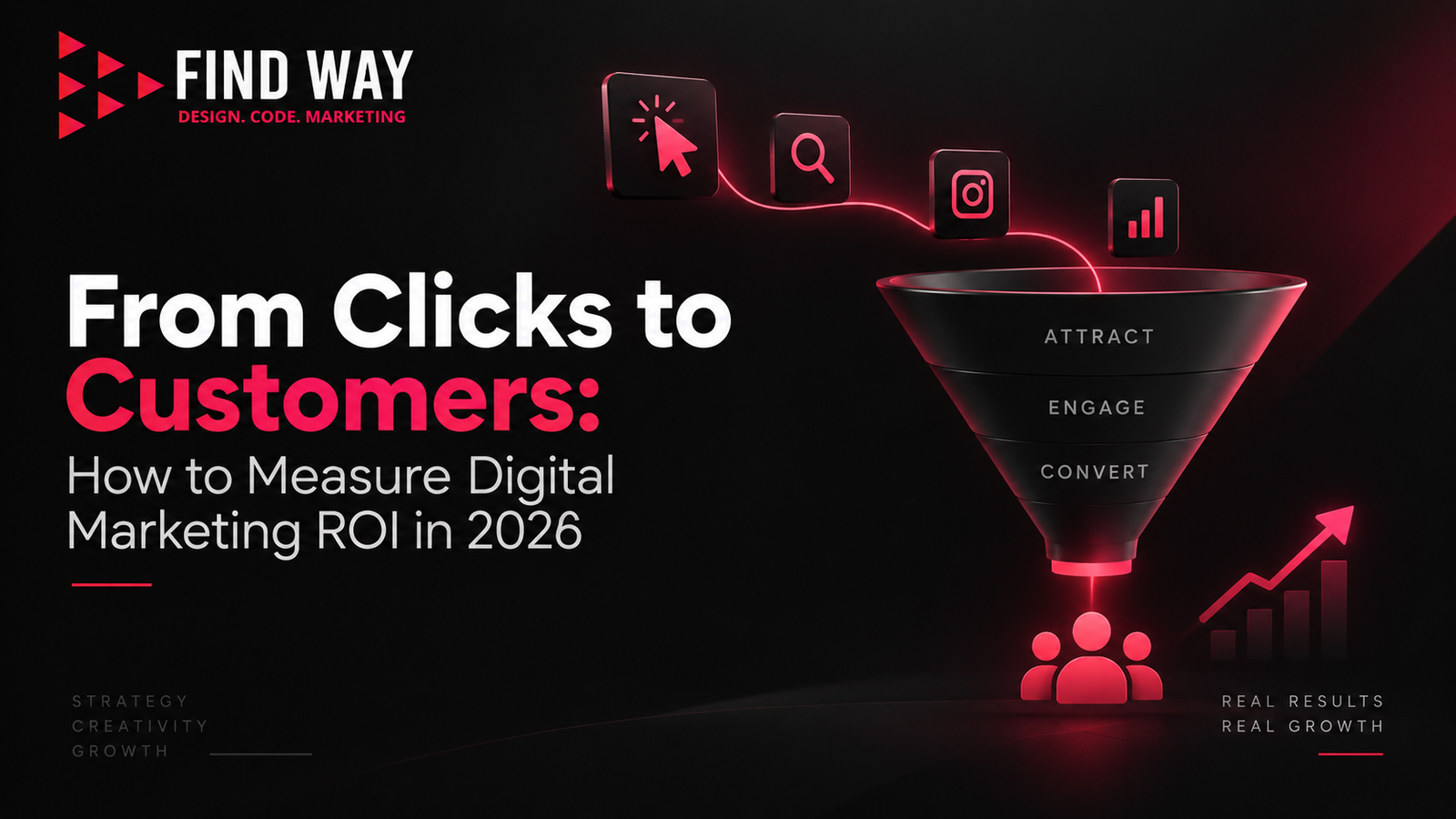
From Clicks to Customers: How to Measure Digital Marketing ROI in 2026
A business owner opens their marketing dashboard and smiles. Thousands of clicks. Rising website traffic. Steady social engagement. Yet the phone is quiet, the enquiry form is empty, and revenue has barely moved. Activity looks healthy. Results do not.
Clicks show motion. Customers show impact. In 2026, measuring digital marketing ROI means connecting every campaign to qualified leads, conversions, and actual revenue—not just counting what is easy to track.
What Does Digital Marketing ROI Actually Mean?
ROI is straightforward:
ROI = (Revenue Generated − Marketing Cost) ÷ Marketing Cost × 100
If you spend ₹1 lakh and generate ₹4 lakh in attributable revenue, your ROI is 300%.
Many businesses still judge performance by impressions, followers, or raw traffic. Those are vanity metrics. They look impressive but rarely tell you whether marketing is profitable. Performance metrics such as conversion rate and cost per lead sit in the middle. Business metrics—customer acquisition cost, customer lifetime value, and true marketing ROI—reveal whether the spend is building the company or simply keeping the team busy.
The Metrics That Matter Beyond Clicks
Focus on the numbers that influence decisions:
- Conversion rate measures how well your website traffic leads visitors to take a desired action.
- Cost per lead and cost per acquisition reveal efficiency.
- Qualified lead rate separates tire-kickers from real prospects.
- Customer acquisition cost tells you what it truly costs to win a paying customer.
- Customer lifetime value estimates the total revenue a business can generate from a customer over time.
- Revenue generated and ROAS (return on ad spend) keep the conversation tied to money.
More clicks do not automatically mean more customers. A high click volume with a weak conversion rate is simply expensive noise.
Track the Complete Journey From Click to Customer
The path usually looks like this: Impression → Click → Website Visit → Lead → Qualified Lead → Customer → Revenue.
Stopping at clicks creates a distorted picture. Consider two campaigns. Campaign A generates 500 clicks and 10 qualified enquiries. Campaign B generates 150 clicks, 25 qualified enquiries, and 8 customers. Campaign B is the stronger performer even though it attracted fewer clicks. The second campaign delivered business outcomes; the first delivered activity reports.
How to Measure ROI Across Different Digital Channels
Each channel needs its own lens.
SEO should be judged by organic conversions, qualified leads, assisted conversions, and long-term revenue from organic traffic—not just rankings or sessions.
Google Ads and PPC succeed when cost per conversion, qualified leads, conversion value, ROAS, and customer acquisition cost stay healthy.
Social media measurement moves past likes and followers to website visits, leads, assisted conversions, and sales influenced by the channel.
Content marketing proves its value through content-assisted conversions, pipeline influence, and the quality of leads it attracts over time.
Why Attribution Matters More in 2026
Customers rarely convert after a single touch. Someone may discover you through Google, visit the site, see a social post, search the brand again, read a blog, click a retargeting ad, and finally enquire. Giving 100% credit to the last click hides the real contribution of earlier stages.
Privacy changes and AI-powered search have made third-party tracking less reliable. First-party data, CRM integration, and proper conversion tracking have become essential. Full-funnel visibility is no longer optional if you want accurate ROI.
Use ROI Data to Make Better Marketing Decisions
Measurement exists to answer practical questions: Which channel brings the best customers? Which campaigns waste budget? Which keywords produce qualified enquiries? Which landing pages convert? Where do prospects drop off? Should more money go into a particular channel?
When the answers are clear, optimization becomes continuous rather than reactive. Budget shifts toward what actually produces revenue.
The 2026 Shift: From Marketing Activity to Business Outcomes
AI Overviews, generative engine optimization, privacy-conscious measurement, and multi-touch journeys have made simple click reports less useful. The businesses that win connect visibility to engagement, engagement to conversion, conversion to customers, and customers to revenue. Chasing every new platform or vanity metric is a distraction. Focusing on measurable business outcomes is the durable approach.
Final Thoughts
The real measure of digital marketing success is not how many people clicked. It is how effectively those interactions created meaningful business growth. If your reports are full of activity but short on customers and revenue, it may be time to change what you measure. Findway Digital helps businesses connect digital marketing activity with the outcomes that matter—qualified leads, conversions, and sustainable growth.
FAQs
How do you calculate digital marketing ROI?
Subtract total marketing cost from the revenue generated by those efforts, divide the result by the marketing cost, and multiply by 100. Accurate calculation requires proper conversion tracking and revenue attribution so the numbers reflect real business impact.
What is the most important digital marketing ROI metric?
Customer acquisition cost paired with customer lifetime value often provides the clearest picture. Together they show whether you are acquiring customers profitably and whether those customers justify the investment over time.
How can businesses track marketing ROI across multiple channels?
Use consistent conversion tracking, first-party data, CRM integration, and multi-touch attribution. This approach reveals how channels work together rather than treating each one in isolation.

25 Aug 2026
By PRAVEEN S
Website Maintenance in 2026: Why Businesses Lose Revenue Without Regular Updates
A company launches a new website. The design is sharp, the pages load fast, and enquiries start coming in. A year later, the site still looks almost the same — but the plugins haven't been touched since launch, a few pages have quietly slowed down, the contact form hasn't been tested in months, and the pricing page still lists last year's rates.
Nobody notices, because the website still "works." It loads. Visitors land on it. But somewhere along the way, it stopped doing its job as well as it used to.
That's the part most business owners miss: a website can stay online and still be costing the business money.
What Is Website Maintenance in 2026?
Website maintenance used to mean fixing what's broken and renewing the domain once a year. That definition is outdated. A modern website depends on a CMS that receives regular updates, plugins and themes that change frequently, browsers that evolve their standards, and third-party tools — payment gateways, booking systems, chat widgets — that update independently of the website itself.
Maintenance today covers security patches, backups, performance checks, broken-link audits, form testing, mobile usability, content accuracy, SEO health, and monitoring analytics for anything unusual. None of these are exciting tasks on their own. But each one protects a part of the website that directly touches the customer experience.
How Neglected Maintenance Can Reduce Revenue
Slow Website Performance
Pages get heavier over time — more images, more scripts, more third-party embeds — even when nobody is actively adding content. A visitor who waits too long for a page to load simply leaves before they see the offer, the service page, or the enquiry form. Slower pages also tend to correlate with weaker search visibility, since Google's Core Web Vitals metrics for loading, interactivity, and layout stability factor into how a page's experience is assessed.
Broken Forms and Lost Leads
This is the risk businesses feel least, because it's invisible. Traffic keeps arriving, but a WhatsApp button stops opening correctly, an email integration silently fails, or a booking form throws an error after a plugin update. At first glance, the website may appear to be working perfectly normally. The business simply stops hearing from people who tried to get in touch — and rarely finds out why.
Security Problems
Outdated plugins, themes, and integrations widen the window for something to go wrong, whether that's a vulnerability being exploited or a conflict causing downtime. Not every outdated plugin leads to a breach, but neglected security maintenance raises the odds of downtime, data concerns, and the time and cost of recovering from an incident Even minor website issues can gradually reduce customer confidence in your brand.
SEO and Search Visibility Can Decline
Maintenance doesn't guarantee rankings, but neglect creates the kind of technical friction that makes rankings harder to hold onto: broken internal links, redirect chains left over from old page changes, indexing issues, and content that no longer reflects what the business actually offers. Search engines are quick to notice when a site's technical health slips.
Outdated Information Can Cost Customers
Wrong prices, old business hours, an outdated service list, or a phone number that's no longer answered — these push a visitor straight to a competitor. This matters most for local and service businesses, where a customer's next click after finding inaccurate information is usually another business's website.
What Should Businesses Update Regularly?
Ongoing: uptime and security alerts, backups, forms and other critical functions. Monthly: software updates, page speed, broken links, analytics, and content accuracy. Quarterly: technical SEO, Core Web Vitals, overall UX, third-party integrations, and conversion paths.
An e-commerce store handling payments needs tighter monitoring than a brochure site for a local service business — the right frequency depends on what the website actually does.
Signs Your Website Needs Maintenance
- Pages feel noticeably slower than before
- Forms aren't generating the enquiries they used to
- Content, pricing, or hours are out of date
- Plugins or software show pending updates
- Organic visitors are declining even though you haven't made any major changes to the website
- Visitors mention broken pages or errors
- Nobody can say when the last backup happened
DIY or Hire a Professional?
For a very simple site with minimal traffic, an owner with basic technical comfort can manage maintenance directly. Professional maintenance becomes worth the cost once the website generates leads, processes payments, relies on several integrations, or simply can't afford extended downtime. At that point, the risk of missing something outweighs the cost of having it monitored properly.
Final Thought
A website isn't a one-time project — it's an ongoing business asset that needs the same attention as any other part of the business. The goal of maintenance isn't just keeping it "working." It's keeping it secure, fast, accurate, and ready to convert the visitors it already attracts.
Findway Digital works with businesses across Tamil Nadu to assess website health and pinpoint the technical issues quietly affecting performance, SEO, and conversions — a useful starting point before deciding what needs fixing first.
FAQs
How often should a business website be maintained?
Critical checks like uptime and backups should run continuously, with software and content reviewed monthly, and a deeper technical and SEO review every quarter.
What problems can arise from an outdated website?
Small issues tend to compound — slower pages, broken functions, security gaps, and outdated content that gradually reduce leads and customer trust.
Does website maintenance improve SEO?
Maintenance alone doesn't guarantee rankings, but it removes the technical obstacles — broken links, slow pages, indexing errors — that make good SEO performance harder to sustain.
18 Aug 2026
By PRAVEEN S
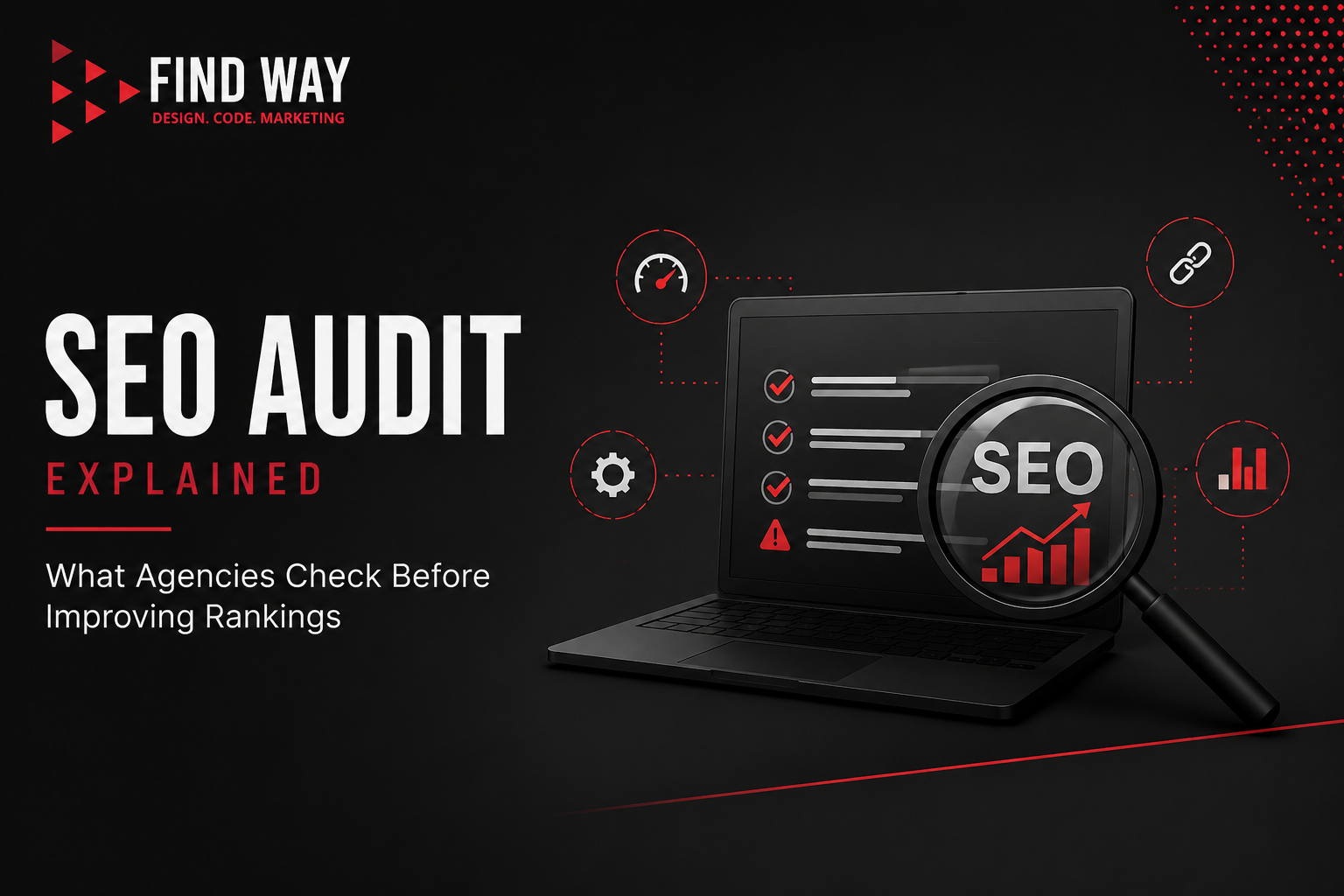
SEO Audit Explained: What Digital Marketing Agencies Check Before Improving Rankings
A website can look polished, load a set of well-written pages, and still fail to show up on Google. When that happens, the instinct is usually to add more keywords or publish a few more blog posts. But the real problem is often something else entirely — a technical error blocking search engines, weak page structure, mismatched search intent, slow load times, duplicate content, or a backlink profile that's doing more harm than good.
This is why experienced agencies never start with changes. They start with an SEO audit. Before touching a single title tag, they map out exactly what's working, what's broken, and what's holding a site back. This article walks through what that process actually looks like and why it matters.
What Is an SEO Audit?
An SEO audit is a structured evaluation of a website's technical health, content quality, search visibility, authority, and overall user experience. It's not a single score or a pass/fail grade. It's a diagnostic process — the goal is to identify specific problems, uncover missed opportunities, and decide which issues deserve attention first.
Think of it the way a doctor approaches a check-up: symptoms alone don't tell the full story, so a proper examination looks at the whole system before recommending treatment.
What Digital Marketing Agencies Check During an SEO Audit
1. Technical SEO and Crawlability
Before anything else, agencies confirm that search engines can actually crawl and understand the site. This includes the robots.txt file, XML sitemap, crawl errors, HTTP status codes, redirect chains, HTTPS setup, canonical tags, indexability, noindex directives, and how JavaScript-heavy pages render. If Google can't crawl or interpret a page correctly, nothing else in the audit matters — the content simply won't be found.
2. Website Speed and Core Web Vitals
Performance and page experience come next. Agencies look at loading speed, mobile responsiveness, and visual stability, often referencing Core Web Vitals metrics like LCP (loading), INP (interactivity), and CLS (layout stability). These aren't the sole factor in rankings, but a slow or unstable page experience does affect how visitors — and search engines — perceive the site.
3. On-Page SEO and Content Quality
This is where title tags, meta descriptions, heading structure, keyword targeting, content depth, thin or duplicate pages, image alt text, internal linking, and URL structure get reviewed. Modern on-page SEO isn't about repeating a keyword as often as possible — it's about whether the content genuinely satisfies what the searcher was looking for.
4. Keyword and Search Intent Analysis
Agencies map what a site currently ranks for against what potential customers are actually searching. A business offering web development, for instance, might rank well for an informational query but completely miss commercial searches like "website development company in Madurai." Spotting these gaps — along with keyword cannibalization between similar pages — is often where the biggest opportunities show up.
5. Competitor Analysis
An audit shouldn't look at a website in isolation. Comparing keyword coverage, content depth, page structure, and backlinks against competitors shifts the question from "what's wrong with our site?“Which approaches are helping competitors perform better, and what can we adapt to strengthen our own strategy?”
6. Backlinks and Off-Page SEO
Here, agencies assess referring domains, link relevance, authority, and any suspicious or manipulative patterns that could be dragging the site down. More backlinks isn't automatically better — relevance and quality matter far more than raw quantity.
7. Local SEO and Business Visibility
For businesses that depend on customers from specific cities or service areas, this section covers Google Business Profile accuracy, consistency of business information across the web, local landing pages, citations, reviews, and how well the site matches local search intent.
8. User Experience and Conversion Paths
Ranking well is only half the job. Agencies also check whether visitors can understand the service being offered, navigate easily, find key information, and take the next step — a call, a form, an enquiry. Traffic that doesn't convert isn't delivering much business value.
How an SEO Audit Turns Into an Action Plan
A useful audit doesn't end with a long list of problems dumped on a business owner's desk. Findings get prioritized by impact, urgency, difficulty, and business value — typically grouped into high priority (critical technical or indexing issues), medium priority (content and on-page improvements), and long-term (authority building and content expansion).
Why Businesses Should Audit Before Changing Their SEO
Changing titles at random, publishing dozens of blog posts, or chasing backlinks without understanding the underlying issues wastes both time and budget. An audit establishes a baseline, so results can be measured against actual data over time — SEO is rarely instant, and progress should be tracked through analytics and search performance, not guesswork.
Final Takeaway
SEO improvement should begin with diagnosis, not guesswork. A proper SEO audit surfaces technical barriers, content gaps, keyword opportunities, competitive weaknesses, and conversion issues — giving a business a clear, prioritized roadmap instead of a scattered list of fixes. For businesses looking for a structured approach, Findway Digital combines technical review, content strategy, competitor analysis, and performance-focused SEO services to turn audit findings into an actionable plan.
FAQs
1. What is an SEO audit? An SEO audit is a structured review of a website's technical health, content, and authority to identify what's preventing it from ranking well and where the biggest opportunities lie.
2. When is an SEO audit necessary for a business website? Most businesses benefit from a full audit once a year, with lighter technical reviews every few months, especially after major site changes or algorithm updates.
3. Which technical factors are reviewed during an SEO audit? It examines crawlability, indexability, site speed, mobile performance, redirects, canonical tags, and other factors that determine whether search engines can properly access and understand a site.
4. Can an SEO audit help a website perform better in search results? An audit itself doesn't change rankings, but it identifies the issues holding a site back so that fixes can be prioritized effectively rather than applied randomly.
5. How long does an SEO audit take? Depending on site size and complexity, a thorough audit typically takes anywhere from a few days to a couple of weeks to complete properly.
06 Aug 2026
By PRAVEEN S
Why Your Google Business Profile Is Not Getting Calls: Common Mistakes Businesses Make
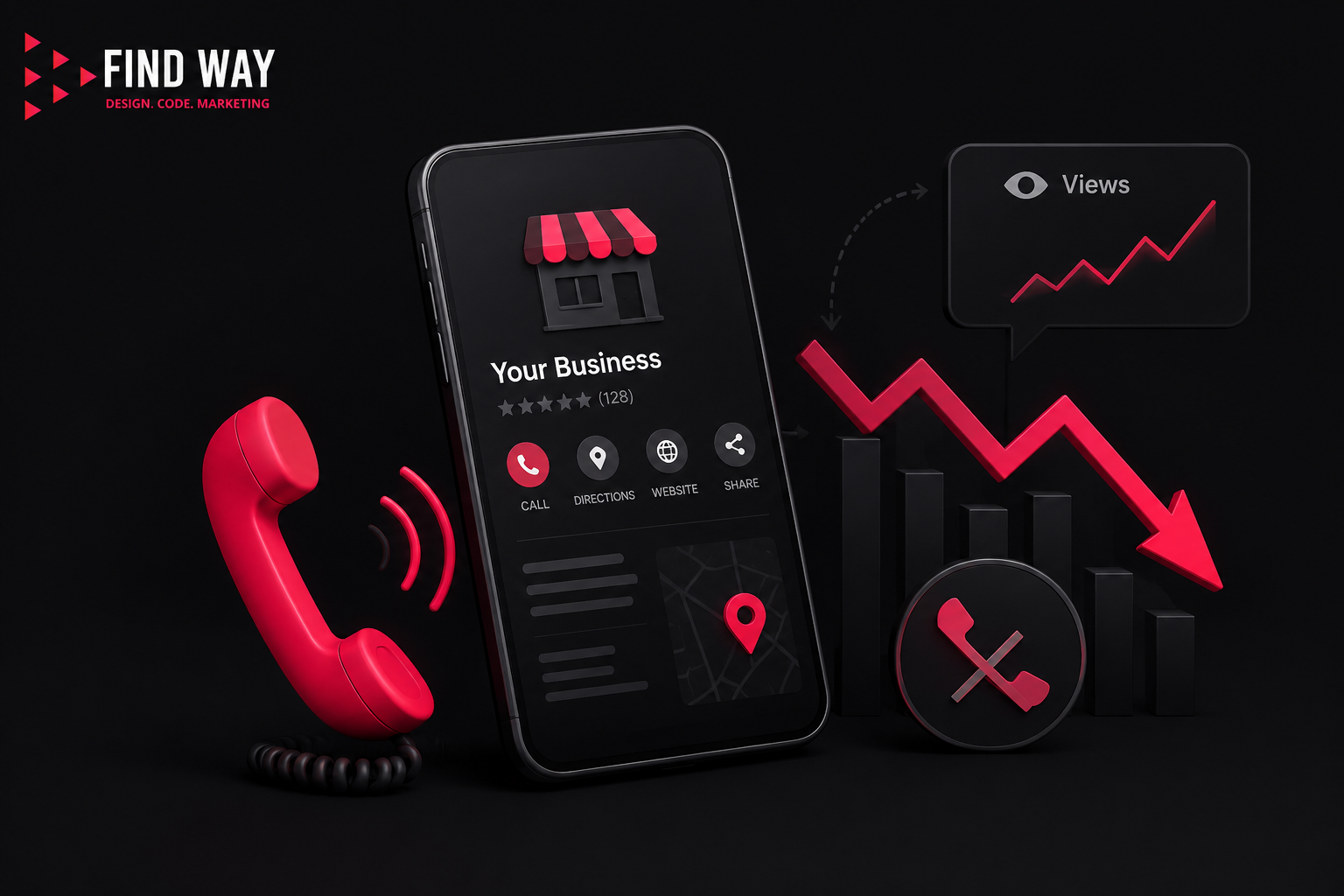
You check your Google Analytics reports or Google Business Profile insights, expecting positive results, but the numbers leave you wondering what’s holding your business back.Profile views are climbing. Your business is being discovered by local customers on Google Maps. Yet the phone barely rings. If your Google Business Profile is not getting calls despite solid visibility, you are not alone. Many local businesses rank but fail to convert that attention into actual inquiries.
Visibility is only the first step. Calls happen when a potential customer trusts what they see and feels ready to act.
Why Views Don’t Always Turn Into Calls
Google shows your profile to people searching nearby. An impression means your listing appeared. A profile visit means someone clicked to learn more. A call, direction request, or website click is the conversion.
Rankings get you in front of the right people. What they see next decides whether they pick up the phone. Weak trust signals, incomplete information, or friction in the customer journey turn browsers into silent exits. Local SEO success depends on both ranking and conversion readiness.
Common Mistakes Businesses Make
Choosing the Wrong Primary Category
Google uses your primary category to decide which searches your profile should appear in. Selecting a broad or mismatched category reduces relevance and confuses visitors about what you actually offer.
Solution: Choose the most specific primary category that accurately reflects your core service, then add relevant secondary categories.
Incomplete or Outdated Business Information
Missing hours, wrong phone number, or incomplete address create immediate doubt. Customers hesitate to call a business that looks neglected.
Solution: Audit every field monthly. Confirm phone number, address, hours (including special hours), and service areas are accurate and complete.
Poor-Quality or Outdated Photos
Grainy, dark, or years-old photos make a business look less professional or closed. Customers form quick judgments from visuals.
Solution: Upload high-resolution photos of your storefront, team, products, and interior. Refresh them regularly so the profile feels current.
Weak Business Description
A generic or keyword-stuffed description fails to explain why someone should choose you. It misses the chance to build trust and answer common questions.
Solution: Write a clear, benefit-focused description in natural language. Highlight what makes you different and include relevant services without stuffing keywords.
Missing Products or Services
When products and services are empty, potential customers must dig elsewhere for basic information. Many leave instead.
Solution: Add your main services or products with short, clear descriptions and, where possible, pricing ranges.
Few or Low-Quality Reviews
A profile with few reviews or mostly negative ones signals risk. People prefer businesses with consistent positive social proof.
Solution: Politely ask satisfied customers for reviews after a good experience. Make it easier for customers to leave feedback by providing a direct review link.
Ignoring Review Responses
Unanswered reviews, especially negative ones, make the business appear unresponsive. Publicly responding to customer reviews shows that you value feedback and prioritize a positive customer experience.
Solution: Reply to customer reviews promptly, ideally within a few days of receiving them. Thank positive reviewers and address concerns calmly and helpfully.
Website Provides a Poor User Experience
Many potential customers visit the website from your Google Business Profile before deciding to contact your business. Slow load times, mobile issues, or unclear contact information stop the conversion.
Solution: Ensure the linked site loads quickly on mobile, displays the phone number prominently, and matches the NAP details on your profile.
Inconsistent NAP Information
Name, Address, and Phone number that differ across the web and your profile reduce trust and can hurt ranking signals.
Solution: Keep your business name, address, and phone number consistent across your website, social media profiles, online directories, and Google Business Profile to improve trust and local search performance.
No Regular Google Business Profile Updates
A static profile looks abandoned. Google and users both favor active listings.
Solution: Post updates, offers, or news weekly. Publish regular updates on your Google Business Profile to keep your business active, relevant, and visible to potential customers.
Quick Self-Audit Checklist
- Is the primary category precise and accurate?
- Are hours, phone, address, and service areas fully updated?
- Do photos look professional and recent?
- Does the description clearly explain what you offer and why it matters?
- Are products or services listed with useful details?
- Are you consistently receiving new customer reviews, and do you respond to them promptly?
- Does the website linked from the profile work well on mobile and match your NAP?
- Have you posted any updates in the last two weeks?
Run this checklist monthly. Small gaps often explain why ranking does not equal calls.
Conclusion
A strong ranking gets attention. Customer decisions are influenced by trust, accurate information, and a seamless experience. If your Google Business Profile isn't generating calls, the problem is often caused by one or more of the issues discussed above rather than a lack of visibility alone. Fix the information gaps, strengthen social proof, keep the profile active, and remove friction between the listing and the phone call.
Regular Google Business Profile optimization, combined with solid Local SEO practices, turns more profile views into real conversations. Businesses that treat their profile as a living sales tool rather than a set-it-and-forget-it listing consistently generate more leads. For tailored support with Google Business Profile optimization and Local SEO services, experienced teams can help close the gap between ranking and results.
FAQs
Why does my Google Business Profile rank but get no calls?
Ranking brings views. Calls require clear information, strong reviews, quality photos, and easy contact options. Missing information or a lack of trust can prevent potential customers from taking the next step.
How Often Should Businesses Update Their Google Business Profile Information?
Review core information monthly. Post updates or offers weekly. Fresh activity and accurate details improve both visibility and conversion rates.
Do photos really affect Google Business Profile calls?
Yes. Professional, recent photos build confidence quickly. Poor or outdated images make the business look less trustworthy and reduce call likelihood.
What is the best way to get more reviews for more calls?
Ask happy customers shortly after a positive experience and share a direct review link. Consistent positive reviews increase trust and encourage phone inquiries.
Can Local SEO services help increase Google Business Profile calls?
Yes. Proper optimization of categories, content, reviews, posts, and consistency improves both ranking and the profile’s ability to convert viewers into callers.
25 Jul 2026
By PRAVEEN S
Website vs Landing Page: Which One Does Your Business Actually Need in 2026?
Many businesses start investing in digital marketing before deciding whether they need a full website or simply a landing page. They launch advertising campaigns, publish social media content, or hire designers, only to realise later that their digital foundation doesn't align with their business goals.
This decision influences far more than design. It affects your SEO performance, Google rankings, visibility in AI-powered search platforms, customer trust, lead quality, conversion rates, and long-term business growth.
Choosing the wrong solution often results in wasted advertising spend, lower conversions, and unnecessary redevelopment costs. Understanding when to use a website, a landing page, or both helps you invest in the right digital asset from the beginning.
Website vs Landing Page: What's the Difference?
A website is a complete online presence made up of multiple interconnected pages. It represents your business, explains your products or services, builds credibility, and helps visitors learn more about your brand.
A business website typically includes:
- Home page
- About Us
- Service or Product pages
- Blog
- FAQ section
- Contact page
- Resources or Careers (where applicable)
With clear navigation, internal links, and well-structured content, websites help search engines and AI platforms understand your business. Over time, they become valuable assets for SEO, content marketing, and long-term brand authority.
A landing page, on the other hand, is a single page created with one specific objective. It removes unnecessary navigation and distractions so visitors focus on a single action—such as submitting an enquiry, booking an appointment, downloading a brochure, or making a purchase.
Landing pages are commonly used for paid advertising because every section is designed to increase conversion rates.
When Does Your Business Need a Website?
A website becomes essential when your business offers multiple services, targets long-term growth, or wants to establish a strong online presence.
Dedicated service pages allow potential customers to find exactly what they need while giving search engines more opportunities to rank your content. Publishing blogs, case studies, FAQs, and educational resources also strengthens your authority within your industry.
In 2026, search behaviour has evolved beyond traditional search engines. AI-powered platforms such as Google AI Overview, ChatGPT, Gemini, and Perplexity increasingly generate answers using information from well-structured websites. Businesses that publish helpful, organised, and trustworthy content have a greater chance of being referenced in these AI-generated responses.
Technical optimisation also plays an important role. Features such as Core Web Vitals, schema markup, internal linking, and structured content improve both search visibility and user experience.
A complete website is particularly valuable for:
- Local businesses
- Healthcare providers
- Educational institutions
- Manufacturers
- Professional service companies
- E-commerce businesses
For organisations where trust and detailed information influence purchasing decisions, a website is no longer optional—it's a long-term business asset.
When Should You Choose a Landing Page?
A landing page is the right choice when your goal is to encourage visitors to complete one specific action.
Whether you're collecting enquiries, scheduling appointments, promoting a limited-time offer, or selling a single product, a landing page keeps visitors focused on that objective without unnecessary distractions.
Landing pages work exceptionally well with:
- Google Ads campaigns
- Meta Ads
- Product launches
- Seasonal promotions
- Webinar registrations
- Event sign-ups
- Appointment booking campaigns
Because they eliminate competing navigation and unnecessary information, landing pages often achieve significantly higher conversion rates than standard website pages for paid traffic.
They're also quicker and more cost-effective to build, making them ideal for testing campaigns before investing in a larger website.
If your immediate priority is lead generation rather than long-term SEO, a dedicated landing page is often the better investment.
Website vs Landing Page Comparison
|
Factor |
Website |
Landing Page |
|
Primary Purpose |
Brand building, SEO, long-term growth |
Single conversion objective |
|
Structure |
Multiple pages |
Single page |
|
SEO Potential |
Strong |
Limited |
|
Navigation |
Full navigation and internal links |
Minimal or no navigation |
|
Conversion Focus |
Multiple goals |
One clear goal |
|
Best For |
Organic traffic and credibility |
Paid campaigns and promotions |
|
Development Cost |
Higher initial investment |
Faster and more affordable |
|
Long-Term Value |
Continues growing over time |
Campaign-specific |
Can You Use Both Together?
Absolutely.
Most successful businesses combine both assets because they serve different purposes.
Your website acts as your long-term digital headquarters. It attracts organic traffic, builds trust, supports SEO, and establishes your expertise.
Landing pages complement the website by converting paid traffic into leads or customers. Instead of sending advertising visitors through multiple pages, businesses direct them to focused landing pages designed specifically for that campaign.
Together, they create a balanced digital marketing strategy where:
- The website builds authority.
- Landing pages maximise conversions.
- SEO generates consistent long-term traffic.
- Paid advertising delivers immediate results.
Rather than replacing one another, websites and landing pages work best when used together.
Why This Decision Matters More in 2026
Digital search is changing rapidly.
Instead of browsing multiple websites, many users now receive direct answers from AI-powered search experiences. Businesses with detailed service pages, structured FAQs, helpful content, and clear topical authority are far more likely to appear in these AI-generated responses.
Landing pages rarely contribute to this visibility because they're intentionally built around a single campaign rather than comprehensive information.
Advertising platforms have become increasingly competitive, making it more expensive for businesses to attract qualified visitors. Sending expensive paid traffic to a general website often reduces conversion rates because visitors encounter too many choices.
Matching the right digital asset with the right traffic source has become one of the most important factors in improving marketing ROI.
At Findway Digital, we help businesses determine whether they need a high-converting landing page, a scalable business website, or a combination of both. Our recommendations are based on business objectives—not one-size-fits-all solutions.
Conclusion
A website and a landing page solve different business challenges.
A website supports long-term SEO, builds credibility, strengthens your online presence, and improves visibility across both traditional and AI-powered search.
A landing page focuses on one objective—turning visitors into leads or customers through a streamlined conversion experience.
For most businesses, the strongest digital strategy combines both. Your website builds lasting authority, while dedicated landing pages maximise campaign performance.
Before investing in digital marketing, identify your primary objective. If you're aiming for sustainable online growth, invest in a strong website. If your priority is generating leads from a specific campaign, a landing page may deliver faster results. Choosing the right foundation ensures your marketing budget produces measurable business outcomes rather than unnecessary expenses.
Frequently Asked Questions
How does a website differ from a landing page?
A website consists of multiple interconnected pages that represent your entire business and support long-term SEO. A landing page is a single page designed around one specific conversion goal, such as lead generation or appointment booking.
Which is better for SEO?
A website offers significantly greater SEO potential because it supports content marketing, internal linking, technical optimisation, and topical authority. Landing pages generally have limited SEO value since they focus on a single campaign.
Do small businesses need a website or just a landing page?
Most small businesses benefit from having a professional website because it improves credibility and helps customers discover them through search engines. Landing pages are best used alongside a website for marketing campaigns rather than replacing it.
Do Google Ads always require a website?
No. Google Ads can direct visitors to either a dedicated landing page or a website. In many cases, a well-optimised landing page delivers better conversion rates because it is designed around a single objective and removes unnecessary distractions.
Should I have both a website and a landing page?
In most cases, yes. A website supports organic growth, brand authority, and AI search visibility, while landing pages improve conversions for paid campaigns and promotional offers. Using both creates a more effective and balanced digital marketing strategy.
16 Jul 2026
By PRAVEEN S
Google Ranking Dropped Suddenly? 12 Reasons Your Website Lost Traffic in 2026
Google's algorithms constantly evolve. What worked well months ago may no longer align with current signals. Here are 12 common reasons for a Google ranking drop and organic traffic loss, along with practical insights.
1. Google Core Updates
Google releases several core updates yearly, such as the May 2026 Broad Core Update and earlier ones in March and February. These updates re-evaluate web content to ensure users receive more relevant, accurate, and helpful search results.
The Helpful Content System prioritizes pages demonstrating strong E-E-A-T (Experience, Expertise, Authoritativeness, and Trustworthiness). Sites with shallow, generic, or outdated content often lose visibility as Google favors those offering real value backed by first-hand experience or clear expertise.
Recovery tips: Review your content against Google's guidelines. Focus on adding unique insights, real-world examples, and clear sourcing. Improvements can influence rankings even between major updates.
2. AI Overviews & AI Search
AI Overviews (and similar generative features) now appear in a significant portion of searches, providing quick answers drawn from multiple sources. This leads to more zero-click searches, lowering traditional click-through rates even if your page ranks well.
GEO (Generative Engine Optimization) and AEO (Answer Engine Optimization) matter because AI systems cite authoritative, well-structured content. Rankings may hold, but traffic drops as users get answers without visiting sites.
Recovery tips: Structure content with clear headings, concise summaries, and data-backed sections. Optimize for citations by demonstrating topical depth and reliability. Use schema where appropriate to help AI understand your content better.
3. Search Intent Has Changed
User queries and expectations evolve. What once matched "informational" intent may now lean transactional or require more specific details due to AI-assisted searching.
SERP features like AI summaries or rich results also shift visibility.
Recovery tips: Revisit top-performing pages and align them with current intent. Analyze real user queries in Google Search Console and update content to answer questions more completely.
4. Outdated Content
Google values freshness. Content with old statistics, broken examples, or outdated screenshots loses relevance quickly in fast-moving industries.
Stale FAQs or unmaintained internal links compound the issue.
Recovery tips: Schedule regular content audits. Refresh key pages with new data, updated examples, and improved structure. Add recent case studies or insights to signal ongoing value.
5. Technical SEO Problems
Crawl errors, indexing issues, problematic robots.txt files, incorrect canonical tags, faulty redirects, or incomplete XML sitemaps can prevent Google from properly accessing or understanding your site. Server issues or sudden changes in crawl budget exacerbate problems.
Recovery tips: Use Google Search Console to identify and fix errors promptly. Submit updated sitemaps, review redirect chains, and ensure mobile-friendly implementation.
6. Competitors Improved
Your competitors may have published better content, enhanced user experience, strengthened topical authority, or earned higher-quality backlinks.
Recovery tips: Conduct competitive analysis. Identify gaps in your coverage and create superior, more comprehensive resources. Focus on consistent improvement rather than one-off efforts.
7. Weak Topical Authority
Google understands topics holistically. Isolated pages without supporting topic clusters, strong semantic SEO, or robust internal linking struggle to compete.
Recovery tips: Build pillar pages and cluster content around core topics. Improve internal linking to distribute authority and help users (and crawlers) navigate related information.
8. Lost Backlinks
Losing high-quality referring domains reduces domain authority signals. Disavowed or naturally decayed links can also impact performance.
Recovery tips: Monitor your backlink profile regularly. Reach out for replacements where appropriate and focus on earning new, relevant links through valuable content and outreach.
9. Poor User Experience
Core Web Vitals—loading performance, interactivity, and visual stability—remain important. Poor mobile experience, confusing navigation, or low readability frustrates users and signals lower quality to Google.
Recovery tips: Test with Google PageSpeed Insights. Optimize images, implement lazy loading, and streamline navigation for better engagement metrics.
10. Website Changes
Site migrations, URL restructuring, redesigns, or metadata updates without proper redirects often cause temporary or lasting drops.
Recovery tips: Plan changes carefully with 301 redirects. Monitor post-change performance closely in Search Console and Analytics.
11. Search Demand Declined
Changes in consumer behavior, seasonal trends, and evolving market conditions can all influence how often people search for specific topics or services. Tools like Google Trends help identify this.
Recovery tips: Diversify content to related topics. Explore new keyword opportunities and adjust expectations based on real demand data.
12. Tracking the Wrong Metrics
Focusing solely on rankings or clicks ignores AI visibility, leads, revenue, or engagement. Apparent drops may reflect broader search changes rather than site failure.
Recovery tips: Track holistic metrics in Google Analytics and Search Console. Measure business outcomes and AI citation potential alongside traditional SEO data.
How to Recover Lost Google Rankings
Recovery requires a systematic approach:
- Begin by reviewing your Google Search Console data to identify crawl errors, indexing issues, and any noticeable changes in impressions or clicks.
- Conduct a full technical SEO audit.
- Refresh outdated content with fresh, authoritative information.
- Strengthen topical authority through strategic internal linking and topic clusters.
- Optimize for AI Search with clear, citable content.
- Improve Core Web Vitals and overall user experience.
- Build quality backlinks ethically.
- Monitor progress consistently without overreacting to daily fluctuations.
Consistent effort aligned with Google's guidelines typically yields positive results over time.
Final Thoughts
Ranking drops are a normal part of SEO in 2026. Google's systems evolve to prioritize genuinely helpful content amid AI-driven search and rising competition. By focusing on users first—creating valuable, experience-backed content while maintaining strong technical foundations—you position your site for sustainable visibility.
At Findway Digital, we specialize in helping businesses navigate these changes with data-driven strategies tailored to the Indian market and global audiences. If your website has lost traffic, consider a professional SEO audit to identify specific opportunities.
FAQ
1. Why did my Google ranking suddenly drop?
Sudden drops often stem from Google Core Updates, technical issues, or content that no longer matches evolving search intent. AI Overviews and increased competition also contribute. Diagnose via Search Console before assuming a penalty.
2. Can AI Overviews reduce website traffic?
Yes. AI Overviews provide instant answers, increasing zero-click searches and reducing CTRs even for well-ranking pages. Optimize by creating clear, authoritative content that AI systems are likely to cite.
3. How long does SEO recovery take?
Recovery varies—technical fixes can show results in weeks, while content and authority improvements may take 1–3 months or longer after updates. Patience and consistent optimization are key.
4. How do I know if Google penalized my website?
True penalties are rare and usually tied to clear violations. Most drops relate to core updates or quality reassessments. Check Search Console for manual actions; otherwise, focus on improving E-E-A-T and usefulness.
5. What should I check first after losing rankings?
Start with Google Search Console for crawl errors, indexing issues, and performance drops. Review recent site changes, then assess content freshness and Core Web Vitals.
11 Jul 2026
By PRAVEEN S
Why Your Competitors Are Getting More Customers Online: A Digital Visibility Gap Analysis
If your competitors are attracting more customers despite offering similar products or services, the problem may not be quality—it may be visibility.
Today's customers don't just choose the best business; they choose the one they find first and trust most. Before making a purchase, they search on Google, browse Google Maps, read reviews, visit websites, and increasingly ask AI platforms like ChatGPT, Google AI Overview, Gemini, and Perplexity for recommendations.
If your business isn't visible across these touchpoints, you're losing potential customers before they even contact you. This difference between your current online presence and the visibility needed to consistently generate enquiries is known as the Digital Visibility Gap.
What Is a Digital Visibility Gap?
A Digital Visibility Gap is the difference between your business's current online presence and the level of visibility required to compete effectively in your market.
It goes beyond Google rankings and includes every factor that influences how customers discover and trust your business, such as:
- Search engine rankings
- Google Business Profile
- Website performance
- Customer reviews
- Helpful content
- Brand mentions and backlinks
- AI search visibility
The smaller your visibility gap, the more opportunities you have to attract qualified leads and convert them into customers.
Why Your Competitors Are Winning More Customers
Most customers make decisions long before they contact a business. They compare websites, reviews, local listings, and online reputation within minutes.
Consider two businesses offering the same service. One has a fast website, hundreds of positive reviews, updated Google Business information, and informative content. The other has an outdated website, limited reviews, and little online presence. When two businesses offer similar quality, customers usually choose the one that builds greater trust through its online presence.
That's why digital visibility has become a business growth strategy—not just an SEO activity.
|
Strong Digital Visibility |
Weak Digital Visibility |
|
Visible where customers search online |
Difficult for potential customers to discover |
|
Fast, mobile-friendly website |
|
|
Regular positive reviews |
Few or outdated reviews |
|
Helpful content answers customer questions |
Little or no useful content |
|
Recognized by AI search platforms |
Limited AI search presence |
6 Visibility Gaps That Cost Businesses Customers
1. Low Search Visibility
If potential customers can't find your website when searching for your services, you're likely losing valuable business opportunities. Strong on-page SEO, technical optimization, and relevant content help improve rankings and attract qualified traffic.
2. Unoptimized Google Business Profile
For local businesses, your Google Business Profile often creates the first impression. Keeping your business information accurate, adding recent photos, publishing updates, and responding to reviews can significantly improve local visibility and customer trust.
3. Slow or Outdated Website
A website should build confidence within seconds. Slow loading times, poor mobile experience, and confusing navigation often lead visitors to leave without making an enquiry. A modern, responsive website improves both user experience and search performance.
4. Lack of Helpful Content
Customers search for solutions before choosing a business. Publishing informative blogs, service pages, FAQs, and location-based content demonstrates expertise while increasing your chances of appearing in both traditional and AI-powered search results.
5. Weak Online Authority
Positive customer reviews, quality backlinks, and mentions on trusted websites help establish credibility. Businesses with stronger authority are more likely to rank well, earn customer trust, and receive recommendations from search engines and AI platforms.
6. Missing AI Search Visibility
Search behaviour is evolving. Customers now ask AI assistants for recommendations instead of relying only on traditional search engines. AI platforms are more likely to recommend businesses that provide well-organized information, clearly explain their services, and maintain a consistent and trustworthy online presence.
A Quick Digital Visibility Checklist
Ask yourself these questions:
- Is your website fast and mobile-friendly?
- Does your Google Business Profile stay updated?
- Do you regularly receive genuine customer reviews?
- Do you publish useful content for your audience?
- Is your business information consistent across online platforms?
- Can AI tools easily understand and recommend your business?
If you answered "No" to several of these, your business likely has a Digital Visibility Gap that's affecting enquiries and growth.
Why AI Search Matters in 2026
The way customers discover businesses online is evolving with the rise of AI-powered search.Platforms like ChatGPT, Google AI Overview, Gemini, and Perplexity recommend businesses based on trustworthy content, structured information, online authority, and consistent business data.
To increase the chances of being recognized by AI search platforms, businesses should focus on the following best practices:
- Publish helpful, experience-driven content.
- Implement Schema Markup.
- Keep business information consistent across platforms.
- Build topical authority with quality content.
- Earn genuine reviews and authoritative backlinks.
Businesses that optimize for both traditional SEO and AI search are better positioned to attract customers as search behaviour continues to evolve.
How Findway Digital Helps
At Findway Digital, we help businesses identify and close their Digital Visibility Gap through data-driven digital marketing strategies.
Our services include:
- Website Design & Development
- Search Engine Optimization (SEO)
- Local SEO & Google Business Profile Optimization
- AI Search Optimization (GEO & AEO)
- Content Marketing
- Technical SEO Audits
- Website Performance Optimization
- Conversion Rate Optimization
Rather than focusing only on rankings, we improve every stage of the customer journey—from online discovery to customer enquiry—helping businesses generate qualified leads and achieve sustainable growth.
Conclusion
A great product or service alone isn't enough to win customers in today's digital landscape. If your business isn't visible where customers search—or doesn't inspire confidence when they find it—your competitors will continue to capture those opportunities.
Closing your Digital Visibility Gap means improving your website, strengthening your local presence, publishing valuable content, earning customer trust, and preparing your business for AI-powered search.
If you're ready to understand where your business is losing visibility, Findway Digital can help you identify the gaps and create a strategy that drives long-term online growth.
Frequently Asked Questions
1. What is a Digital Visibility Gap?
It is the difference between your current online visibility and the visibility needed to consistently attract customers through search engines, local search, and AI-powered platforms.
2. Why are my competitors getting more customers online?
They often have stronger SEO, better websites, more reviews, helpful content, and greater online authority, making them easier to find and trust.
3. How does AI search affect my business?
AI platforms recommend businesses with trustworthy content, structured data, consistent business information, and strong online authority.
4. How can I improve my digital visibility?
Improve your website, optimize your Google Business Profile, publish valuable content, earn customer reviews, build backlinks, and adopt AI search optimization strategies.
5. How can Findway Digital help?
Findway Digital provides Website Development, SEO, Local SEO, Google Business Profile Optimization, AI Search Optimization, Content Marketing, and Technical SEO services to improve visibility, generate qualified leads, and support long-term business growth.
06 Jul 2026
By PRAVEEN S
Website Development Checklist for Small Businesses in 2026: 15 Things to Check Before Hiring a Developer
Hiring the wrong web developer costs more than money—it can cost valuable leads, search visibility, and customer trust.
After working with businesses across different industries, one common pattern stands out: many websites look visually appealing but fail to generate enquiries because critical elements like SEO, performance, user experience, and scalability were overlooked during development. Fixing these issues after launch is often more expensive than getting them right from the beginning.
In 2026, a business website is more than an online brochure. It acts as your digital storefront, sales representative, and one of the strongest trust signals for potential customers. Whether visitors discover you through Google Search, AI-powered search engines like ChatGPT and Gemini, social media, or local search, your website needs to deliver a fast, secure, and seamless experience.
Before hiring a developer, use this checklist to ensure your investment supports your business for years to come.
1. Define Your Business Goals Before Development
Every effective website starts with a well-defined business objective. Decide whether your primary objective is lead generation, online sales, appointment bookings, brand awareness, or customer support.
Without clear goals, even a well-designed small business website can struggle to deliver measurable business results.
Practical Tip: Document your top three business objectives before discussing design or technology.
2. Review Portfolio and Industry Experience
A developer's portfolio offers valuable insight into more than just visual design—it demonstrates how they've helped businesses achieve practical goals through effective website solutions.
Explore live websites rather than screenshots. Check loading speed, mobile usability, navigation, and overall user experience.
Experience within your industry is valuable because every business has different customer expectations and conversion goals.
Practical Tip: Speak with previous clients to understand how the developer handled communication, deadlines, and post-launch support.
3. Prioritize Mobile-First Design
Mobile devices account for the majority of website traffic for most businesses. Google's mobile-first indexing also means your mobile experience directly influences search rankings.
A responsive design is no longer enough. Developers should build the mobile experience first and then optimize for larger screens.
Practical Tip: Review mobile wireframes before development begins.
4. Focus on Website Speed and Core Web Vital
Website speed has a direct impact on how visitors interact with your site, influencing both engagement and the likelihood of converting into customers.
Developers should optimize:
- Core Web Vitals
- Image compression
- Lazy loading
- Browser caching
- CDN implementation
- Clean code structure
Fast-loading websites improve both user satisfaction and SEO performance.
Practical Tip: Ask which performance benchmarks the developer targets using PageSpeed Insights or Lighthouse.
5. Ensure an SEO-Friendly Website Structure
SEO starts during development—not after launch.
Your website should include:
- Clean URL structure
- Proper heading hierarchy
- XML Sitemap
- Robots.txt
- Canonical tags
- Schema Markup
- Optimized internal linking
- Crawl-friendly navigation
These technical foundations help search engines understand and index your website effectively.
Practical Tip: Confirm that technical SEO is included in the development process rather than offered as an additional service.
6. Verify Website Security Standards
Website security protects both your business and your customers.
Modern websites should include:
- HTTPS (SSL)
- Regular backups
- Firewall protection
- Malware monitoring
- Secure login practices
- Software updates
Security also builds customer confidence and supports search engine trust signals.
Practical Tip: Ask how security updates and backups will be managed after launch.
7. Choose an Easy-to-Manage CMS
Your website shouldn't require a developer for every small update.
Whether using WordPress or another CMS, you should be able to:
- Update content
- Publish blogs
- Add images
- Modify contact information
- Create new pages
A user-friendly CMS reduces long-term maintenance costs.
Practical Tip: Request a training session after launch so your team can confidently manage the website.
8. Design for Conversions, Not Just Appearance
An attractive website is only valuable if it encourages visitors to take action.
Good conversion-focused design includes:
- Clear calls-to-action
- Simple navigation
- Trust signals
- Easy contact forms
- Strategic button placement
- Strong landing pages
Every page should guide users toward a meaningful business goal.
Practical Tip: Ask the developer to explain the customer journey from homepage to enquiry or purchase.
9. Make Accessibility a Priority
Accessibility benefits every visitor—not only users with disabilities.
Modern websites should include:
- Alt text
- Keyboard navigation
- Proper colour contrast
- Readable typography
- Accessible forms
Accessibility improves usability while supporting broader compliance standards.
Practical Tip: Ask whether the website follows current WCAG accessibility guidelines.
10. Test Responsiveness Across All Devices
Your website should work consistently across smartphones, tablets, laptops, and large desktop screens.
Broken layouts, overlapping text, or inconsistent spacing create a poor first impression.
Practical Tip: Test development versions on multiple devices before approving the final build.
11. Build for Future Growth
As your business grows, your website should be flexible enough to support new goals, services, and customer needs without requiring a complete rebuild.
Plan for future additions like:
- E-commerce
- Online booking
- Multiple service locations
- Customer portals
- Membership systems
- Additional landing pages
A scalable website prevents expensive rebuilds later.
Practical Tip: Discuss future expansion plans before development begins.
12. Check Integration Capabilities
A well-developed website should connect seamlessly with the tools your business relies on, helping automate workflows and improve day-to-day efficiency.
Common integrations include:
- CRM software
- WhatsApp Business
- Google Analytics 4
- Payment gateways
- Email marketing platforms
- Live chat
- Booking systems
Well-connected systems improve productivity and customer experience.
Practical Tip: Prepare a list of business tools you currently use and verify compatibility.
13. Request Transparent Pricing and Timelines
Professional developers provide clear project scopes.
Your proposal should explain:
- Design costs
- Development costs
- Hosting
- Domain management
- Maintenance fees
- Revision policy
- Project milestones
Transparency reduces misunderstandings later.
Practical Tip: Request a detailed timeline with milestone-based deliverables instead of a single completion date.
14. Understand Post-Launch Support
Launching a website is only the beginning.
Regular maintenance includes:
- Plugin updates
- Security patches
- Performance monitoring
- Backup management
- Bug fixes
- Technical support
Reliable maintenance keeps your website secure and performing at its best.
Practical Tip: Review the maintenance agreement before signing your development contract.
15. Evaluate Reviews and Communication
Strong communication often predicts a successful project.
Look beyond testimonials on the company's website. Review Google ratings, case studies, and client feedback across trusted platforms.
Notice how quickly the developer responds, explains technical concepts, and manages expectations.
Practical Tip: Choose a development partner who communicates clearly and values long-term collaboration rather than simply delivering a website.
Final Thoughts
A business website is one of the few investments that works for your company 24/7. Choosing a developer based only on price can result in poor performance, limited scalability, and costly redevelopment.
In 2026, businesses should expect more than an attractive website. It should be fast, secure, SEO-friendly, accessible, mobile-first, and ready for AI-powered search experiences. Features like structured data, strong technical SEO, privacy-conscious analytics, and excellent user experience are no longer optional—they're part of building a competitive online presence.
Before signing any agreement, use this website development checklist to compare agencies, ask informed questions, and evaluate their long-term approach. If you need expert guidance, experienced agencies like Findway Digital can help you build a website designed not only to look professional but also to support sustainable business growth.
FAQs
- What should I check before hiring a website developer?
Review the developer's portfolio, SEO knowledge, mobile-first approach, security practices, pricing transparency, post-launch support, and experience building websites for businesses similar to yours. - What is the average cost of developing a small business website in 2026?
The cost of a professional website depends on your unique business requirements, including design complexity, custom functionality, third-party integrations, and post-launch support. Instead of focusing solely on price, choose a solution that provides a secure, fast, and SEO-friendly foundation that can grow with your business. - Why is SEO important during website development?
SEO should be built into the website from the start through clean code, fast loading speeds, mobile optimization, structured data, and a search-friendly site architecture. - What are the must-have features of a small business website in 2026?
Every modern business website should have responsive design, SSL security, fast loading speeds, clear calls-to-action, technical SEO, accessibility, analytics integration, and an easy-to-manage CMS. - How do I know if a website developer is the right choice?
Choose a developer who understands your business goals, communicates clearly, provides transparent pricing, demonstrates proven results, and offers reliable maintenance after the website goes live.

18 Jun 2026
By PRAVEEN S
10 Sneaky Web Design Flaws That Are Quietly Killing Your Inbound Leads
The website that you create represents your company’s first impression to many potential customers. It is the digital version of your storefront, salesman, and customer support representative. A number of companies are expending great resources on digital marketing in order to drive traffic to their site; however, the majority of them do not consider that poor website design will cause visitors to leave without ever converting into a lead.
In addition to overall design and layout of the website, there are other areas where poor website design will reduce the conversion rates of your website, increase bounce rates, as well as damage the user's confidence in shopping on the website. By understanding these common web design mistakes, businesses can provide a better user experience for their customers, generate more leads for their business, and maximize their return on investment for their marketing efforts.
Why Web Design Matters for Lead Generation
As consumers have become more acclimated to using the internet and have a greater expectation for websites to load quickly and provide an easy and intuitive navigation; as a result, if consumers have difficulty finding the information they need, or become frustrated with a website's design, they will leave the website and visit one of your competitor's websites instead.
An effective website helps to support the following things:
- Improved user experience
- Increased customer trust
- Higher conversion rates
- Improved SEO performance
- Stronger brand credibility
- More qualified inbound leads
The following are ten web design errors that are often overlooked, and may be contributing to the underachievement of your website.
1. Slow Website Loading Speeds
For the past couple of years, one of the most critical components of website ranking, as well as conversion, has been website speed. The data consistently shows that consumers expect an individual web page to load within less than 2 seconds
A slow website can lead to:
- High bounce rate
- Low visibility in search engines
- Low customer engagement
- Lost sales opportunities
Slow-loading pages are often caused by oversized images, excessive scripts, or low-quality hosting services.
Optimizing images, using caching techniques and minimizing unwanted plugins can all help dramatically improve the performance of your pages.
2. Confusing Navigation Menus
Visitors will never know where to find information if you have very complicated navigation structures and they will be frustrated when they cannot easily find what they are looking for. Beyond frustration, many users tend to leave a site when navigation feels unclear or hard to find.
Navigation should be simple and logical. Important information (e.g., the services, contact information or about us) should always be easy to access.
Simple menus will allow visitors to smoothly move through your website and improve their overall experience on your site.
3. Weak Call-to-Action Placement
Calls to action (or CTAs) are critical for converting visitors into leads. Unfortunately, many websites place their calls to action where visitors can easily miss them or use messaging that lacks clarity.
Some examples of good CTAs are:
- Request a Quote
- Book a Consultation
- Contact Us
- Get Started Today
Well-positioned CTAs can gently guide users toward taking immediate action without feeling forced.
4. Poor Mobile Responsiveness
With mobile devices (smartphones and tablets) making up the bulk of global website traffic, websites that are not mobile friendly risk losing a significant amount of traffic.
Some of the most common mobile issues are:
- Difficult-to-read text
- Buttons that are too small
- Broken layouts
- Slow mobile performance
Responsive web design allows for a uniform experience across all devices.
5. Overcrowded Page Layouts
Visitors may feel overloaded when a single page tries to hold too many details at once.
Large blocks of text and pop-ups can distract visitors from performing any action.
Clean designs with adequate spacing improve the readability of text, and also allow visitors to concentrate on significant information.
Simple and organized designs frequently work more effectively than those filled with unnecessary complexity.
6. Lack of Trust Signals
Before giving personal information or inquiring about products or services, visitors may want proof that the business they are dealing with is reliable.
Trust-building factors can include:
- Customer reviews
- Testimonials
- Industry credentials
- Security seals
- Case studies
Such elements create confidence in new visitors and naturally improve the brand’s credibility.
7. Generic Stock Photography
Images greatly affect user perceptions of a business.
Overly used stock images can lead to isolation and disengagement with the business website.
When possible, businesses should use:
- Photos of their staff
- Photos of their offices
- Photos from previous projects
- Photos of behind-the-scenes
Authentic images frequently create stronger emotional connections between your company and prospects.
8. Inconsistent Branding
Your website should provide a clear representation of your company's brand identity.
Inconsistencies in fonts, colors, messaging, and visual design may confuse visitors and decrease trustworthiness.
Strong branding facilitates recall of your business and lends a more professional appearance.
Consistency across all pages reinforces brand recognition.
9. Ignoring SEO Fundamentals
If your beautiful website cannot be discovered, it won’t produce any leads.
A lot of websites ignore key elements of SEO, including:
- Optimized page title
- Meta description
- Heading structure
- Internal linking
- Keyword placement
- Image optimization
Should you target relevant keywords such as: "web design services", "responsive website design", "conversion optimization", "SEO-friendly websites" and "lead generation strategies", your search visibility will increase as well as your ability to attract qualified traffic.
SEO and web design should complement each other instead of being separate entities.
10. Complicated Contact Forms
Visitors tend to avoid filling out forms that appear lengthy or take too much effort.
Requiring too much information may reduce the amount of completed forms submitted.
In most cases, a name, email address, phone number and inquiry message are sufficient to start the conversation.
Reducing friction in the contact process can greatly increase your number of leads.
The Importance of Continuous Website Improvement
Websites should never be considered a finished product. User expectations, technology, and search engine algorithms constantly change.
By regularly performing website audits, broken links, slow pages, user behaviour, and design improvements will be obvious.
Companies that continue to optimize their websites see long-term increases in the overall effectiveness of their marketing efforts.
Small continuous adjustments can create noticeable increases in the quality of your traffic and the number of leads you generate.
Final Thoughts
Most businesses concentrate primarily on their website's traffic while failing to resolve underlying design problems that are preventing that traffic from turning into customers. Resolving hidden issues like slow page loads, poor navigation, weak calls-to-action, and usability issues on mobile devices can significantly improve conversion performance.
A website should not only be visually appealing but also provide an intuitive flow that leads users towards conversion.
Fortunately for businesses looking for website design solutions, FINDWAY DIGITAL can provide web design solutions that focus on improving user experience, search engine visibility, and lead generation to help develop websites that promote long-term success.
Frequently Asked Questions (FAQs)
1. How does web design affect lead generation?
Web design impacts user experience, trust, navigation, and conversion rates, all of which directly determine how many inbound leads a company generates.
2. What is the biggest web design mistake businesses make?
Among the most common design flaws that negatively impact a website's overall performance are slow loading pages and poor mobile device responsiveness.
3. Why is mobile-friendly web design important?
Since the majority of people surf the web using their mobile devices, a poor mobile experience will lead to increased bounce rates and decreased conversion rates.
4. How often should a website be updated?
To keep their websites performing well and meeting changing expectations of users, businesses should evaluate and update the design of their sites on a regular basis (approximately every 2-3 months).
5. Can good web design improve SEO rankings?
Yes, the use of fast-loading pages, responsive page layouts, easy-to-use navigation, and optimized content all improve the visibility and subsequent ranking of a website in search engines.
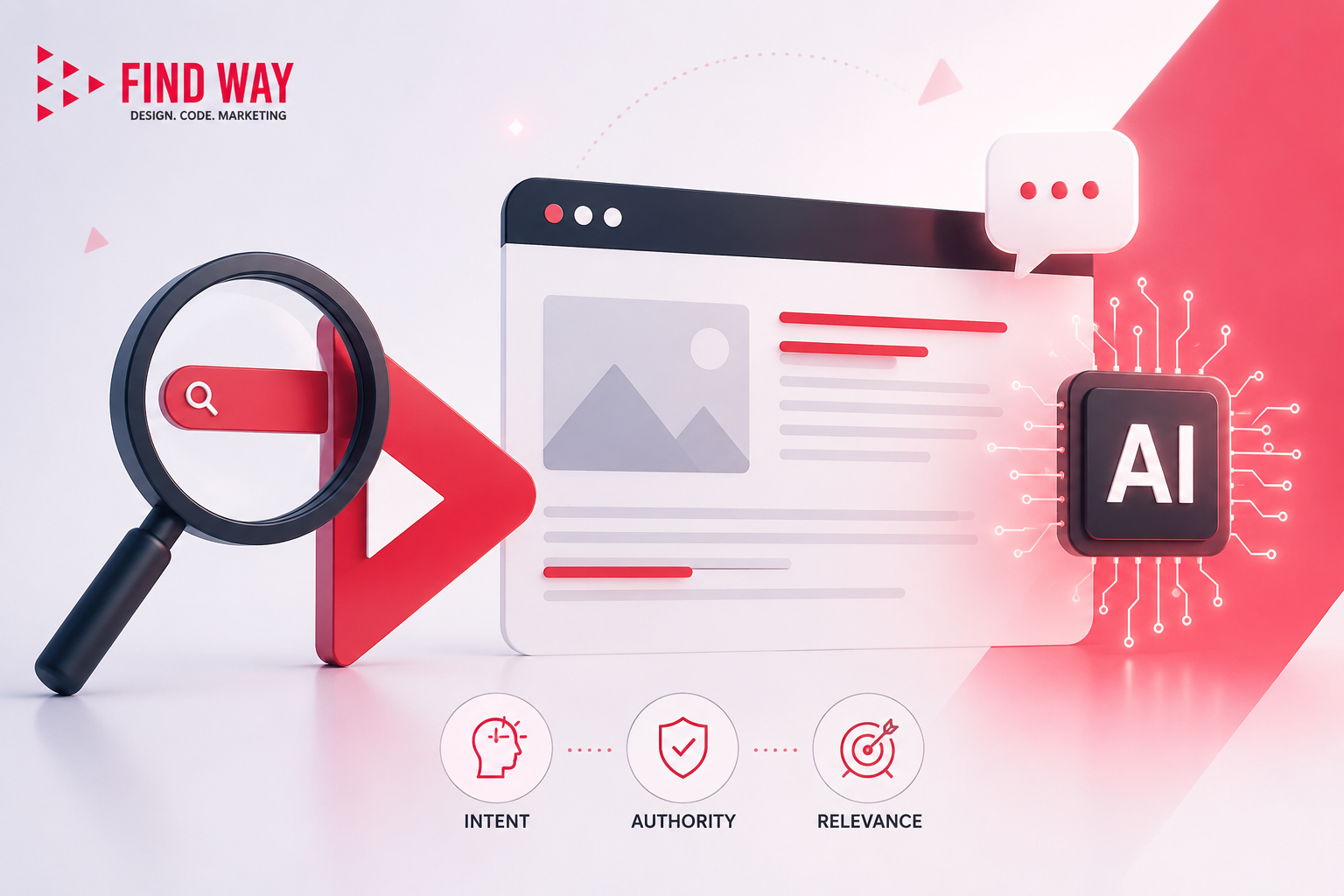
15 Jun 2026
By PRAVEEN S
Beyond Keywords: How to Optimize Your Custom Website for AI Search Engines
Search has changed — and if you're still optimizing purely for keywords, you're already playing catch-up.
Today, millions of people get answers from AI-generated summaries before they ever click a link. Google AI Overviews, ChatGPT Search, Gemini, and Perplexity are now the first stop for countless queries. If your website isn't built for this shift, you're invisible to a growing slice of your audience.
Why AI Search Engines Think Differently
Traditional search engines ranked pages. AI search engines understand them.
When someone asks ChatGPT "best practices for small business websites in 2026," it doesn't scan for keyword density. It looks for context, authority, and genuinely useful answers — then synthesizes a response from trusted sources.
Google AI Overviews works similarly, pulling structured, credible content to surface at the top before organic results. Perplexity and Gemini prioritize sources that demonstrate clear expertise and answer questions directly. The result? Conversational search has fundamentally changed what "ranking" even means.
Key Elements of an AI-Friendly Website
Create Content Around Questions
AI search engines are built on question-answering. If your content doesn't address what real users are asking, it won't be cited.
Write pages that directly answer "how," "why," and "what" questions in your niche. Think in terms of user intent — what problem is someone trying to solve? Lead with the answer, then support it with detail.
Build Topic Authority
A single great article won't cut it anymore. AI systems favor websites that demonstrate depth across a subject — not just one-off posts.
Build content clusters: a core pillar page supported by related subtopics that link to each other. This signals topical authority and helps AI engines understand that your site is a reliable resource worth citing.
Improve Website Structure
Clear, logical structure makes your content easier for AI to parse and recommend.
Focus on:
- Intuitive navigation so both users and crawlers can find content easily
- Internal linking that connects related pages with descriptive anchor text
- Schema markup (FAQ, Article, Organization, and LocalBusiness schemas) to give AI engines structured data they can extract
- Semantic HTML using proper heading hierarchies (H1, H2, H3) that reflect content organization
Optimize for User Experience
AI search engines don't just read your content — they evaluate how users experience it.
Ensure your website is fully mobile-responsive, loads in under 2.5 seconds, and passes Core Web Vitals benchmarks. Slow, clunky websites rarely get cited in AI Overviews, regardless of content quality.
Demonstrate Trust Signals
AI systems prioritize credible sources. Trust signals tell them your site is worth recommending.
Include visible author bios with credentials, client reviews and testimonials, case studies with real outcomes, and clear contact information. These EEAT (Experience, Expertise, Authoritativeness, Trustworthiness) signals directly influence whether AI tools surface your content.
Why Custom Websites Have an Advantage in AI Search
Off-the-shelf website builders have limits — and those limits show up in AI search performance.
Custom-built websites can be engineered from the ground up for speed, semantic structure, and advanced schema implementation. They scale cleanly as your content strategy grows, and they give developers precise control over technical SEO elements that templates simply can't match.
That's where Findway Digital comes in. As a Madurai-based custom website development agency, they build sites optimized not just for traditional search, but for the AI-driven search landscape businesses are navigating right now.
Future-Proofing Your Website for AI Search
Here are practical steps you can take today:
- Audit your content for question-intent alignment — reframe pages to directly answer user queries.
- Add structured schema markup across all key pages.
- Build internal links between related content to establish topical depth.
- Run a Core Web Vitals check and fix speed or layout issues.
- Create or update author pages with real credentials and experience.
If your current site makes these upgrades difficult, it may be time for a rebuild. Findway Digital specializes in custom website development designed to perform in both traditional and AI-driven search environments — helping businesses in Madurai and beyond stay visible as the search landscape evolves.
Conclusion
The era of keyword stuffing is over. AI search engines reward websites that are structured, authoritative, fast, and genuinely helpful. User intent optimization isn't a future strategy — it's what you need now.
Businesses that invest in AI-friendly websites today will hold a significant advantage as conversational search becomes the default. Start with your content, build your structure, and make sure your website is ready to be cited — not just crawled.
Frequently Asked Questions
What is AI search optimization?
AI search optimization is the process of improving your website so AI-powered platforms like Google AI Overviews, ChatGPT Search, Gemini, and Perplexity can understand, trust, and cite your content. It focuses on user intent, content quality, structured data, and topical authority rather than keyword density.
How is AI SEO different from traditional SEO?
Traditional SEO aims to improve rankings in search results through keywords, backlinks, and technical optimization. AI SEO focuses on helping AI systems understand your content, answer user questions accurately, and recognize your website as a trustworthy source for generated responses.
Why does website structure matter for AI search engines?
A clear website structure helps AI search engines understand your content and relationships between pages. Proper headings, internal links, semantic HTML, and schema markup make it easier for AI systems to extract information and present it accurately in search results.
Can a custom website perform better in AI search results?
Yes. Custom websites offer greater control over page speed, user experience, schema implementation, and content organization. These factors help AI search engines understand your website more effectively and improve the chances of your content being cited in AI-generated answers.
How can I improve my chances of appearing in Google AI Overviews?
Create content that directly answers user questions, organize information clearly, implement relevant schema markup, and build topical authority around your industry. Websites that provide accurate, helpful, and well-structured information are more likely to be featured in Google AI Overviews.
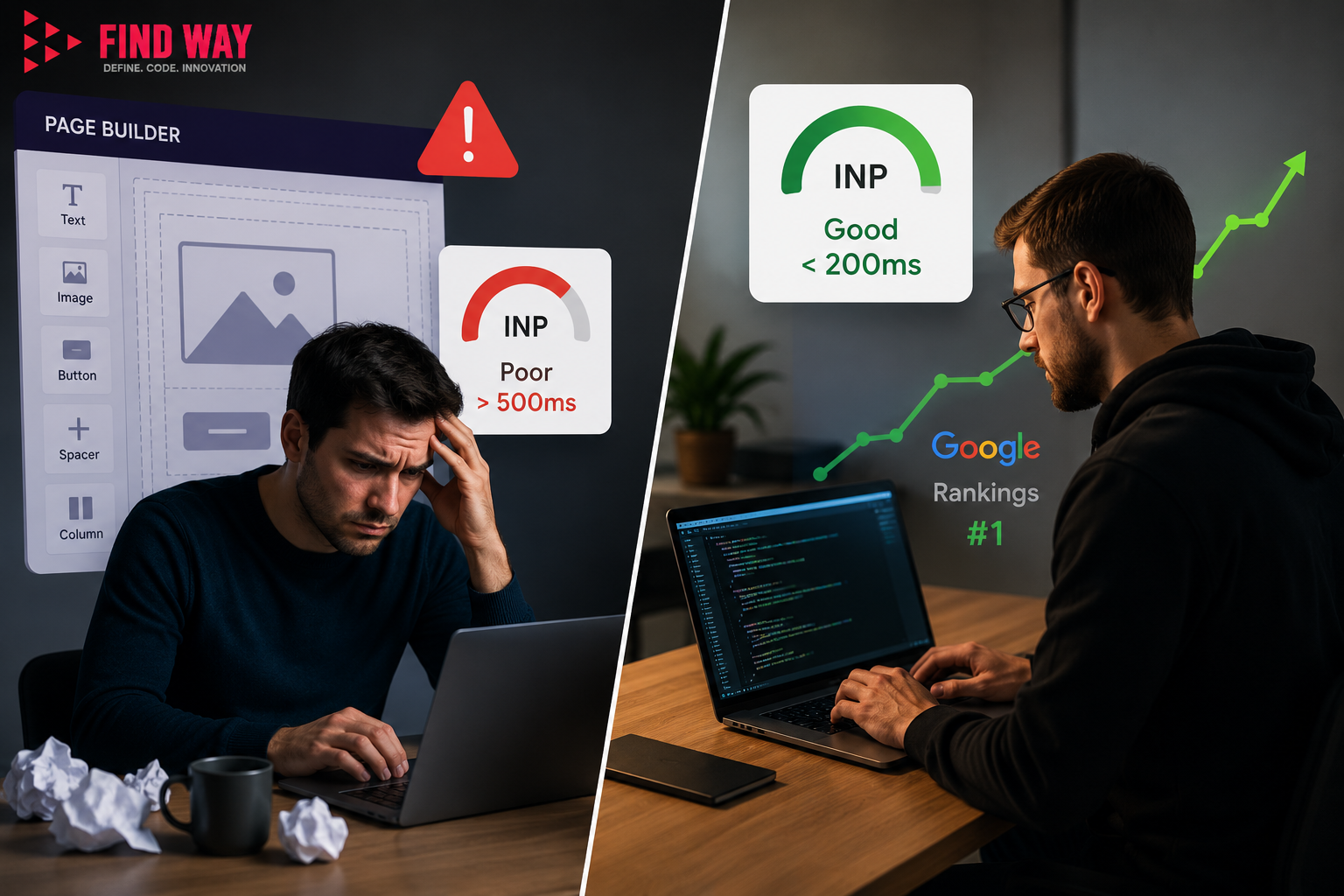
12 Jun 2026
By PRAVEEN S
Why Page Builders Fail Google’s New INP Metric And How Custom Code Saves Your Rankings
In today’s competitive digital landscape, Core Web Vitals have become a critical ranking factor for Google Search. Among them, Interaction to Next Paint (INP) stands out as the newest and often most challenging metric. Many websites built with popular page builders struggle to achieve good INP scores, leading to poor user experiences and declining SEO rankings.
At Findway Digital, a leading web development company in Madurai, we specialize in high-performance websites that pass Google’s strict performance standards. In this comprehensive guide, we’ll explore why page builders often fail the INP metric and how switching to custom code can dramatically improve your INP optimization, boost page speed, and protect your search rankings.
What is Google’s INP Metric?
Interaction to Next Paint (INP) measures how quickly a page responds to user interactions like clicks, taps, or keyboard inputs throughout the entire user session. Unlike the older First Input Delay (FID), which only looked at the first interaction, INP evaluates all interactions and reports the worst one (with some outlier handling).
Google considers:
- Good: 200 milliseconds or less
- Needs Improvement: 200–500 milliseconds
- Poor: Over 500 milliseconds
INP became a Core Web Vitals in March 2024, replacing FID. It directly impacts page experience signals and SEO rankings. Sites with poor INP scores risk lower visibility in search results, higher bounce rates, and lost conversions.
Why Page Builders Struggle with INP
Popular page builders like Elementor, Divi, WPBakery, and others promise drag-and-drop convenience. However, they often generate significant JavaScript bloat, unused CSS, and complex DOM structures that block the main thread—the key culprit behind poor INP scores.
Common Issues with Page Builders:
- Heavy JavaScript Execution: Builders load extensive scripts for animations, widgets, and dynamic elements. Even on simple pages, this leads to long tasks that delay responses to user clicks.
- Render-Blocking Resources: Multiple CSS and JS files load synchronously, increasing processing time.
- Inefficient Code: Auto-generated code includes redundant styles and event listeners that aren’t optimized for real-world interactions.
- Plugin and Theme Bloat: Combined with numerous plugins, this creates a "kitchen sink" effect, where unused features still load and hurt performance.
Studies and real-world tests show that sites built with heavy page builders frequently score poorly on mobile INP, where resources are more limited. This is especially problematic for businesses in competitive niches relying on WordPress speed optimization for better rankings.
How Custom Code Improves INP Performance
Custom-coded websites, built with clean HTML, CSS, and vanilla JavaScript (or lightweight frameworks), offer precise control over every element. At Findway Digital, our team crafts tailored solutions that prioritize performance without sacrificing design or functionality.
Key Benefits of Custom Code:
- Minimal JavaScript Footprint: Only load scripts needed for specific interactions, reducing main-thread blocking.
- Optimized Event Handlers: Use efficient listeners, debouncing, and passive events for smoother responsiveness.
- Lean DOM Structure: Cleaner markup means faster parsing and painting.
- Better Resource Loading: Implement advanced techniques like code splitting, lazy loading, and critical CSS inline.
- Scalability: Custom solutions adapt easily to future updates without accumulating technical debt.
Businesses switching from page builders to custom development often see dramatic improvements in Core Web Vitals, including LCP, CLS, and INP, leading to higher Google rankings and better user engagement.
Real-World Impact on SEO and Business Growth
Poor INP doesn’t just frustrate users; it signals to Google that your site offers a subpar experience. In contrast, fast, responsive sites built with custom code rank higher, especially in mobile-first indexing.
Findway Digital has helped numerous clients in Madurai and beyond achieve excellent Core Web Vitals scores. Our approach combines modern web development best practices with SEO expertise, ensuring your site loads lightning-fast and responds instantly. Whether you need a complete redesign or performance audits, our website development services deliver measurable results.
How to Improve Your INP Score Today
Even if you use a page builder, targeted optimizations can still improve performance.
- Disable or defer non-essential scripts and plugins.
- Use performance plugins wisely (with caution).
- Optimize images and implement lazy loading.
- Minify CSS/JS and enable browser caching.
- Monitor with tools like Google PageSpeed Insights, Lighthouse, and real-user monitoring (RUM).
For the best long-term results, consider migrating to a custom-coded foundation. Our experts at Findway Digital provide seamless transitions with minimal downtime.
Conclusion
Google’s INP metric has raised the bar for web performance. While page builders offer speed in development, they often compromise on the user experience and SEO that matter most. Custom code provides the precision and efficiency needed to excel in INP optimization, Core Web Vitals, and overall page speed optimization.
At Findway Digital, we’re committed to building websites that not only look great but perform exceptionally well in Google’s eyes. Ready to future-proof your online presence and boost your rankings? Contact our team today for a free performance consultation.
Findway Digital – Your trusted web development partner in Madurai for high-performance digital solutions.
FAQs
1. What exactly is INP in Core Web Vitals?
INP (Interaction to Next Paint) is Google’s metric for measuring page responsiveness. It tracks the time between a user interaction and the next visual update, focusing on real-user experiences across the entire session. Good scores are under 200ms.
2. Do page builders like Elementor or Divi always hurt INP scores?
Not always, but they frequently do due to heavy code overhead. Proper optimization can mitigate issues, but custom code typically delivers superior and more consistent results for demanding sites.
3. How does poor INP affect SEO rankings?
Poor INP contributes to failing Core Web Vitals, which are part of Google’s page experience signals. This can lower your rankings compared to faster competitors, increase bounce rates, and reduce conversions.
4. Can I improve INP without switching from a page builder?
Yes—through heavy optimization like script deferral, image optimization, and plugin audits. However, for maximum gains and maintainability, custom development is often the better long-term investment.
5. How does Findway Digital help improve INP performance?
We provide full website audits, custom web development, WordPress speed optimization, Core Web Vitals fixes, and migrations from page builders to lightweight, high-performance code.
6. How long does it take to see improvements in rankings after INP optimization?
Improvements in user experience and field data can appear within weeks. Google typically incorporates performance signals into rankings over time, with noticeable gains in competitive searches often visible in 1–3 months.
08 Jun 2026
By PRAVEEN S
Social Media Trends in 2026 Every Business Needs to Be Aware Of
Introduction
Companies methods for communicating with customers, developing connections and earning income are changing faster than ever before, primarily due to the emergence and advancement of technology or social platforms. Businesses that adapt to the various changes in social media, as well as the new trends and innovations through 2026, can expect to outperform many of their rivals who do not utilize these tools.
Businesses can continue to build their reputation and engage with their customers by remaining up-to-date with evolving digital marketing strategies that include the use of short-form video content and AI personalization. Learning about the different current trends in social media marketing is essential for all businesses (no matter their size, from start-ups to marketing/advertising firms) as they seek to generate more prospects or lead conversions; therefore, these businesses will use this guide of suggested ideas for all different social media marketing trends expected in 2026 with how best to use those trends to support growing your business and its operations.
1. AI-Powered Content Personalization Becomes Essential
Social media marketing is being revolutionized by AI. Social media channels have become smarter in their knowledge of the users behaviours and interests. Businesses now have an opportunity to create extremely tailored messages that reach those who are most interested in the message being delivered.
Why It Matters
- Higher engagement rates
- Better customer experiences
- Improved conversion rates
- More accurate audience targeting
Those that utilize AI-based content strategies will benefit from improved customer relationships as well as more successful marketing programs.
2. Short-Form Video Continues to Dominate
Although there's much debate about how long videos should be, short-form video content is still one of the most effective ways to engage with your audience. In particular, short videos (under 60 seconds) are being prioritized by platforms because they are often more valuable in terms of immediacy and entertainment in attracting attention immediately from your audience.
Tips For Using Short-form Video Content
- Always include subtitles.
- Use captions (subtitles) as necessary to aid comprehension.
- Always tell stories through video.
- Include call-to-action items at the end of the video.
Companies becoming involved in video marketing today will generate much higher engagement, shares and organic reach compared to companies that are only utilizing static (non-video) content against their video content.
3. Social Commerce Becomes a Major Revenue Channel
More and more consumers are using social media platforms to buy things. Shopping is now simpler thanks to in-app purchases, live shopping events, and easy product tagging features.
Benefits of Social Media Commerce include:
- Faster purchasing decisions for customers
- Less friction for customers when purchasing
- Better experience for customers using those platforms
- More chances for businesses to sell products.
Businesses need to make sure that they have a good profile on social media, have a product catalog, and have some way of integrating shopping programs into those profiles if they want to maximize sales.
4. Community Building Outperforms Follower Counts
In the year 2026, the best brands will continue moving toward creating engaged communities instead of focusing on vanity metrics. Customers prefer to have authentic interactions and meaningful conversations with brands.
Strategies for Creating Valuable Communities
- Responding quickly to comments
- Promoting user-generated content
- Creating private groups & communities
- Hosting live Q&As
An engaged community often produces more return on investment compared to a massive but unresponsive/unsupported/unenhanced audience.
5. The Employee-Generated Content Trend on the Rise
Consumers believe that they can trust a real person over an "advertised human," and many businesses are encouraging employees to use social media to share their experiences and provide insight inside the organization and the broader industry
How Employee-Generated Content Creates Success
- By Providing Credibility
- Adds a Human Element to Business
- Produces Higher Organic Reach
- Improves Trust of Customers
Authenticity Continues To Be A Major Factor In Engagement On Social Media Platforms.
6. Optimizing Social Media for Search is Important
More and more, users are turning to social platforms to perform searches for products, services, reviews and recommendations.
Here are some examples of how businesses can optimize their social media presence for search:
- use relevant keywords naturally
- optimize your profile description for impacting words
- add keyword-rich descriptions to photos
- ensure you add location words where applicable
- use a strategic combination of hashtags
By implementing social media optimization strategies, businesses are able to be more discoverable and reach a larger, more targeted audience.
7. Brand Collaborations with Influencers are Becoming Niche
In many cases, brands are partnering with micro-influencers and niche content creators for their campaigns instead of relying on traditional celebrity influencers.
Benefits to Collaborating with Micro-Influencers or Niche Content Creators
- higher engagement rates
- more authentic endorsements
- improved targeting of audiences
- less expensive than traditional celebrity endorsement
Companies should seek to find influencers whose audience mirrors their own target market.
8. User-Generated Content Provides Quick Building of Trust
Customer testimonials, customer photos, customer video reviews, and much more are now commonly used by companies. This type of communication is increasingly being viewed by potential buyers as more credible than traditional advertisements.
Ideas for Engaging Customers to Generate Content Include
- Creating contests or promotions that will encourage customers to submit their own content
- Encouraging customers to write reviews of your product or service
- Sharing customer success stories on social media
- Using branded hashtags to aggregate customer-generated content
User-generated content will help to establish your company's credibility while providing a low-cost way to generate more content.
9. Privacy and transparency are important factors in all decisions made by customers in today's society
Consumers are becoming more educated about their rights to privacy with respect to their data and how much of that data is being used by companies to try to influence their behavior online and/or offline. It is vital that businesses be transparent with what data they collect from their customers as well as how that data will be used.
Businesses have several key steps they can take to promote transparency.:
- Clearly communicate your company's privacy policy
- Obtain informed consent from customers before using their data
- Promote ethical marketing practices
- Develop and sustain trust with your customers
By promoting transparency within your company, you will strengthen your ability to build and maintain a successful relationship with your customers.
10 - True Storytelling Triumphs Over Advertising Copy.
Today’s consumers like brands that tell real stories and provide value beyond just selling stuff. Telling a real story creates a personal bond and helps you connect with customers on an emotional level and also helps them remember your brand.
Elements That Make a Good Story
- Real-life stories from your customers
- A journey from where you started to where you are today (or anything else related to your brand)
- Content that shows what happens behind the scenes of your business
- Expertise/complementary products relating to what you do
Brands that share real-life stories create more significant relationships with their customers and are more likely to receive repeat business and loyalty over time.
Conclusion
Every brand’s social media strategy will be focused on personalization, authenticity, community interaction and creating a great experience for the customer by 2026. Brands that are using Artificial Intelligence (AI), creating/using video for content creation, optimizing their sites for social search and forming real relationships with their customers are going to do well over time, continuing to grow their businesses.
The only way to stay ahead of the competition and to continue to thrive as a business in an increasingly digital environment is to keep up with the evolving trends in social media marketing and to allow FINDWAY DIGITAL to help you develop strategies and tactics that will lead to measurable business growth now and long-term support for your success in business moving forward.
Frequently Asked Questions (FAQs)
1) What’s the biggest social media trend of 2026?
Our prediction is the “personalized content and short videos“, that really gets powered up by AI. It allows businesses to give the audience a better experience, and even more accurate content.
2) How important is social media SEO in 2026?
I guess you can agree that a lot of social media more and more look like search engines, so optimizing your social profiles, captions, and other content using keywords is really important for your business.
3) How do I improve my social media presence?
Offer content that is worthwhile, respond to comments on social media, offer video content, encourage your audience to create and share user-generated content, and establish an online community.
4) Are micro-influencers as impactful as celebrities for their followers?
Yes, in the vast majority of cases, micro-influencers receive greater engagement from their followers due to their credibility and ability to persuade their followers to buy products in niches.
5) What value does social commerce provide to each business?
Using social commerce to allow your customers to Discovery and buy from businesses through social media will enable them to complete their purchases more quickly and easily.
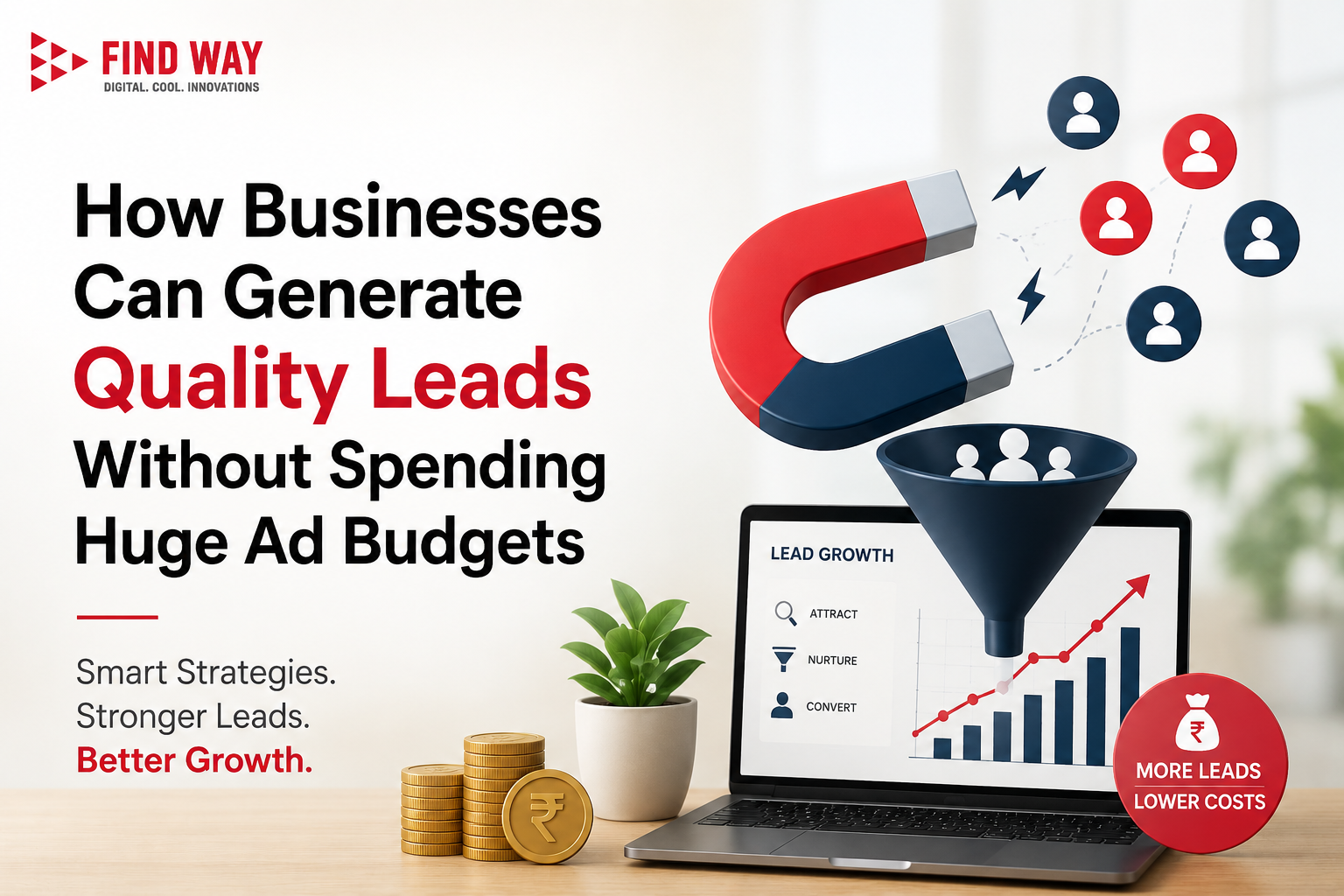
05 Jun 2026
By PRAVEEN S
How Businesses Can Generate Quality Leads Without Spending Huge Ad Budgets
For many business owners, lead generation often feels like a simple equation: spend more on ads and get more customers. While paid advertising can certainly deliver results, rising costs and increasing competition have made it difficult for many businesses to maintain a healthy return on investment.
The good news is that generating quality leads doesn't always require a massive advertising budget. In fact, some of the most sustainable and profitable lead generation strategies focus on building trust, improving visibility, and attracting customers organically. At Findway Digital, we've seen businesses achieve consistent growth by combining strategic digital marketing efforts rather than relying solely on paid campaigns.
Why Quality Leads Matter More Than Quantity
Many businesses focus on getting as many leads as possible. However, attracting hundreds of unqualified prospects rarely produces better results than attracting a smaller number of highly interested customers.
Quality leads are individuals who:
- Are closer to making a buying decision
- Match your ideal customer profile
- Have a genuine interest in your products or services
- Are more likely to convert into paying customers
The goal should always be to attract the right audience rather than simply increasing traffic numbers.
1. Invest in SEO for Long-Term Growth
Search Engine Optimization (SEO) remains one of the most cost-effective ways to generate leads online. When potential customers search for products or services, appearing in search results puts your business directly in front of people who already have purchase intent.
A strong SEO strategy should include:
- Keyword-optimized website pages
- High-quality blog content
- Fast-loading web pages
- Mobile-friendly design
- Local SEO optimization
- Quality backlink building
Unlike paid advertising, SEO continues delivering traffic and leads long after the initial work has been completed.
2. Create Helpful Content That Solves Real Problems
Modern consumers research extensively before making purchasing decisions. Businesses that consistently provide useful information naturally earn trust and authority.
Consider creating:
- Blog articles
- How-to guides
- Industry insights
- Case studies
- Checklists
- Educational videos
When your content answers common customer questions, you attract visitors who are already interested in your solutions.
For example, a business searching for ways to improve online visibility is more likely to engage with a detailed SEO guide than a generic sales pitch.
3. Make Your Content Easy for AI-Powered Search Platforms to Understand
Search behaviour is changing rapidly. Today, people increasingly use AI-powered platforms and voice assistants to find answers.
To improve visibility across Google AI Overviews, ChatGPT Search, Gemini, and other AI-driven platforms:
- Use clear headings and subheadings
- Answer questions directly
- Include FAQ sections
- Write conversationally
- Provide concise explanations
Businesses that structure content around user intent are more likely to appear in both traditional search results and AI-generated responses.
4. Strengthen Your Local SEO Presence
For service-based businesses, local SEO can be one of the most powerful lead-generation channels.
Make sure to:
- Optimize your Google Business Profile
- Maintain accurate business information
- Collect customer reviews
- Create location-specific content
- Build local citations
When someone searches for services near them, strong local SEO can help your business appear ahead of competitors without additional advertising spend.
5. Use Lead Magnets to Capture Interested Prospects
Not everyone who visits your website is prepared to make a purchase right away. Lead magnets help convert website visitors into future customers.
Popular lead magnets include:
- Free consultations
- Website audits
- Industry reports
- Downloadable guides
- Templates and checklists
- Free strategy sessions
By collecting contact information, businesses can continue nurturing prospects until they are ready to make a purchasing decision.
6. Build Trust Through Social Proof
People trust businesses that others have already had positive experiences with.
Social proof can include:
- Customer testimonials
- Online reviews
- Case studies
- Success stories
- Client feedback
Businesses that showcase real-world results often experience higher conversion rates because potential customers feel more confident about their decision.
At Findway Digital, we've found that businesses with strong customer testimonials and case studies typically generate more qualified enquiries than those relying solely on promotional messaging.
7. Nurture Leads Through Email Marketing
Email marketing remains one of the most effective ways for businesses to stay connected with potential customers while maximizing their marketing efforts.
Rather than constantly searching for new prospects, businesses can nurture existing leads by sharing:
- Helpful tips
- Industry updates
- Educational content
- Special offers
- Customer success stories
Consistent communication keeps your brand visible and builds trust over time.
Common Mistakes Businesses Should Avoid
Many businesses unknowingly limit their lead-generation potential by:
- Focusing only on paid advertising
- Ignoring SEO
- Publishing inconsistent content
- Neglecting customer reviews
- Using weak calls-to-action
- Failing to follow up with leads
Avoiding these mistakes can significantly improve lead quality and conversion rates.
Frequently Asked Questions
How can businesses generate leads without spending heavily on ads?
Businesses can generate leads through SEO, content marketing, local SEO, email marketing, referral programs, and customer reviews. These strategies attract potential customers organically and often provide long-term results.
What is the most cost-effective lead-generation strategy?
SEO is widely considered one of the most cost-effective strategies because it targets users actively searching for products or services and continues generating traffic over time.
When can businesses expect to see results from SEO efforts?
Most businesses begin seeing meaningful SEO improvements within three to six months, although results depend on competition, website quality, and content consistency.
Why is content marketing important for lead generation?
Content marketing helps businesses educate potential customers, establish authority, and build trust, making visitors more likely to convert into qualified leads.
Can local SEO help service-based businesses?
Yes. Local SEO improves visibility in location-based searches and helps nearby customers discover your business when they need your services.
Final Thoughts
Generating quality leads doesn't have to mean spending thousands on advertising every month. Businesses that focus on SEO, valuable content, local visibility, customer trust, and lead nurturing often build stronger and more sustainable growth over time.
The most successful companies understand that effective lead generation is about helping potential customers find solutions, not simply promoting products. By implementing these strategies, businesses can attract better leads, improve conversion rates, and reduce dependence on expensive ad campaigns.
If you're looking for a long-term approach to lead generation, the team at Findway Digital can help develop a strategy tailored to your business goals and growth objectives.
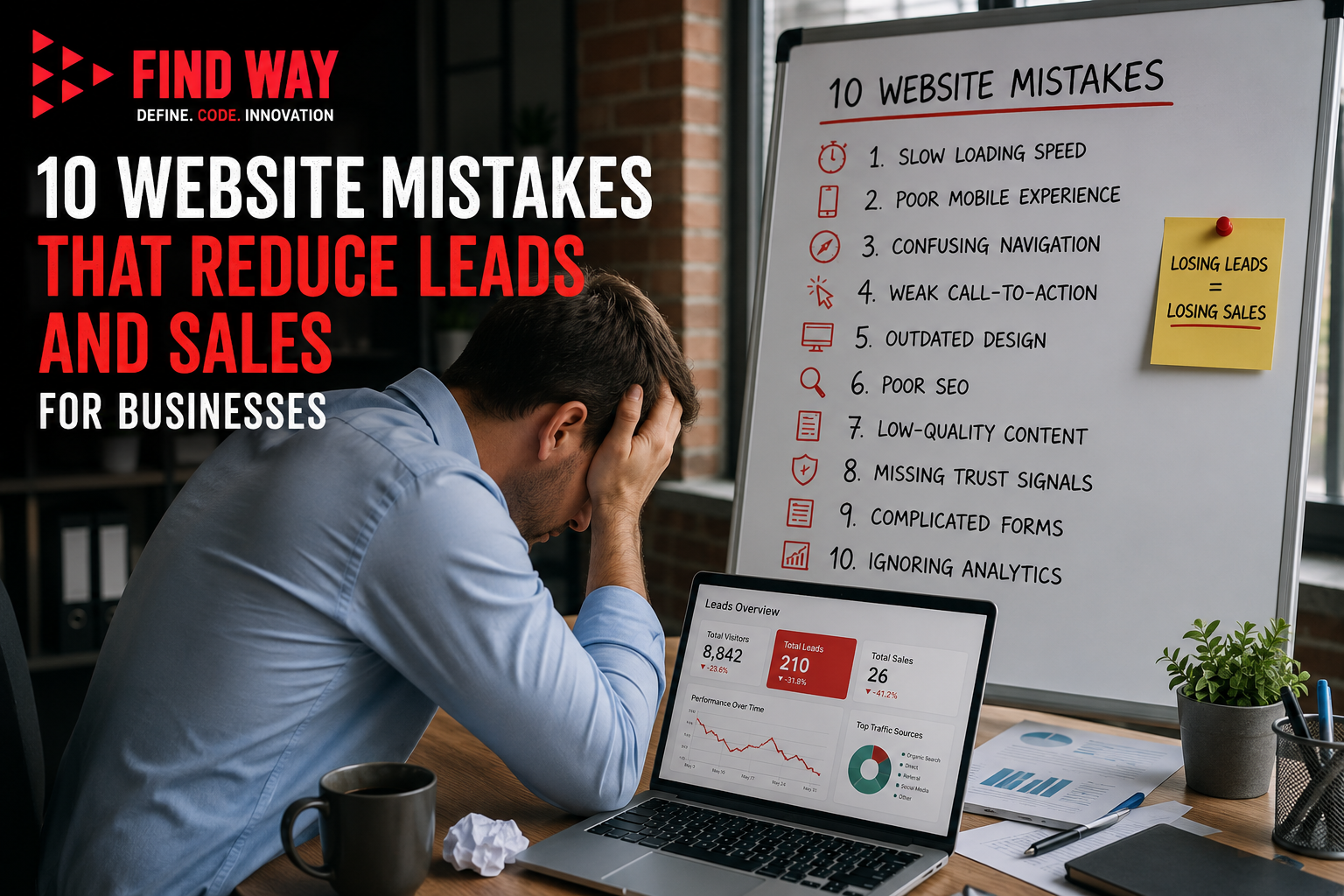
25 May 2026
By PRAVEEN S
10 Website Mistakes That Reduce Leads and Sales for Businesses
In 2026, your website is more than an online presence — it’s your business’s biggest sales tool. A good website builds trust, generates leads, and converts visitors into customers. But a poorly optimized website can quietly push potential customers away.
Today’s users expect fast-loading pages, smooth mobile experiences, clear navigation, and trustworthy design. If your website fails to meet those expectations, visitors leave within seconds — often choosing competitors instead.
At Findway Digital, many businesses approach us after noticing high traffic but low conversions. In most cases, the issue comes down to avoidable website mistakes that hurt engagement, SEO rankings, and sales.
Here are 10 common website mistakes businesses should avoid in 2026.
1. Slow Website Loading Speed
A website’s loading performance plays a major role in keeping visitors engaged and encouraging them to take action. Today’s online users expect pages to open quickly, and even a small delay can cause potential customers to leave before exploring the website further.
Slow websites are often caused by:
-
Heavy images
-
Poor hosting
-
Too many plugins
-
Unoptimized code
Google’s Core Web Vitals now heavily influence search rankings, making speed optimization critical for SEO as well.
Quick Fix:
Compress images, use reliable hosting, enable caching, and regularly optimize website performance.
2. Poor Mobile Responsiveness
Most users now browse through smartphones, making mobile-first design essential. If visitors struggle to navigate your site on mobile devices, they’re unlikely to stay.
Common mobile issues include:
-
Tiny text
-
Broken layouts
-
Slow mobile loading
-
Hard-to-click buttons
Quick Fix:
Use responsive layouts and test your website across multiple devices to ensure a smooth experience everywhere.
3. Confusing Website Navigation
Visitors should quickly understand where to go next. Overloaded menus and poorly organized navigation can confuse visitors, making it harder for them to find information and complete desired actions on the website.
If customers can’t find important information within seconds, they leave.
Quick Fix:
Keep menus clean and simple with clear sections like:
-
Services
-
About
-
Contact
-
Pricing
-
Portfolio
Guide users naturally toward important landing pages.
4. Weak or Missing Call-to-Action Buttons
A website without strong CTAs often fails to convert visitors into leads.
Users need clear direction about what action to take next:
-
Book a Consultation
-
Request a Quote
-
Call Now
-
Get Started
Weak button placement or generic wording reduces engagement.
Quick Fix:
Use action-driven CTA text and place buttons strategically throughout your website.
5. Outdated Website Design
Your website design strongly influences customer trust. An outdated design can make even a good business appear unprofessional.
Modern users expect:
-
Clean layouts
-
Fast interfaces
-
Consistent branding
-
Smooth user experiences
Quick Fix:
Refresh your website design regularly to stay aligned with current UX and UI trends.
At Findway Digital, modern redesign strategies often help businesses improve credibility and conversion rates significantly.
6. Poor SEO Optimization
Even the best-looking website won’t generate leads if customers can’t find it online.
Many businesses ignore essential SEO elements like:
-
Meta titles
-
Keyword optimization
-
Internal linking
-
Technical SEO
-
Optimized content
Quick Fix:
Focus on user-intent SEO and create helpful content that answers customer questions naturally.
7. Low-Quality or Unclear Content
Confusing or poorly written content creates uncertainty and reduces trust.
Your website should clearly explain:
-
What your business offers
-
Who you help
-
Why customers should trust you
-
What users should do next
Quick Fix:
Use conversational, easy-to-read content with short paragraphs and customer-focused messaging.
8. Missing Trust Signals
Trust is one of the biggest conversion factors in 2026.
Visitors hesitate to contact businesses if websites lack credibility indicators like:
-
SSL certificates
-
Customer reviews
-
Testimonials
-
Certifications
-
Secure payment icons
Quick Fix:
Display trust elements prominently across your website to improve confidence and conversions.
9. Complicated Contact Forms or Checkout Processes
Long forms and difficult checkout processes often lead to abandoned conversions.
Every unnecessary step increases friction for users.
Quick Fix:
Keep forms short and simple. Ask only for essential details to improve lead generation.
10. Ignoring Analytics and User Behavior Tracking
Many businesses make website decisions based on assumptions instead of data.
Without tracking tools, you won’t know:
-
Where users leave
-
Which pages convert best
-
What users click most
-
Which content underperforms
Modern businesses now rely on:
-
Google Analytics
-
Heatmaps
-
Session recordings
-
AI-assisted UX insights
Quick Fix:
Regularly analyze user behavior and optimize pages based on real visitor interactions.
Why These Mistakes Matter More in 2026
Customers today have endless online options. A poor website experience immediately pushes users toward competitors.
Modern high-converting websites focus on:
-
Mobile-first design
-
Fast loading speed
-
AI-assisted UX
-
Conversion-focused landing pages
-
Trust-based design
-
User experience optimization
Businesses partnering with agencies like Findway Digital often see better SEO performance, improved engagement, and higher lead generation through strategic website optimization.
Conclusion
Your website should actively support business growth — not silently reduce sales opportunities.
Even small website mistakes can damage trust, lower conversions, and hurt search visibility. The good news is that most of these issues are completely fixable with the right strategy.
By improving website speed, SEO, mobile responsiveness, UX, and trust elements, businesses can create stronger digital experiences that generate real results.
If your website isn’t delivering the leads or sales you expected, it may be time for a professional optimization strategy.
Findway Digital helps businesses build modern, conversion-focused websites designed for growth, visibility, and long-term success.
Looking to enhance your website experience and attract more potential customers? A well-optimized website can help turn visitors into valuable business leads.Connect with Findway Digital today.
FAQs
1. How do website mistakes reduce sales?
Poor website speed, confusing navigation, and weak CTAs frustrate users and reduce conversions.
2. Why is mobile-friendly design important?
Most users browse through smartphones, and mobile-friendly websites improve both SEO and user experience.
3. Can website redesign improve lead generation?
Yes. Modern UX, faster performance, and conversion-focused layouts significantly improve leads and engagement.
4. Does SEO help increase sales?
SEO improves visibility in search engines, helping businesses attract targeted customers actively searching online.
5. What tools help optimize website conversions?
Google Analytics, heatmaps, and user behavior tracking tools help businesses improve website performance and conversions.
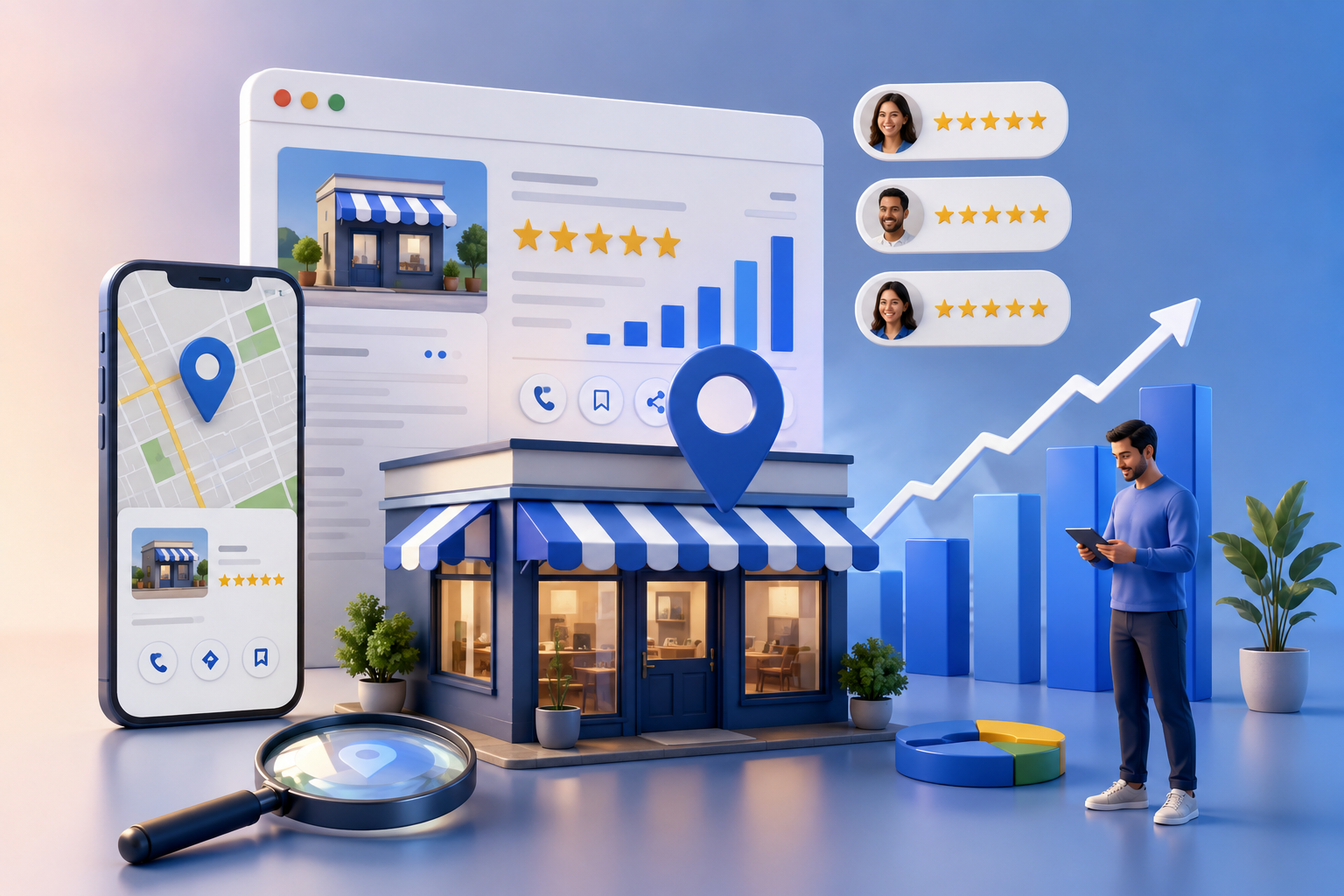
25 May 2026
By PRAVEEN S
Why Every Small Business Needs Google Business Profile Optimization in 2026
In 2026, the way customers discover local businesses has changed more than ever. Whether someone is searching for “best restaurant near me,” “digital marketing agency near me,” or “plumber in my area,” the first place they usually turn to is Google. And more specifically, they rely on the Google Business Profile (GBP) listings that appear on Google Maps and local search results.
For small businesses, optimizing this profile is no longer optional-it is a critical growth strategy that directly impacts visibility, trust, and customer conversions.
What is Google Business Profile Optimization?
Google Business Profile optimization refers to the process of improving your business listing on Google so that it ranks higher in local search results and attracts more customer engagement.
It includes:
- Updating business information (name, address, phone number)
- Adding high-quality images and videos
- Collecting and managing customer reviews
- Posting regular updates and offers
- Using relevant keywords for local SEO ranking
In simple terms, it helps your business appear when customers are actively searching for your services.
Why Google Business Profile remains a powerful tool for attracting customers in 2026
1. “Near Me” Searches Are Dominating
Search behavior has shifted heavily toward intent-based queries like:
- “best salon near me”
- “web design company near me”
- “cafes open now near me”
These searches are highly conversion-driven. Users are not browsing-they are ready to buy. A fully optimized Google Business Profile increases your chances of appearing in these high-intent searches.
2. Google Maps is the New Front Page
In 2026, Google Maps has become one of the main platforms people use to explore local services. Customers often choose businesses directly from map listings without even visiting websites.
A well-optimized profile improves:
- Google Maps ranking
- Direction requests
- Click-to-call actions
- Website visits
If your business is not optimized, you are practically invisible in local competition.
3. Trust is Built Through Reviews and Engagement
Customers trust online reviews more than advertisements. A strong GBP profile includes:
- Positive Google reviews
- Fast responses to customer feedback
- Regular engagement with Q&A sections
This builds credibility and increases conversion rates significantly.
4. Mobile Usage Drives Local Decisions
Most users now search locally using mobile devices, and Google Business Profile makes essential business info available instantly:
- Call buttons
- Location maps
- Working hours
- Service details
This reduces customer effort and increases the chances of immediate action.
5. Local SEO is More Competitive Than Ever
With more businesses going digital, ranking on Google’s local pack has become highly competitive. Optimization factors include:
- Keyword-rich business descriptions
- Consistent NAP (Name, Address, Phone)
- Category selection
- Regular posts and updates
- Geo-tagged images
Without optimization, even good businesses struggle to appear in top results.
Key Strategies for Google Business Profile Optimization
1. Use Keyword-Rich Business Description
Include relevant search terms naturally like:
- local SEO services
- digital marketing agency
- web development services
- Google Maps optimization
This helps Google understand your business relevance.
2. Upload High-Quality Visual Content
Images and videos increase engagement and trust. Businesses with regular photo updates often get higher click-through rates.
3. Collect and Respond to Reviews
Encourage positive customers to post reviews and respond to all feedback with professionalism and care.This signals activity and reliability to both users and Google.
4. Post Weekly Updates
Google Posts help promote:
- Offers
- News
- Events
- Service updates
This improves visibility and keeps your profile active.
5. Maintain Consistency Across Platforms
Ensure your business details match across:
- Website
- Social media
- Online directories
Consistency improves local ranking signals.
Benefits of Google Business Profile Optimization
When done correctly, GBP optimization provides:
- Higher visibility on Google Search and Maps
- Increased website traffic
- More phone calls and inquiries
- Better conversion rates
- Strong local brand presence
It is one of the most cost-effective digital marketing strategies for small businesses.
Conclusion
In 2026, competition in the digital space is not just about having a website-it is about being discoverable at the exact moment customers are searching for your services. Google Business Profile optimization plays a crucial role in ensuring that small businesses remain visible, trusted, and competitive in local search results. By improving profile accuracy, engagement, and keyword relevance, businesses can significantly increase leads and conversions while building long-term digital authority. For companies looking to scale their local presence and dominate search visibility, partnering with experts like FINDWAY DIGITAL can make the optimization process more strategic and result-driven.
FAQs
1. What is Google Business Profile optimization?
It is the process of improving your Google listing to increase visibility in local search results and attract more customers.
2. Why is Google Business Profile important for small businesses?
It helps businesses appear in Google Search and Maps when customers search for services nearby, increasing leads and visibility.
3. How does a Google Business Profile help boost local SEO rankings and visibility?
It improves ranking factors like relevance, distance, and prominence through keywords, reviews, and activity.
4. How often should a business keep updating its Google Business Profile for better visibility and engagement?
Ideally, businesses should update posts, images, and offers weekly to maintain active engagement.
5. Can Google Business Profile increase sales?
Yes, an optimized profile improves visibility and trust, leading to more calls, visits, and conversions.
20 May 2026
By PRAVEEN S
Short-Form Video Marketing in 2026: How Reels & Shorts Help Businesses Grow Faster
In 2026, digital marketing is evolving faster than ever. Customers now prefer quick, engaging, and visually appealing content instead of long promotional messages. This shift has made short-form video marketing one of the most effective strategies for businesses looking to grow online.
Platforms like Instagram Reels, YouTube Shorts, Facebook Reels, and TikTok are transforming how brands communicate with audiences. From startups to established companies, businesses are using short videos to increase visibility, build trust, and attract customers faster. A trusted digital marketing company in coimbatore can now help brands achieve stronger engagement through creative short-form content strategies.
Why Short-Form Videos Are Growing Rapidly in 2026
Modern audiences consume content quickly. Most users scroll through social media within seconds, so businesses must capture attention instantly. Short-form videos work because they are fast, entertaining, and easy to understand.
Unlike traditional marketing methods, Reels and Shorts allow businesses to deliver messages in a more natural and relatable way. Customers today connect more with authentic content than overly polished advertisements. This is one of the biggest reasons why short-form videos continue to dominate social media platforms in 2026.
Another major advantage is platform reach. Social media algorithms now prioritize video content, helping brands appear on explore pages, recommendations, and trending sections. Even small businesses can achieve massive visibility with creative and consistent video content.
How Short-Form Videos on Reels and Shorts Drive Faster Business Growth
Short-form videos are not just about entertainment. They also generate real business results when used strategically.
Increased Brand Awareness
Reels and Shorts help businesses reach new audiences organically. A well-created 30-second video can attract thousands of viewers without requiring a huge advertising budget.
Higher Audience Engagement
Short videos usually receive more likes, comments, shares, and saves compared to image posts. This improves overall engagement and strengthens online presence.
Better Customer Trust
Customers are more likely to connect with brands that appear authentic and easy to relate to. Behind-the-scenes clips, customer reviews, team introductions, and product demonstrations help businesses appear more human and trustworthy.
Faster Buying Decisions
Short-form videos explain products and services quickly. Customers can understand benefits within seconds, making them more confident to take action or make a purchase.
Cost-Effective Marketing
One of the biggest advantages of short-form video marketing is affordability. Businesses can create engaging content using smartphones, basic lighting, and simple editing tools without spending heavily on production.
Popular Short-Form Video Trends in 2026
Businesses are now focusing on content that feels authentic, informative, and trend-driven. Some of the most successful video formats include:
-
Quick educational tips
-
Product showcase videos
-
Customer testimonials
-
Behind-the-scenes clips
-
Trending audio and viral challenges
-
Before-and-after transformation videos
-
Day-in-the-life business content
These content styles help brands stay relevant while increasing engagement naturally.
The Role of Artificial Intelligence in Enhancing Video Marketing
Artificial intelligence is now playing an important role in content creation. Businesses use AI tools for video editing, captions, voiceovers, script generation, and audience analysis.
However, audiences still value originality and emotional connection. While AI improves efficiency, authentic storytelling remains the key to successful short-form video marketing.
SEO Benefits of Reels and Shorts
Short-form videos also improve online visibility. Platforms now index video content more effectively, helping businesses appear in search results.
Using relevant keywords in captions, hashtags, titles, and descriptions can increase discoverability and attract targeted audiences. This is why many brands are combining video strategies with SEO practices to improve rankings and online reach.
A professional social media marketing company in coimbatore can help businesses create optimized video campaigns that improve both engagement and search visibility.
Tips for Creating Effective Short Videos
Start Strong
The first few seconds matter the most. Use a strong hook to stop users from scrolling.
Keep the Message Clear
Avoid adding too much information in one video. Focus on a single idea or message.
Add Captions
Many users watch videos without sound, so captions improve engagement and accessibility.
Follow Current Trends
Trending music, formats, and challenges help businesses increase visibility faster.
Stay Consistent
Regular posting improves audience trust and platform performance over time.
Why Businesses Need a Strong Video Marketing Strategy
In 2026, businesses without video content may struggle to stay competitive online. Customers expect fast communication, visual storytelling, and engaging experiences before choosing a brand.
Companies that consistently create quality Reels and Shorts are building stronger customer relationships, increasing conversions, and improving brand recognition faster than traditional marketing methods.
This is where FINDWAY DIGITAL is making a strong impact by helping businesses create trend-focused short-form video strategies that improve engagement, strengthen branding, and generate real growth through creative digital marketing solutions.
Final Thoughts
Short-form video marketing has become an essential part of modern business growth in 2026. Reels and Shorts are helping businesses connect with audiences in faster, smarter, and more engaging ways.
From increasing visibility to improving customer trust and driving conversions, short-form videos offer powerful opportunities for brands of all sizes. Businesses that focus on authentic storytelling, current trends, and consistent content creation will continue to grow successfully in the evolving digital world.
Frequently Asked Questions
1. What is short-form video marketing and why is it important in 2026?
Short-form video marketing refers to creating quick, engaging videos (usually 15–60 seconds) on platforms like Instagram Reels, YouTube Shorts, and TikTok. In 2026, it is important because users prefer fast, visually rich content that delivers information instantly, helping businesses gain more attention and engagement.
2. How do Instagram Reels and YouTube Shorts help businesses grow faster?
Reels and Shorts help businesses grow faster by increasing reach, improving engagement, and boosting brand visibility through algorithm-driven discovery. Even small businesses can go viral, attract new audiences, and generate leads without heavy advertising budgets.
3. Why are short-form videos more effective than traditional marketing content?
Short-form videos are more effective because they are easy to consume, highly engaging, and quickly deliver key messages. Unlike long content, they match modern attention spans and encourage faster decision-making among customers.
4. What type of content works best for Reels and Shorts in 2026?
In 2026, the best-performing content includes educational tips, product demos, customer testimonials, behind-the-scenes videos, and trending audio-based content. These formats help brands build trust and connect with audiences in a natural way.
5. How can businesses improve results from short-form video marketing?
Businesses can improve results by posting consistently, using trending audio, adding strong hooks in the first few seconds, optimizing captions with keywords, and focusing on authentic storytelling rather than overly promotional content.
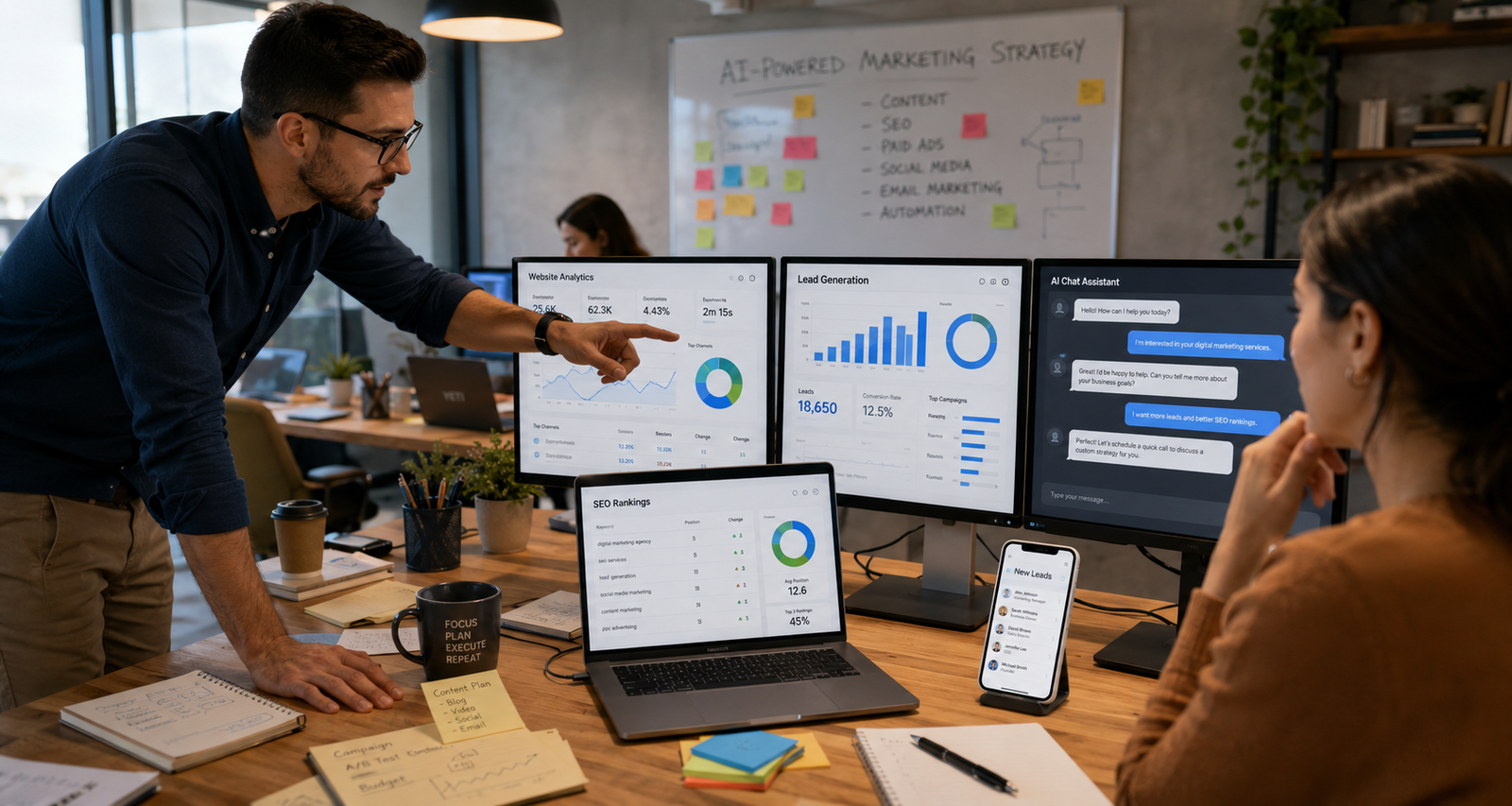
06 May 2026
By PRAVEEN S
AI in Digital Marketing: How Businesses Are Using ChatGPT to Get More Leads in 2026
Introduction: The Rules of Lead Generation Have Changed
If your marketing playbook looks the same as it did two years ago, you're already behind.
In 2026, AI in digital marketing isn't an experiment anymore — it's the engine running behind every competitive campaign. Businesses that once spent weeks crafting email sequences or manually scoring leads are now doing it in minutes, with better results and fewer resources.
The shift isn't just about speed. It's about precision. ChatGPT for lead generation, AI-powered personalization, and predictive analytics are helping brands reach the right people at the right moment — before competitors even know the opportunity exists.
Here’s what it looks like when businesses actually apply these strategies in real-world marketing.
How ChatGPT Is Powering Lead Generation Right Now
Conversational AI That Qualifies Leads 24/7
One of the most impactful applications of ChatGPT for lead generation is replacing static contact forms with intelligent, conversational flows. Instead of asking visitors to fill out a generic form, AI chatbots now ask contextual questions — budget, timeline, pain points — and build a rich lead profile in real time.
Prospects today expect instant answers in whichever channel they're already using, and conversational AI captures that intent immediately, qualifying it and moving serious buyers directly toward a booked meeting.
The result? Fewer dead-end form submissions, more sales-ready conversations.
Hyper-Personalized Outreach at Scale
Generic email blasts are dead. In 2026, AI tools analyze behavioral data, firmographic signals, and browsing history to automatically generate outreach that feels one-to-one — even when it's going to thousands of prospects.
AI makes hyperpersonalization possible at scale, with marketing platforms automatically sending different content versions based on the specific company, industry, and stage in the buyer journey.
AI Marketing Automation: Where the Real Efficiency Lives
Smarter Lead Scoring, Not Just Faster Lead Scoring
Traditional lead scoring relied on gut instinct and simple rules. AI flips that entirely. Predictive models now analyze conversion history, engagement patterns, and intent signals to rank prospects by likelihood to buy.
Research shows the chance of conversion drops by 80% if you wait longer than five minutes to follow up — and in 2026, AI agents are increasingly handling these time-critical tasks automatically, from instant alerts to personalized email sequences triggered by specific page visits.
Content Creation That Matches Search Intent
Over half of marketers now use AI tools to optimize content for search engines and email campaigns, while another 50% actively use AI assistance in content creation itself.
The smarter move isn't using AI to produce more content — it's using it to produce better-targeted content. Tools like ChatGPT help identify what questions buyers are actually asking, then structure answers that satisfy both human readers and AI-powered search engines like Google's AI Overviews and Perplexity.
Practical Business Examples
E-commerce Brand: A mid-sized online retailer integrated an AI chatbot on their product pages. Rather than losing potential customers who had questions about sizing or shipping, the chatbot responded immediately, captured their details, and guided them through an automated follow-up journey. Conversion on those chat interactions ran 3x higher than standard form fills.
B2B SaaS Company: A software company used ChatGPT to rewrite their blog content for GEO (Generative Engine Optimization) — structuring articles so they'd be cited in AI-generated answers. Within 90 days, branded mentions in ChatGPT and Google AI Overviews increased significantly, bringing in warmer inbound leads who already understood the product.
Marketing agencies like Findway Digital have been applying this AI-first approach for their clients — combining conversational lead capture with AI-driven content strategies to build pipelines that don't rely on ad spend alone. You can explore their approach at findwaydigital.com.
Digital Marketing Trends 2026: What's Actually Shaping Strategy
GEO Is the New SEO
In 2026, Generative Engine Optimization (GEO) is becoming critical — it's the practice of ensuring your content appears inside AI-generated answers, summaries, and overviews across platforms like ChatGPT, Perplexity, and Google.
ChatGPT alone is driving more than 87% of AI referral traffic, while Google's AI Overviews now appear in roughly 25% of all searches — up from 13% just a year ago. If your content isn't structured to be cited by these tools, you're invisible to a fast-growing segment of buyers.
First-Party Data Is Non-Negotiable
As third-party cookies fade and privacy regulations tighten, AI tools that work with first-party behavioral data are becoming the backbone of targeting strategies. Businesses collecting their own intent signals — through chatbots, quizzes, gated content — have a significant edge.
Common AI Marketing Mistakes Businesses Still Make in 2026
1. Using AI to produce volume, not value. More AI content without a clear strategy just adds noise. Quality and intent-alignment matter far more than output speed.
2. Ignoring the human layer. The most successful businesses in 2026 blend AI with human strategy, creativity, and oversight. Letting AI run completely unchecked leads to generic messaging that loses trust fast.
3. Optimizing only for traditional search. If you're still focused solely on Google blue links, you're chasing a shrinking audience. GEO and AEO optimization need to be part of the mix.
4. Skipping transparency. Research shows that 83% of consumers expect disclosure when AI is being used — making transparency a strategic priority, not just an ethical one.
FAQ
Q: Is ChatGPT actually useful for small business lead generation? Yes — especially for automating follow-ups, creating personalized email sequences, and building chatbot flows that qualify visitors without human involvement. Even lean teams can compete with enterprise-level lead nurturing.
Q: What's the difference between SEO and GEO? Traditional SEO mainly focuses on improving visibility in Google’s standard search rankings. GEO (Generative Engine Optimization) focuses on making your content structured and authoritative enough to be cited by AI tools like ChatGPT and Google AI Overviews. Both matter in 2026 — but GEO is the faster-growing priority.
Q: How do I start using AI marketing automation without a big budget? Start with one use case: either an AI chatbot on your site or AI-assisted email personalization. Prove ROI there, then expand. Tools like HubSpot's AI features or ChatGPT integrated with your CRM offer accessible entry points.
Conclusion: AI Tools for Businesses That Want to Grow Smarter
The businesses winning in 2026 aren't necessarily spending more — they're thinking more clearly about where AI creates real leverage. ChatGPT for lead generation, predictive scoring, GEO content strategies, and automated follow-ups are all working together to create pipelines that compound over time.
The key is strategy before software. Teams like Findway Digital understand that AI tools only perform as well as the thinking behind them — which is why blending automation with genuine expertise is still what separates results from noise.
If you're ready to put AI to work in your marketing, start by auditing where your lead generation breaks down. That's usually where the biggest gains are hiding.

22 Apr 2026
By PRAVEEN S
Google Ads vs Facebook Ads: Which is Better for Your Business in India?
By Findway Digital | Digital Marketing Experts
If you're a business owner in India trying to grow your brand online, you've probably asked yourself this question: Should I invest in Google Ads or Facebook Ads? It's one of the most common dilemmas in the world of digital marketing in India, and the answer isn't as simple as picking one over the other. At Findway Digital, we work with businesses across industries to craft the right paid advertising strategy — and the truth is, both platforms are powerful, but for very different reasons.
Let's break it down so you can make a smarter, data-driven decision for your business.
Understanding the Core Difference
Before comparing costs or results, it's important to understand the fundamental difference between the two platforms.
Google Ads operates on search intent. When someone types "best digital marketing agency in Madurai" or "affordable SEO services near me," they are actively looking for a solution. Your ad appears at the exact moment of intent — making Google Ads one of the most powerful tools for lead generation in India.
Facebook Ads (which includes Instagram Ads) operates on interest-based targeting. Users aren't necessarily searching for your product, but Facebook's algorithm places your ad in front of people who are likely to be interested based on their demographics, behavior, and online activity. This makes Facebook ideal for brand awareness campaigns, product discovery, and reaching a broader audience affordably.
Google Ads in India: Strengths and Best Use Cases
Google processes over 8.5 billion searches per day globally, and India is one of its largest markets. With increasing smartphone penetration and affordable data plans, Google search advertising in India has never been more accessible.
When Google Ads Works Best:
- High-intent purchases — If someone is searching for "best accounting software India" or "buy running shoes online," they're ready to act. Google Ads captures this decision-making moment.
- Service-based businesses — Lawyers, doctors, CA firms, coaching institutes, and local service providers see excellent ROI through Google Search Ads.
- E-commerce product listings — Google Shopping Ads help Indian e-commerce brands showcase products directly in search results.
- Remarketing — Show your ads to people who have already visited your website, keeping your brand top of mind.
At Findway Digitals, our Google Ads management services focus on smart keyword targeting, Quality Score optimization, and conversion tracking to ensure every rupee you spend delivers measurable results.
Google Ads Cost in India
The cost-per-click (CPC) on Google Ads in India varies by industry. Competitive sectors like real estate, insurance, and legal services can have CPCs ranging from ₹50 to ₹300+, while niche or local businesses may pay as low as ₹10–₹30 per click. The key is targeting the right keywords and optimizing your landing pages — something our team specializes in.
Facebook Ads in India: Strengths and Best Use Cases
India has over 400 million Facebook users and more than 500 million Instagram users, making it one of the most lucrative markets for social media advertising. Facebook Ads allow you to target users by age, gender, location, language, interests, job title, income bracket, and even purchasing behavior.
When Facebook Ads Work Best:
- Brand awareness and reach — If you're launching a new brand or product, Facebook Ads can help you reach millions of targeted users at a low cost.
- Visual products — Fashion, food, beauty, home décor, and lifestyle brands thrive on Instagram and Facebook due to the visual nature of the platform.
- B2C businesses — Direct-to-consumer brands in India have seen exceptional results using Facebook and Instagram advertising.
- Retargeting warm audiences — Facebook's Pixel technology allows you to retarget website visitors and app users with precision.
- Regional targeting — Want to reach Tamil-speaking users in Tamil Nadu or Hindi-speaking customers in UP? Facebook's language and regional targeting makes it easy.
Facebook Ads Cost in India
Facebook Ads are generally more affordable than Google Ads in India. The average CPM (cost per 1,000 impressions) can range from ₹50 to ₹200, and CPC rates often fall between ₹5 and ₹50, depending on your niche and creative quality. For businesses with a limited budget, Facebook Ads offer a lower barrier to entry.
Head-to-Head Comparison
|
Feature |
Google Ads |
Facebook Ads |
|
User Intent |
High (active search) |
Low to Medium (passive browsing) |
|
Best For |
Lead generation, conversions |
Brand awareness, engagement |
|
Targeting |
Keyword-based |
Demographic & interest-based |
|
Average CPC in India |
₹20–₹300+ |
₹5–₹50 |
|
Visual Appeal |
Text-heavy |
Highly visual |
|
Platform Reach |
Google Search, YouTube, Display |
Facebook, Instagram, Messenger |
|
Ideal Budget |
₹15,000+/month |
₹5,000+/month |
So, Which One Should You Choose?
Here's the honest answer from the experts at Findway Digitals: The best platform depends on your business goals, target audience, and budget.
- If you want immediate leads and conversions, start with Google Ads.
- If you want to build brand awareness or have a visually appealing product, invest in Facebook and Instagram Ads.
- If you have a moderate to healthy budget, run both simultaneously for a full-funnel digital advertising strategy in India.
Many of our clients in Coimbatore, Chennai, Bangalore, Madurai, and across India see the best results when they use Google Ads to capture demand and Facebook Ads to create demand. Together, they form a powerful 360-degree online marketing strategy.
How Findway Digitals Can Help
At Findway Digitals, we don't believe in a one-size-fits-all approach. Our team of certified Google Ads specialists and Facebook Ads experts analyzes your business, studies your competitors, and designs a customized paid marketing strategy that maximizes your return on investment.
Whether you're a startup looking for your first customers or an established brand scaling your reach, we have the tools, talent, and track record to deliver results.
Ready to grow your business with smart digital advertising? 📞 Contact Findway Digitals today and get a free digital marketing consultation.
Frequently Asked Questions
Q1. Which is cheaper — Google Ads or Facebook Ads in India? Facebook Ads are generally more affordable, with CPCs starting as low as ₹5. Google Ads tend to cost more but deliver higher purchase intent.
Q2. Which platform is better for small businesses in India? Facebook Ads are ideal for small businesses with limited budgets due to lower costs. Google Ads work better when customers are actively searching for your product or service.
Q3. Can I run both Google Ads and Facebook Ads together? Yes, and it's highly recommended! Google captures existing demand while Facebook creates new demand — together they form a complete marketing funnel.
Q4. Which is better for lead generation in India? Google Ads typically delivers stronger lead generation results since users are actively searching with intent. It's perfect for service-based businesses like clinics, coaching centers, and agencies.
Q5. How much budget do I need to start advertising in India? You can start Facebook Ads with as little as ₹5,000/month and Google Ads from ₹15,000/month. The right budget depends on your industry, goals, and competition.
Q6. How can Findway Digitals help me choose the right platform? Findway Digitals offers a free consultation to analyze your business goals and recommend the best-fit ad strategy. Our certified experts manage campaigns on both platforms for maximum ROI.
20 Apr 2026
By PRAVEEN S
Website Not Getting Traffic? 10 SEO Mistakes You Must Fix in 2026
Still publishing content regularly — and watching the traffic flatline?
You're not alone. And the fix isn't publishing more. It's publishing smarter.
SEO in 2026 has fundamentally shifted. Google, AI Overviews, and voice search now reward content that answers intent, demonstrates authority, and loads fast on every device. If your website isn't getting traffic, you're likely making one (or more) of the 10 mistakes below.
Let's diagnose and fix them — one by one.
1. You're Targeting Keywords Instead of Search Intent
Why this kills your traffic: Search engines no longer match keywords — they decode why someone is searching. A page stuffed with the right words but solving the wrong problem will not rank.
The mistake: Writing content around keywords without addressing the user's actual goal.
The fix:
-
Identify the intent behind every target keyword (informational, navigational, commercial, transactional)
-
Start by answering the main question directly within the first 100 words to immediately address user intent.
-
Structure your headings around questions your audience actually asks — like "How do I increase website traffic fast?"
Pro tip: Use Google's "People Also Ask" and "Related Searches" to uncover real user intent, not just volume data.
2. Your Content Isn't Built to Be Scanned
Why it matters: Studies consistently show users scan content before committing to reading it. AI systems do the same — they extract structure, not just keywords.
The mistake: Publishing dense paragraphs with no visual hierarchy.
The fix:
-
Keep paragraphs to 2–3 lines maximum
-
Use descriptive H2s and H3s that work as standalone answers
-
Bold key phrases, not random words
-
Add a TL;DR or key takeaway box at the top of long posts
3. You're Ignoring AEO — Answer Engine Optimization
Why it matters in 2026: AI Overviews (Google SGE), ChatGPT search, and Perplexity AI are now answering questions instead of showing links. If your content isn't structured to be cited, you're invisible to an entire channel.
The mistake: Writing content that explains, but never directly answers.
The fix:
-
Place a concise, direct answer immediately after each H2
-
Add an FAQ section at the end of every post (like this one)
-
Use plain language — no jargon in your definitions
-
Format key answers as 40–60 word summaries that AI can lift cleanly
4. Slow Page Speed Is Silently Killing Your Rankings
Why it matters: Google's Core Web Vitals directly influence rankings. A page that loads in 4 seconds loses significant organic and paid traffic — and in 2026, the threshold for "acceptable" has only gotten tighter.
The mistake: Launching content on unoptimized infrastructure and never measuring load performance.
The fix:
-
Compress and serve images in WebP or AVIF format
-
Move to a host with strong LCP (Largest Contentful Paint) benchmarks
-
Defer non-critical JavaScript and eliminate render-blocking resources
-
Run monthly checks with Google PageSpeed Insights or GTmetrix
5. You're Not Optimizing for Mobile — You're Just Responsive
Why it matters: There's a difference between a site that works on mobile and one that's built for mobile. Google now prioritizes the mobile version of your website when indexing content.
The mistake: Treating mobile optimization as a checkbox, not a primary design decision.
The fix:
-
Check each page on an actual device instead of relying only on Chrome DevTools.
-
Ensure tap targets are large enough and text doesn't require zooming
-
Prioritize above-the-fold speed on mobile specifically
-
Simplify navigation for thumb-based interaction
6. You're Missing Local SEO and GEO Targeting
Why it matters: Search results in 2026 are hyper-personalized by location. A business in Chennai and one in Chennai show different results for the same query. If you're not optimized for your geography, you're losing to competitors who are.
The mistake: Publishing generic, location-agnostic content when your audience is local.
The fix:
-
Include city, region, or neighborhood keywords naturally within your content and metadata
-
Keep your Google Business Profile fully updated with categories, hours, and posts
-
Build dedicated local landing pages for each service area you target
-
Earn local backlinks from regional directories, news outlets, and partner sites
Understanding how to implement GEO strategies without over-engineering them is a common challenge — especially for businesses expanding into new regions. Focusing on hyper-local relevance rather than broad geographic targeting tends to produce faster results.
7. You're Publishing Without Topical Authority
Why it matters: Google's Helpful Content system rewards depth and expertise. If your blog covers 20 unrelated topics, it signals that you're a generalist — and generalists don't rank for competitive queries.
The mistake: Publishing whatever seems popular without building a clear niche.
The fix:
-
Define your site's core topic and stick to it
-
Build topic clusters: one pillar page supported by 5–10 supporting articles
-
Interlink aggressively within clusters to pass authority and signal depth
-
Only expand your niche after dominating your core subject
8. You're Letting Your Content Go Stale
Why it matters: Content decay is real. Pages that ranked well in 2023 can lose 30–50% of their traffic by 2026 if never updated. Google favors freshness, especially in competitive niches.
The mistake: Adopting a "publish and forget" content strategy.
The fix:
-
Audit your top 20 pages every quarter
-
Update statistics, examples, screenshots, and outdated references
-
Add new sections reflecting current trends or questions
-
Change the published/updated date only after making meaningful updates
9. Technical SEO Issues Are Blocking Your Rankings
Why it matters: Brilliant content on a broken site is invisible content. Crawl errors, missing sitemaps, and indexing issues prevent search engines from even seeing your work.
The mistake: Focusing entirely on content while ignoring the technical foundation.
The fix:
-
Submit and maintain an up-to-date XML sitemap via Google Search Console
-
Fix all crawl errors and broken internal links
-
Ensure no important pages are accidentally marked noindex
-
Implement schema markup (Article, FAQ, HowTo) to help search engines understand your content's structure
10. You're Making Content Decisions Without Data
Why it matters: Gut instinct doesn't scale. The SEO strategies that work in 2026 are built on continuous feedback loops — publish, measure, adjust, repeat.
The mistake: Treating SEO as a set-and-forget tactic rather than an ongoing process.
The fix:
-
Install Google Search Console and Google Analytics 4 right from the start.
-
Track keyword rankings, CTR, and bounce rate monthly
-
Identify your top 5 performing pages and double down on what makes them work
-
Use data to kill underperforming content, not just create new content
Quick Recap: Why Your Website Isn't Getting Traffic
If your traffic is stagnant, you're likely dealing with one or more of these:
-
Targeting keywords, not intent
-
Ignoring AI answer engines (AEO)
-
Skipping local SEO and GEO targeting
-
Publishing unstructured, hard-to-scan content
-
Poor page speed and mobile experience
-
No topical authority or content clusters
-
Outdated content with no refresh strategy
-
Unresolved technical SEO issues
-
No performance tracking or data-driven adjustments
The good news? Every single one of these is fixable.
FAQs: SEO Traffic in 2026
What is the fastest way to increase website traffic in 2026?
The fastest path is a combination of intent-matched content, AEO formatting (direct answers + FAQ sections), fixing Core Web Vitals, and refreshing your highest-potential existing pages. New content takes time; optimizing what you already have delivers results faster.
Why is my website not getting traffic even though I'm doing SEO?
The most common culprits are misaligned search intent, poor content structure, technical crawl issues, or a lack of topical depth. SEO effort without strategic direction produces very little return.
Does SEO still work in 2026?
Absolutely — but SEO in 2026 means optimizing across three dimensions: traditional search (SEO), AI-generated answers (AEO), and location-based results (GEO). Focusing on only one of these leaves significant traffic on the table.
How important is local SEO in 2026?
Critical — especially for service businesses and brick-and-mortar operations. With AI-personalized search results, location relevance can determine whether you appear at all for a significant portion of your target audience.
How frequently should you refresh your website content?
High-traffic and high-competition pages should be reviewed every 3 months. Lower-traffic pages can be updated every 6 months. Prioritize updates based on traffic decline, ranking drops, or outdated information — not just a fixed schedule.
Final Word
If your website isn't getting traffic, the problem isn't your effort — it's the strategy behind it.
SEO in 2026 rewards websites that are fast, clear, authoritative, and structured for both humans and AI. When you align your content with how people actually search — and how AI systems retrieve answers — traffic stops being a struggle and starts being a result.
Start with the mistakes that feel most familiar. Fix one. Then the next. Momentum builds faster than you think.
And if you'd rather not figure it all out alone — that's exactly where a team like Findway Digital comes in. With over a decade of hands-on experience in SEO, web development, and digital marketing, they help businesses cut through the noise and build visibility that actually converts. Whether you're starting from scratch or fixing what's broken, having the right partner makes the process faster and the results more predictable.
Because in 2026, the businesses winning online aren't just working harder — they're working with the right strategy, and the right people behind it.

17 Apr 2026
By PRAVEEN S
How to Generate Quality Leads Using Digital Marketing (Proven Strategies 2026)
In 2026, most businesses are not struggling to get traffic—they are struggling to get the right traffic.
You can invest in ads, publish content regularly, and still end up with leads that never convert. The reason is simple: modern users are more informed, algorithms are more selective, and only highly targeted, intent-driven marketing delivers results.
Today, less than a small percentage of visitors actually convert into leads. That means most potential customers leave without taking action. The real challenge is no longer generating leads—it is generating quality leads that are ready to convert.
What Are Quality Leads—and Why They Matter in 2026
A quality lead is defined by three factors: intent, relevance, and timing.
A lead becomes valuable when:
- They are actively searching for a solution
- They match your ideal customer profile
- They are closer to making a decision
In 2026, lead generation has shifted from simple form submissions to understanding user behavior and intent. Businesses now focus on identifying who is visiting their website, what they are looking for, and how they interact with content.
This shift is driven by:
- Rising customer acquisition costs
- Increased competition in digital channels
- The need for personalized user experiences
Focusing on quality leads helps improve conversion rates, reduce wasted marketing spend, and build long-term customer relationships.
Key Digital Marketing Channels for Lead Generation
In 2026, successful lead generation is not about using one channel—it is about integrating multiple channels strategically.
SEO (Search Engine Optimization)
SEO continues to be a strong foundation for long-term lead generation. However, it now goes beyond traditional search engines.
Modern SEO includes:
- Optimizing for AI-driven search results
- Targeting intent-based keywords such as “how to generate quality leads”
- Creating content that answers real user problems
PPC (Pay-Per-Click Advertising)
Paid advertising is effective when focused on high-intent users. Instead of broad targeting, campaigns should prioritize users who are already searching for solutions.
Key focus areas:
- High-conversion keywords
- Optimized landing pages
- Continuous testing and refinement
Social Media and Micro-Communities
Large audiences are no longer as effective as engaged audiences. Niche communities and professional networks are becoming more valuable for lead generation.
Businesses are now focusing on:
- Thought leadership
- Community engagement
- Value-driven content
Email Marketing and First-Party Data
With increasing privacy regulations, first-party data has become essential. Email marketing remains one of the most reliable channels when combined with personalization and automation.
Content Marketing
Content marketing in 2026 is about depth, not volume. Generic content no longer performs well.
Effective content:
- Solves specific problems
- Builds trust and authority
- Guides users toward a decision
A data-driven agency like Findway Digital focuses on combining SEO, content strategy, and analytics to attract users who are more likely to convert rather than just increasing traffic.
Proven Strategies to Generate High-Converting Leads
Identify Visitor Intent Early
Instead of waiting for users to fill out forms, businesses now track visitor behavior to understand intent. This allows for proactive engagement and better targeting.
Create Problem-Focused Lead Magnets
Generic resources no longer work. Lead magnets must address a specific problem and provide immediate value.
Examples:
- Targeted guides
- Practical templates
- Actionable checklists
Optimize Conversion Paths
Many leads are lost due to friction in the user journey.
Common issues include:
- Long forms
- Slow-loading pages
- Unclear messaging
Simplifying the experience improves both lead quality and conversion rates.
Use AI for Real-Time Optimization
AI tools are now central to digital marketing strategies.
They help in:
- Predicting user behavior
- Personalizing content dynamically
- Automating follow-ups
Strengthen Trust Signals
Trust plays a critical role in conversions.
Effective trust elements include:
- Case studies
- Testimonials
- Real user feedback
Build Referral and Advocacy Systems
Satisfied customers can become a strong source of new leads. Referral systems encourage users to share and recommend your services.
Businesses that implement continuous optimization strategies—like those used by Findway Digital—often see better results because decisions are based on real data rather than assumptions.
Importance of User Experience and Conversion Rate Optimization
User experience directly impacts lead generation performance. Even high-quality traffic will not convert if the experience is poor.
Key factors include:
- Fast page loading speed
- Mobile-friendly design
- Clear navigation
- Strong and visible calls to action
Improving user experience is one of the most effective ways to increase conversion rates without increasing traffic.
Common Mistakes to Avoid
Many businesses fail to generate quality leads due to avoidable mistakes:
- Focusing on traffic instead of intent
- Targeting the wrong audience
- Ignoring mobile optimization
- Using unclear or weak calls to action
- Not analyzing performance data
Successful lead generation requires continuous testing and refinement.
Future Trends in Lead Generation (2026 and Beyond)
Lead generation is evolving rapidly with new technologies and user behaviors.
Key trends include:
AI-driven marketing
AI is becoming central to decision-making, enabling more accurate targeting and automation.
First-party data strategies
Businesses are focusing on collecting and using their own data instead of relying on third-party sources.
Micro-community engagement
Smaller, highly engaged audiences are proving more valuable than large, passive ones.
Voice and AI search optimization
Content must adapt to conversational and AI-driven queries.
Predictive lead scoring
AI can now identify high-quality leads before they convert, allowing for better prioritization.
Frequently Asked Questions
What is a quality lead in digital marketing?
A quality lead is a potential customer who shows strong interest, matches your target audience, and has a high likelihood of conversion.
Which channel generates the best leads in 2026?
SEO and content marketing provide sustainable results, while PPC and social media can generate faster, high-intent leads when optimized correctly.
Why are most leads not converting?
Most leads fail to convert because of poor targeting, lack of personalization, and ineffective user experience.
How can I generate high-converting leads online?
Focus on understanding user intent, optimizing conversion paths, using data-driven strategies, and continuously improving your campaigns.
Conclusion
Generating quality leads in 2026 requires a shift from volume-based marketing to precision-driven strategies. Businesses that succeed are those that understand their audience, use data effectively, and continuously optimize their approach.
If your current strategy is generating traffic but not conversions, it is time to rethink your approach.
Focus on attracting the right audience, improving user experience, and building systems that convert interest into action. A structured, data-driven strategy will always outperform random marketing efforts.
13 Apr 2026
By PRAVEEN S
From SEO to GEO: Strategies for Businesses to Succeed in Google’s AI-Driven Search Results in 2026
The Shift From Ranking to Representation
For years, SEO focused on helping businesses rank higher in search results. That foundation still matters.
But in 2026, ranking alone is no longer the full picture.
Google’s search experience now includes AI-generated answers that summarize information before users explore further. This adds an entirely new dimension to visibility:
It’s not just about where you rank—it's about whether your content is represented in the answer itself.
At this stage, Generative Engine Optimization (GEO) takes on a key role.
SEO Built the Foundation — GEO Expands It
SEO ensures your content is:
- Discoverable
- Structured
- Relevant
GEO builds on that by ensuring your content is:
- Interpretable
- Reliable
- Usable within AI-generated responses
This doesn’t replace existing methods; it reflects how search behavior is changing.
Businesses that recognize this shift are aligning better with how visibility works today.
What’s Changing Inside Search Behavior
Users are interacting with search differently:
- They expect faster clarity, not multiple clicks
- They refine queries less because answers are more direct
- They rely on summarized insights before making decisions
As a result, Google prioritizes content that can:
- Answer clearly
- Provide context
- Be confidently referenced
This is where many businesses fall short not because of weak SEO, but because their content doesn’t align with how answers are generated.
Why Some Content Gets Picked (and Some Doesn’t)
Even among well-optimized pages, only certain content gets surfaced within AI answers.
Common patterns among selected content:
It Directly Addresses Real Scenarios
Content that reflects actual user situations performs better than general explanations.
Example:
- “Why traffic drops after ranking improvements”
- “Why users don’t click despite high visibility”
It Shows Depth Without Noise
Content that is clear and focused is easier to extract.
- No unnecessary expansion
- No repetition of common knowledge
- No vague statements
It Demonstrates Practical Understanding
Insights grounded in real observations tend to be more reliable.
This includes:
- Outcomes
- Patterns
- Context behind decisions
It Exists Within a Larger Content Ecosystem
Single pages rarely dominate.
Businesses that consistently cover a topic from multiple angles:
- Build stronger relevance
- Become easier to reference
- Maintain visibility over time
How Businesses Can Strengthen Their Position in AI Search
Without changing the core of SEO, businesses can expand their approach:
1. Shift From Topic Coverage to Situation Coverage
Instead of writing broadly about a topic, focus on specific user conditions.
This improves both clarity and relevance.
2. Structure Content for Answerability
Content should make it easy to extract meaning:
- Clear sections
- Logical progression
- Direct explanations
This supports both users and AI systems.
3. Build Connected Depth Around Core Areas
Rather than spreading across too many topics, strengthen authority within focused areas.
This creates consistency, which improves visibility over time.
4. Prioritize Clarity Over Volume
Publishing more content is less impactful than publishing usable content.
Clarity improves:
- Engagement
- Retention
-
Inclusion in search-generated responses
A Practical Scenario
In a competitive service segment, one business continued to hold strong positions across several high-intent keywords. On paper, nothing had changed.
But gradually, a different trend started to appear.
Search impressions remained steady. Rankings were consistent. Yet, the way users interacted with those results began to shift. Fewer clicks came from informational queries, and users who did visit were more selective in their actions.
The issue wasn’t visibility, it was how that visibility was being experienced.
Rather than expanding content volume, the business made a quieter adjustment. They began focusing more on how their content reflected real user situations questions that came up during actual conversations, not just search trends.
Content became more direct. Explanations became simpler. Topics became more connected.
Gradually, the change showed up not necessarily in rankings, but in how users engaged. Visits became more intentional, interactions improved, and enquiries reflected clearer intent.
What changed wasn’t the foundation but how it aligned with the way search now delivers information.
Questions Businesses Are Asking Right Now
1. How does GEO differ from traditional SEO in practice?
Traditional SEO focuses on helping pages rank and get discovered. GEO extends that by ensuring content can be clearly understood, trusted, and used within AI-generated answers focusing more on meaning than just keywords.
2. Why do some pages appear in AI answers while others don’t?
Content that is specific, clear, and directly useful is more likely to be selected. Generic or surface-level content often gets ignored, even if it ranks well.
3. What type of content is more likely to be referenced?
Content that answers real questions, reflects practical understanding, and is structured for clarity tends to perform better especially when it’s based on real scenarios.
4. How can we improve visibility beyond rankings?
By improving how content communicates, focusing on clarity, relevance, and real user intent rather than just keyword placement.
5. Is content structure more important now than before?
Yes. Clear structure, logical flow, and direct answers make content easier to interpret and more likely to be used in search-generated responses.
6. How do we align with changing user behavior?
By focusing on what users are trying to solve, not just what they search. Content should reflect real problems, decisions, and intent.
7. How do we build long-term visibility in search?
By creating consistent, in-depth content around a focused area instead of covering too many unrelated topics.
8. How do we adapt without overhauling everything?
Start by improving existing content to make it clearer, more relevant, and better aligned with user intent. Even small changes can lead to significant results over time.
Moving Forward
As search continues to evolve, the conversation is no longer about choosing one approach over another.
The fundamentals that helped businesses become visible in search still play an important role. At the same time, there’s a growing need to align with how information is now presented within search itself.
Visibility today operates on two levels:
- Being present when users search
- Being reflected in how answers are formed
Businesses that are adapting well are not replacing what already works. Instead, they are extending it ensuring their content is not only discoverable, but also clear, reliable, and easy to interpret.
This shift is subtle, but its impact is becoming more visible over time.
Teams like Findway Digital are approaching this by strengthening core SEO foundations while refining how content aligns with modern search behavior focusing on clarity, intent, and long-term visibility.
Final Thought
Search is no longer just a discovery channel, it's becoming a decision layer.
Visibility still matters but inclusion within answers is what truly sets businesses apart.
Businesses that evolve their approach while keeping strong SEO foundations will not only maintain visibility but expand it within the way search now delivers answers.

08 Apr 2026
By PRAVEEN S
How to Create High-Converting Landing Pages for Service-Based Businesses
Why Your Landing Page Isn’t Converting (And How to Fix It)
You’re driving traffic to your website—through ads, SEO, or social media—but visitors aren’t turning into leads.
Sound familiar?
For most service-based businesses, the problem isn’t traffic. It’s the landing page.
A poorly structured page confuses users, lacks trust, and fails to guide them toward action. On the other hand, high-converting landing pages are built with one goal: turning visitors into customers.
Let’s break down exactly how you can create one that actually works.
Quick Answer: What Makes a High-Converting Landing Page?
A high-converting landing page includes:
- A clear, benefit-driven headline
- Focused and persuasive copy
- Strong call-to-action (CTA)
- Trust signals like testimonials and reviews
- Fast, mobile-friendly design
- Minimal distractions and a single goal
1.Start with a clear, engaging headline that grabs attention instantly
Your headline decides whether a visitor stays or leaves within seconds.
Instead of being generic, focus on outcomes.
Weak headline:
“Professional Marketing Services”
Strong headline:
“Get More Leads and Grow Your Business with Proven Marketing Strategies”
The difference? One describes a service. The other promises a result.
2. Focus on User Intent, Not Just Design
When it comes to landing page design for services, aesthetics alone won’t convert.
Visitors are asking:
- Can you solve my problem?
- Are you trustworthy?
- What do I get out of this?
Your page should answer these instantly.
Structure that works:
- Headline (hook)
- Subheadline (clarify value)
- Benefits (what they gain)
- Proof (why trust you)
- CTA (what to do next)
3. Write Copy That Feels Human and Persuasive
People don’t connect with robotic content—they connect with clarity and relevance.
Use a simple framework:
Problem → Solution → Result
Example:
“Struggling to generate consistent leads? Our data-driven strategies help service-based businesses attract high-quality clients and grow faster.”
This directly speaks to the reader’s pain and offers a solution.
4. Use Strong and Strategic CTAs
Your CTA is where conversions happen.
High-performing CTA examples:
- “Book a Free Consultation”
- “Get Your Free Quote”
- “Start Growing Today”
Best practices:
- Place CTAs above the fold
- Repeat them throughout the page
- Use action-oriented language
Make it easy for users to take the next step.
5. Build Trust with Social Proof
In service-based business marketing, trust is everything.
People won’t choose you unless they believe you can deliver.
Add:
- Client testimonials
- Case studies
- Reviews
- Certifications or recognitions
Example:
“We helped a local business increase leads by 120% in just 3 months.”
This makes your claims believable.
6. Keep It Simple and Distraction-Free
One of the biggest mistakes? Too much information.
A landing page should have one goal only.
Avoid:
- Too many links
- Cluttered layouts
- Unnecessary text
Focus on:
- Clean design
- Clear messaging
- Easy navigation
Simplicity improves conversions.
7. Optimize for Mobile and Speed
Most users will visit your landing page on their phones.
If your page is slow or difficult to use, they’ll leave instantly.
Optimization checklist:
- Loads in under 3 seconds
- Mobile-responsive design
- Easy-to-fill forms
- Clickable buttons
Speed and usability directly impact conversions.
8. Use Short, Effective Forms
Long forms reduce conversions.
Ask only what’s necessary.
Ideal form fields:
- Name
- Phone number
- Service requirement
The easier it is to fill out, the more leads you’ll get.
9. Continuously Improve with Conversion Optimization
Creating a landing page is not a one-time task.
To improve performance, apply conversion optimization tips like:
- A/B testing headlines and CTAs
- Analyzing user behavior
- Tracking conversion rates
Even small changes can lead to significant improvements.
10. Learn from Real-World Examples
Let’s compare two scenarios:
Low-converting page:
- Generic headline
- No testimonials
- Weak CTA
- Cluttered layout
High-converting page:
- Clear benefit-driven headline
- Real customer reviews
- Clean, focused design
- Strong CTA: “Book Your Service Now”
The difference is strategy—not luck.
11. Why Strategy Matters More Than Just Design
Many businesses focus only on design—but high conversions come from strategy.
This includes:
- Understanding user behavior
- Structuring content effectively
- Aligning SEO with conversion goals
This is where experienced teams like Findway Digital bring value. Instead of just building pages, they focus on creating performance-driven landing pages tailored for service businesses—combining design, SEO, and conversion psychology to deliver measurable results.
Common Mistakes to Avoid
- Writing vague or generic headlines
- Not including trust signals
- Using too many CTAs or no clear CTA
- Ignoring mobile optimization
- Overloading the page with information
Avoiding these can significantly improve your results.
FAQs
What is a high-converting landing page?
A high-converting landing page is a focused webpage designed to encourage users to take a specific action, such as booking a service or filling out a form.
How can I increase conversions on my landing page?
You can improve conversions by optimizing your headline, adding strong CTAs, using testimonials, simplifying design, and testing different variations.
What should a service-based landing page include?
It should include a clear headline, benefits, trust signals, a strong CTA, and a user-friendly design tailored to the audience.
Why is landing page design important for services?
Because services are intangible, design helps build trust, communicate value, and guide users toward taking action.
How long should a landing page be?
It should be long enough to build trust and answer user questions, but concise enough to keep attention and drive action.
Conclusion: Turn Clicks into Customers
Creating high-converting landing pages is not about tricks—it’s about clarity, trust, and strategy.
When you combine:
- Clear messaging
- Strong CTAs
- Clean design
- Ongoing optimization
You create a system that consistently turns visitors into leads.
Final Call to Action
If your current landing page isn’t delivering results, it’s time to fix what’s holding it back.
Audit your page, apply these strategies, and start optimizing for real conversions.
Because the traffic you’re already getting?
It deserves to convert.

03 Apr 2026
By PRAVEEN S
Social Media Marketing Strategy for Local Businesses (Instagram + Facebook Guide)
If you run a local business like a salon, a restaurant, a boutique gym, or a dental clinic and you're not showing up consistently on Instagram and Facebook, you're leaving real money on the table. Not just followers. Money.
The good news? You don't need a massive budget or a full marketing team to make social media work for you. What you need is the right strategy applied consistently. This guide breaks it down platform by platform and tactic by tactic.
Why Local Businesses Can't Afford to Ignore Social Media in 2026
People don't ask their neighbors for restaurant recommendations anymore. They check Instagram. They look at Facebook reviews. They watch a 30-second Reel and decide to book an appointment.
In 2025 and into 2026, local discovery has shifted heavily toward social platforms. Google's local pack now pulls signals from social engagement. Instagram's algorithm surfaces content to nearby users based on location. Facebook remains the dominant platform for community-level word-of-mouth.
If your business isn't visible on these platforms, your competitors are filling that gap.
Instagram Marketing Strategies for Local Businesses
1. Use Reels to Reach New Local Customers
Reels are Instagram's most powerful reach tool right now. Unlike static posts or Stories, which mostly reach your existing followers, Reels get pushed to new audiences through the Explore page and the Reels tab.
Few tools give a small business this level of local visibility for free.
A bakery in Chennai can post a 20-second Reel showing fresh croissants coming out of the oven, add a location tag, and reach thousands of people in the city who have never heard of them. A physiotherapy clinic can post a quick “3 signs you have poor posture” video and build authority with local viewers overnight.
What makes a Reel work for local businesses:
- Keep it under 30 seconds
- Lead strong — viewers decide to stay or leave in under 2 seconds
- Choose audio with an upward arrow icon — that signals it's currently trending.
- Add your city name naturally in the caption
- Close with a simple CTA — "DM us to book" or "tap the link in bio.
Aim for 3–4 Reels per week when starting out. Consistency beats perfection.
2. Optimize Your Instagram Profile for Local Search
Your Instagram bio is your digital storefront. Most local businesses underuse it.
Here’s what an optimized profile looks like:
- Name field: Business name + service (e.g., “Priya’s Salon | Hair & Skin, Mumbai”)
- Bio: 2–3 lines explaining what you offer and who it's for
- Link: Direct users to booking, menu, or WhatsApp
- Highlights: Menu, Reviews, Before/After, Location
A clear, local, and action-oriented profile converts visitors into customers.
3. Build Engagement With Stories and Polls
Stories keep your audience engaged. While Reels bring in new users, Stories build relationships.
Use Stories for:
- Behind-the-scenes content
- Run polls like 'Pick our next flavour' or 'Which service do you want next?'
- Countdown stickers for offers or launches
- Customer reposts (user-generated content builds trust fast)
Example: A clothing boutique in Hyderabad increased DM inquiries by 40% just by posting “Outfit of the Day” Stories with a “Shop this look” sticker.
4. Use Location Tags and Local Hashtags
Every post and Reel should include a location tag. It helps Instagram show your content to nearby users.
Pair this with a local hashtag strategy:
- City-level: #MumbaiEats, #BangaloreFitness
- Area-level: #BandraRestaurant, #KoramangalaFitness
- Niche + location: #WeddingPhotographyDelhi
Avoid generic hashtags like #love or #food. They are too competitive.
Facebook Marketing Strategies for Local Businesses
1. Run Hyper-Targeted Facebook Ads
Facebook ads remain one of the most powerful tools for local businesses because of precise targeting.
You can target:
- Specific radius (e.g., 5–8 km)
- Age groups
- Interests
- Life events
Start with ₹300–₹500 per day and run simple offers like:
- “Get 20% off your first visit”
- “Free consultation this week”
- “₹500 off on orders above ₹2000”
Lead generation ads work especially well for service-based businesses.
2. Use Retargeting to Bring Back Warm Leads
Most users don’t convert on the first interaction. Retargeting helps bring them back.
Install Facebook Pixel to track visitors and show them follow-up ads.
Example: Someone visits your booking page but doesn’t book. Retarget them with a reminder offer.
Retargeting ads often perform 2–5x better than cold ads.
3. Build Community With a Facebook Group
Facebook Groups are highly underrated for local businesses.
You own the conversation — no algorithm deciding who sees it.
Examples:
- Fitness studio: “Healthy Living in [City]”
- Real estate: “[City] Home Buyers Network”
- Tuition center: “[City] Academic Support Group”
Focus on value, not selling. Trust converts into long-term customers.
4. Leverage Facebook Reviews
Facebook reviews influence buying decisions just like Google reviews.
Ask happy customers to leave reviews.
Reply to every review — good or bad, every response builds credibility.
Common Social Media Mistakes
- Posting inconsistently
- Over-promoting instead of providing value
- Ignoring comments and DMs
- Using poor-quality visuals
- Not checking analytics
Quick-Win Tips You Can Implement Today
- Add your city name to your Instagram profile
- Post one Reel this week
- Ask 5 customers for reviews
- Run a simple Facebook ad
- Post one engaging Story
If managing all of this feels overwhelming, working with experts can help. Findway Digital specializes in helping local businesses generate real leads through a mix of organic content and paid strategies.
FAQ
Q1: How many times a week should a local business post on Instagram?
4–5 times per week is ideal. Consistency matters more than volume.
Q2: What is the minimum Facebook ads budget?
₹300–₹500 per day is enough to start.
Q3: Do hashtags still work?
Yes, but focus on niche and location-based hashtags.
Q4: Should I use Instagram or Facebook?
Both work best, but choose based on your audience demographics.
Q5: How do I get more followers?
Focus on reach using Reels, local tags, and collaborations.
Q6: Is hiring a marketing agency worth it?
Yes, especially if you want faster and measurable results.
30 Mar 2026
By PRAVEEN S
Lead Generation Systems That Run on Autopilot in 2026: A Complete Guide for Service Businesses
In 2026, the way service businesses generate leads has fundamentally changed. Traditional methods like manual follow-ups, cold outreach, and inconsistent referrals are no longer reliable in a fast-moving digital environment.
Today’s customers expect instant responses, personalized communication, and seamless experiences across every touchpoint.
To meet these expectations, forward-thinking businesses are building autopilot lead generation systems — structured digital ecosystems that continuously attract, nurture, and convert leads without constant manual effort.
This approach doesn’t just save time. It creates predictable growth.
Understanding Autopilot Lead Generation
An autopilot lead generation system is not a single tool or tactic. It’s a connected process where every stage of the customer journey is strategically designed and automated.
From the moment a potential customer discovers your business to the point they become a paying client, every interaction is guided by a system working in the background.
Instead of chasing prospects, your business becomes a magnet for qualified leads.
Why Automation is Essential in 2026
Customer behavior has evolved. Most buyers research extensively before making a decision, often interacting with multiple platforms before contacting a business.
Without automation, businesses struggle to keep up.
An automated system ensures that your business is always available, always responsive, and always delivering a consistent experience. Leads are captured at any time, follow-ups happen instantly, and communication remains relevant and timely.
More importantly, automation allows you to scale without increasing workload — a critical advantage for service-based businesses aiming for long-term growth.
The Foundation of a High-Performing System
Every successful lead generation system begins with attracting the right audience. Visibility alone is not enough; the focus must be on reaching people who are actively searching for your services.
This is where strategies like search engine optimization, paid advertising, and content marketing play a crucial role. When executed correctly, they bring in high-intent traffic that is more likely to convert.
Once visitors arrive, the experience they encounter determines everything.
A well-designed landing page communicates value instantly. It builds trust, removes friction, and guides users toward taking action. Clear messaging, strong calls-to-action, fast loading speed, and mobile optimization are all essential elements that influence conversion rates.
Capturing the lead is only the beginning.
A strong system includes mechanisms such as forms, chatbots, or consultation offers that encourage users to share their information. However, what truly defines success is what happens next.
Automated follow-up transforms initial interest into meaningful engagement. Through timely emails, helpful content, and personalized communication, businesses can build trust and stay top-of-mind without manual intervention.
Behind the scenes, a CRM system organizes and tracks every interaction, allowing businesses to understand their leads better and respond more effectively.
The final layer of the system focuses on conversion — turning interested prospects into paying clients through optimized funnels, retargeting strategies, and seamless booking experiences.
Building a System That Works for You
Creating an effective autopilot system starts with clarity. Understanding your ideal audience, their pain points, and their decision-making process allows you to craft messaging that truly resonates.
From there, content becomes your strongest asset. High-quality blogs, videos, and resources position your business as a trusted authority while attracting organic traffic.
Your website then acts as the conversion engine, designed not just to inform but to guide users toward action.
Automation tools bring everything together. Whether it’s email sequences, chatbots, or CRM integrations, these technologies ensure that every lead is nurtured consistently.
However, no system is complete without ongoing refinement. Tracking performance, analyzing user behavior, and making continuous improvements are what turn a good system into a high-performing one.
Avoiding Common Pitfalls
Even the most well-designed strategies can fail if key elements are overlooked.
Targeting the wrong audience often leads to poor-quality leads that never convert. Weak landing pages can cause potential customers to leave before taking action. A lack of follow-up can result in missed opportunities, while ignoring mobile optimization limits your reach in a mobile-first world.
Success lies in attention to detail and a commitment to continuous improvement.
The Future of Lead Generation
As technology continues to evolve, lead generation is becoming more intelligent and more personalized.
Artificial intelligence is enabling deeper insights into customer behavior, allowing businesses to predict needs and deliver tailored experiences. Conversational marketing is making interactions more human, while advanced targeting ensures that marketing efforts reach the right audience at the right time.
In this environment, businesses that embrace integrated, automated systems will consistently outperform those relying on outdated methods.
Why Findwaydigital
At Findwaydigital, we specialize in building complete digital ecosystems designed for growth.
Our approach combines strategy, design, and technology to create systems that not only generate leads but convert them into long-term clients. From traffic generation and website development to automation and optimization, every element is aligned to deliver measurable results.
We don’t just focus on visibility — we focus on outcomes.
Conclusion
An autopilot lead generation system is no longer a luxury. It is a necessity for service businesses that want to grow efficiently in 2026.
By creating a system that continuously attracts, nurtures, and converts leads, you move from unpredictable growth to a scalable, reliable model.
The result is a business that works smarter, responds faster, and converts better.
Ready to Scale Your Business?
Partner with Findwaydigital to build a lead generation system that works around the clock — so you can focus on what matters most: growing your business.
FAQ:
1. What is an autopilot lead generation system?
An autopilot lead generation system is a fully automated process that attracts, captures, nurtures, and converts leads without constant manual effort. It uses tools like SEO, landing pages, email automation, and CRM systems to create a continuous flow of qualified prospects.
2. How does automated lead generation help service businesses?
Automated lead generation helps service businesses save time, improve response speed, and increase conversions. It ensures that every lead is followed up instantly, nurtured consistently, and guided through the sales process without missing opportunities.
3. What tools are required to build an autopilot lead generation system?
A complete system typically includes a website or landing page, SEO or paid ads for traffic, lead capture forms or chatbots, email automation tools, and a CRM to manage and track leads effectively.
4. Is autopilot lead generation suitable for small businesses?
Yes, autopilot lead generation is highly beneficial for small businesses. It allows them to compete with larger companies by automating marketing and sales processes, reducing manual workload, and generating consistent leads with fewer resources.
5. How long does it take to see results from an automated lead generation system?
The timeline varies depending on strategy. Paid advertising can generate leads quickly, while SEO and content marketing may take a few months. However, once established, the system delivers long-term, consistent results.