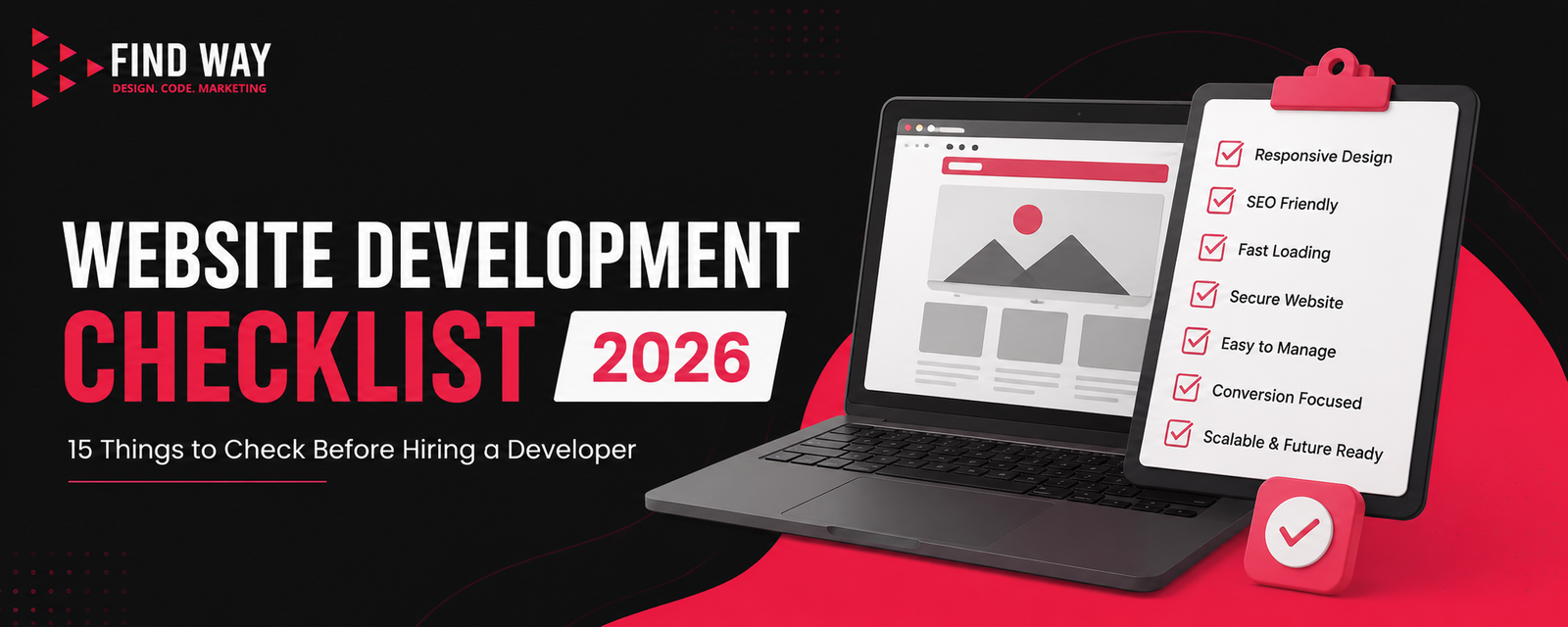
Website Development Checklist for Small Businesses in 2026: 15 Things to Check Before Hiring a Developer
Hiring the wrong web developer costs more than money—it can cost valuable leads, search visibility, and customer trust.
After working with businesses across different industries, one common pattern stands out: many websites look visually appealing but fail to generate enquiries because critical elements like SEO, performance, user experience, and scalability were overlooked during development. Fixing these issues after launch is often more expensive than getting them right from the beginning.
In 2026, a business website is more than an online brochure. It acts as your digital storefront, sales representative, and one of the strongest trust signals for potential customers. Whether visitors discover you through Google Search, AI-powered search engines like ChatGPT and Gemini, social media, or local search, your website needs to deliver a fast, secure, and seamless experience.
Before hiring a developer, use this checklist to ensure your investment supports your business for years to come.
1. Define Your Business Goals Before Development
Every effective website starts with a well-defined business objective. Decide whether your primary objective is lead generation, online sales, appointment bookings, brand awareness, or customer support.
Without clear goals, even a well-designed small business website can struggle to deliver measurable business results.
Practical Tip: Document your top three business objectives before discussing design or technology.
2. Review Portfolio and Industry Experience
A developer's portfolio offers valuable insight into more than just visual design—it demonstrates how they've helped businesses achieve practical goals through effective website solutions.
Explore live websites rather than screenshots. Check loading speed, mobile usability, navigation, and overall user experience.
Experience within your industry is valuable because every business has different customer expectations and conversion goals.
Practical Tip: Speak with previous clients to understand how the developer handled communication, deadlines, and post-launch support.
3. Prioritize Mobile-First Design
Mobile devices account for the majority of website traffic for most businesses. Google's mobile-first indexing also means your mobile experience directly influences search rankings.
A responsive design is no longer enough. Developers should build the mobile experience first and then optimize for larger screens.
Practical Tip: Review mobile wireframes before development begins.
4. Focus on Website Speed and Core Web Vital
Website speed has a direct impact on how visitors interact with your site, influencing both engagement and the likelihood of converting into customers.
Developers should optimize:
- Core Web Vitals
- Image compression
- Lazy loading
- Browser caching
- CDN implementation
- Clean code structure
Fast-loading websites improve both user satisfaction and SEO performance.
Practical Tip: Ask which performance benchmarks the developer targets using PageSpeed Insights or Lighthouse.
5. Ensure an SEO-Friendly Website Structure
SEO starts during development—not after launch.
Your website should include:
- Clean URL structure
- Proper heading hierarchy
- XML Sitemap
- Robots.txt
- Canonical tags
- Schema Markup
- Optimized internal linking
- Crawl-friendly navigation
These technical foundations help search engines understand and index your website effectively.
Practical Tip: Confirm that technical SEO is included in the development process rather than offered as an additional service.
6. Verify Website Security Standards
Website security protects both your business and your customers.
Modern websites should include:
- HTTPS (SSL)
- Regular backups
- Firewall protection
- Malware monitoring
- Secure login practices
- Software updates
Security also builds customer confidence and supports search engine trust signals.
Practical Tip: Ask how security updates and backups will be managed after launch.
7. Choose an Easy-to-Manage CMS
Your website shouldn't require a developer for every small update.
Whether using WordPress or another CMS, you should be able to:
- Update content
- Publish blogs
- Add images
- Modify contact information
- Create new pages
A user-friendly CMS reduces long-term maintenance costs.
Practical Tip: Request a training session after launch so your team can confidently manage the website.
8. Design for Conversions, Not Just Appearance
An attractive website is only valuable if it encourages visitors to take action.
Good conversion-focused design includes:
- Clear calls-to-action
- Simple navigation
- Trust signals
- Easy contact forms
- Strategic button placement
- Strong landing pages
Every page should guide users toward a meaningful business goal.
Practical Tip: Ask the developer to explain the customer journey from homepage to enquiry or purchase.
9. Make Accessibility a Priority
Accessibility benefits every visitor—not only users with disabilities.
Modern websites should include:
- Alt text
- Keyboard navigation
- Proper colour contrast
- Readable typography
- Accessible forms
Accessibility improves usability while supporting broader compliance standards.
Practical Tip: Ask whether the website follows current WCAG accessibility guidelines.
10. Test Responsiveness Across All Devices
Your website should work consistently across smartphones, tablets, laptops, and large desktop screens.
Broken layouts, overlapping text, or inconsistent spacing create a poor first impression.
Practical Tip: Test development versions on multiple devices before approving the final build.
11. Build for Future Growth
As your business grows, your website should be flexible enough to support new goals, services, and customer needs without requiring a complete rebuild.
Plan for future additions like:
- E-commerce
- Online booking
- Multiple service locations
- Customer portals
- Membership systems
- Additional landing pages
A scalable website prevents expensive rebuilds later.
Practical Tip: Discuss future expansion plans before development begins.
12. Check Integration Capabilities
A well-developed website should connect seamlessly with the tools your business relies on, helping automate workflows and improve day-to-day efficiency.
Common integrations include:
- CRM software
- WhatsApp Business
- Google Analytics 4
- Payment gateways
- Email marketing platforms
- Live chat
- Booking systems
Well-connected systems improve productivity and customer experience.
Practical Tip: Prepare a list of business tools you currently use and verify compatibility.
13. Request Transparent Pricing and Timelines
Professional developers provide clear project scopes.
Your proposal should explain:
- Design costs
- Development costs
- Hosting
- Domain management
- Maintenance fees
- Revision policy
- Project milestones
Transparency reduces misunderstandings later.
Practical Tip: Request a detailed timeline with milestone-based deliverables instead of a single completion date.
14. Understand Post-Launch Support
Launching a website is only the beginning.
Regular maintenance includes:
- Plugin updates
- Security patches
- Performance monitoring
- Backup management
- Bug fixes
- Technical support
Reliable maintenance keeps your website secure and performing at its best.
Practical Tip: Review the maintenance agreement before signing your development contract.
15. Evaluate Reviews and Communication
Strong communication often predicts a successful project.
Look beyond testimonials on the company's website. Review Google ratings, case studies, and client feedback across trusted platforms.
Notice how quickly the developer responds, explains technical concepts, and manages expectations.
Practical Tip: Choose a development partner who communicates clearly and values long-term collaboration rather than simply delivering a website.
Final Thoughts
A business website is one of the few investments that works for your company 24/7. Choosing a developer based only on price can result in poor performance, limited scalability, and costly redevelopment.
In 2026, businesses should expect more than an attractive website. It should be fast, secure, SEO-friendly, accessible, mobile-first, and ready for AI-powered search experiences. Features like structured data, strong technical SEO, privacy-conscious analytics, and excellent user experience are no longer optional—they're part of building a competitive online presence.
Before signing any agreement, use this website development checklist to compare agencies, ask informed questions, and evaluate their long-term approach. If you need expert guidance, experienced agencies like Findway Digital can help you build a website designed not only to look professional but also to support sustainable business growth.
FAQs
- What should I check before hiring a website developer?
Review the developer's portfolio, SEO knowledge, mobile-first approach, security practices, pricing transparency, post-launch support, and experience building websites for businesses similar to yours. - What is the average cost of developing a small business website in 2026?
The cost of a professional website depends on your unique business requirements, including design complexity, custom functionality, third-party integrations, and post-launch support. Instead of focusing solely on price, choose a solution that provides a secure, fast, and SEO-friendly foundation that can grow with your business. - Why is SEO important during website development?
SEO should be built into the website from the start through clean code, fast loading speeds, mobile optimization, structured data, and a search-friendly site architecture. - What are the must-have features of a small business website in 2026?
Every modern business website should have responsive design, SSL security, fast loading speeds, clear calls-to-action, technical SEO, accessibility, analytics integration, and an easy-to-manage CMS. - How do I know if a website developer is the right choice?
Choose a developer who understands your business goals, communicates clearly, provides transparent pricing, demonstrates proven results, and offers reliable maintenance after the website goes live.


 Projects

