Strategize, design, and develop your app with Findway Digital

Futures are made now.
Get a Free Consultation
Mobile App Development and Design Agency in Madurai

Findway is an madurai-based app development company driven by innovation. We meticulously focus on every detail throughout the entire process!

Get a Free Consultation

We are the top-ranked app developers and designers in madurai.

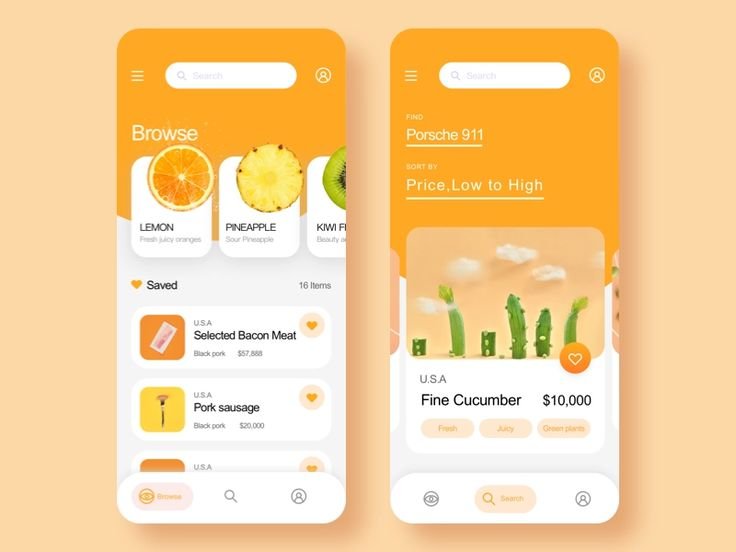
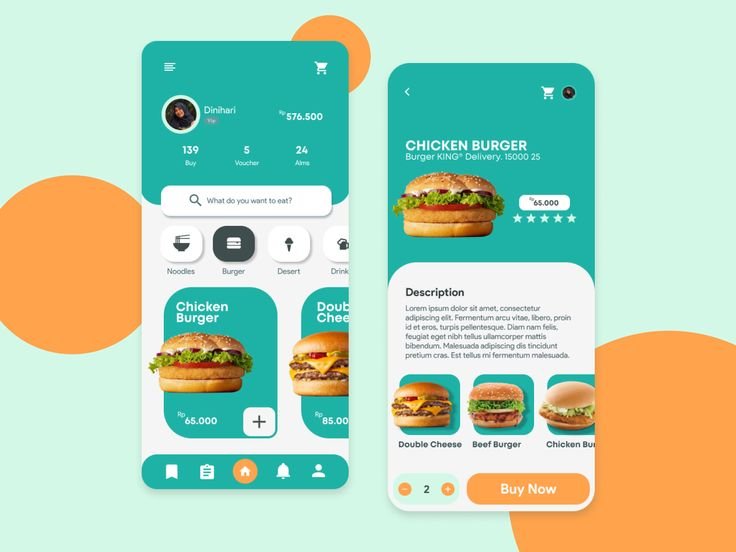
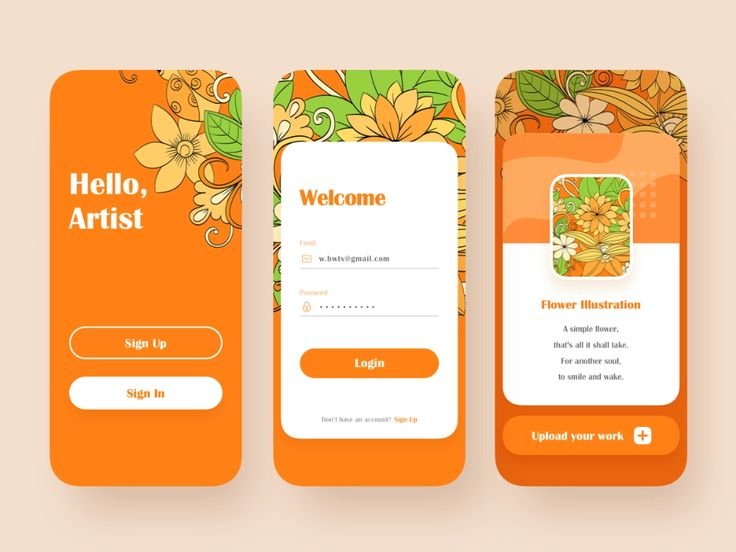
Mobile App Development Services in Madurai

Elevate your business with our customized Android app development services in Madurai. We bring your unique vision to life by leveraging cutting-edge technology to create seamless applications that resonate with your audience. Join us in exploring the Android ecosystem and experience the perfect blend of functionality, innovation, and design that drives your brand forward.

Experience innovation with our skilled iPhone app developers at Findway Digital. We offer premium iPhone app development tailored to your business objectives, captivating the iOS audience with intuitive designs and exceptional performance. Utilize our expertise in iOS frameworks to launch impactful and engaging apps that solidify your presence in the mobile landscape.

Unlock the potential of Flutter with our mobile app development services based in Madurai. Our talented developers create visually stunning apps that deliver smooth animations and a native-like experience across platforms. Embrace the future of app development with us and captivate users with high-performance, feature-rich applications that stand out in the competitive market.

Explore the capabilities of React Native for your next app project with Findway, a leading app development service in India. We specialize in dynamic, cross-platform apps that provide a seamless user experience comparable to native applications. Take advantage of our React Native expertise for quick, cost-effective solutions that cater to diverse business needs in today’s dynamic market.

At Findway, we develop enterprise-level applications that transform operational efficiency and enhance customer engagement. Our solutions are specifically designed to address the complex requirements of large businesses, ensuring robust, secure, and scalable applications. With a deep understanding of enterprise ecosystems and a focus on SEO optimization, we empower businesses in Madurai and beyond to leverage mobile technology for better decision-making and improved workflows, fostering growth and innovation.

Our Process

Turning Ideas into Reality

We excel in creating stunning digital products and businesses, from websites to apps. Our team of specialists is dedicated to bringing your vision to life with meticulous attention to detail and a focus on quality.

Get a Free Consultation
Start Here
01. Design and Planning
  • Our Discovery Workshop
  • Discovery Workshop
  • Wireframing
  • User Stories and Sprint Planning
  • UI Design
  • Landing Page Creation
  • Pitch and Product Deck Development
  • Branding
  • Prototyping
  • 02. Launch and Growth
  • App Publication
  • User Guidelines
  • Education and Training
  • Our marketing experts at Findway Digital will assist you in gaining traction and scaling your app
  • 03. Maintenance and Iteration
  • Support and Maintenance
  • Updates and New Features
  • Three-Month Warranty
  • Why Choose Findway Digital in Madurai?

    At Findway Digital, our mobile app developers turn visionary concepts into innovative mobile experiences. You can rely on our commitment to confidentiality, timely delivery, and a focus on your satisfaction with every app we create.

    100% Confidentiality
    with NDA

    Recognized as a Top Web and
    App Development Company

    Quality Assurance And
    Timely Delivery

    Robust IT
    Infrastructure

    Expert and
    Certified Resources

    Affordable
    Pricing

    Outstanding
    Customer Support

    Notable Projects

    Tech Frameworks

    MOBILE

    Android

    React Native

    iOS

    Flutter

    Kotlin

    iPad

    Ionic

    Swift

    FRONTEND

    Angular

    React Native

    ReactJs

    Responsive

    VueJs

    PSD

    BACKEND

    Laravel

    .Net

    WooCommerce

    NodeJs

    Magento

    Wordpress

    PHP

    Shopify

    TESTING

    Software Testing

    Support Testing

    Mobile Testing

    Commonly asked questions

    Findway Digital’s mobile app development company in madurai stands out for its impressive track record across various domains. Our skilled developers excel in delivering high-quality mobile apps, including games, social media platforms, hotel management solutions, travel and logistics applications, and business tools. Clients appreciate our commitment, expertise, and reliability, making us a preferred choice for exceptional mobile app development services.

    We pride ourselves on providing comprehensive support during the entire mobile app development journey. Our dedicated team guides you from the initial concept to the final launch, ensuring a seamless experience. We offer valuable project consultations, keep you informed with regular updates, and maintain open communication. Our collaborative approach aligns your app's design with your vision, delivering an outstanding user experience. Rigorous testing guarantees a bug-free and reliable app, while our post-launch support, including digital marketing strategies, ensures your app remains optimized, visible, and up-to-date.

    Idea & Planning:
    This stage involves conceptualizing the app idea, defining its purpose, target audience, and key features. We create a detailed project roadmap, set goals, and outline the app's functionalities.

    Design:
    Our designers create wireframes and visual designs for the user interface (UI) and user experience (UX), determining the app's layout, navigation, and overall aesthetics.

    Development:
    Actual coding and development occur in this stage, where developers implement the design and integrate the app’s features and functionalities.

    Deployment:
    Once the app is thoroughly tested and ready, it is released to app stores for users to download and enjoy.

    Post-launch Support & Maintenance:
    After deployment, we provide continuous monitoring and updates to address user feedback, fix issues, and add new features as needed.

    At Findway Digital, our highly experienced developers are committed to delivering successful mobile apps across various industries. Skilled in Swift, Kotlin, Java, React Native, and Flutter, they cater to diverse platform requirements. Our team continuously learns and stays updated with the latest technologies to ensure proficient and innovative solutions that align with your mobile app development goals. We take pride in delivering high-quality mobile apps that exceed expectations.

    Mobile app developers in India prioritize inclusivity and accessibility for differently-abled individuals. Their approach includes:

    • Familiarity with international accessibility standards like Web Content Accessibility Guidelines (WCAG) to align apps with global best practices.
    • Clear layouts and simple navigation to improve usability.
    • Resizable text and high-contrast color schemes for users with visual impairments.
    • Integration of voice command capabilities to aid users with mobility or visual challenges.
    • Designing apps to be compatible with screen readers, enabling interaction for visually impaired users.

    At Findway Digital, our app developers excel at creating applications that cater to both global and local audiences. We focus on understanding market dynamics, ensuring that our apps incorporate local preferences and cultural nuances while appealing to a wider user base. This approach allows us to craft engaging and relevant applications that resonate with users across different regions, enhancing both functionality and user experience.

    Content marketing is essential to a successful digital marketing strategy. It involves crafting and sharing valuable content that attracts and engages your target audience. At Findway Digital, our approach to content marketing ensures that the content addresses your audience's needs while aligning with your business objectives. By building trust and establishing authority, our content marketing services drive conversions and foster long-term relationships.

    Paid advertising, such as Google Ads and social media campaigns, provides immediate visibility and precise audience targeting. At Findway Digital, we design and manage effective paid advertising strategies that deliver measurable results. Whether your aim is to increase website traffic, generate leads, or boost sales, our expert team in Madurai ensures that your investment in paid advertising achieves maximum returns.

    Email marketing is a powerful channel for nurturing leads and maintaining customer relationships. At Findway Digital, we develop personalized email campaigns that engage your audience and encourage repeat business. Our email marketing strategies are designed to complement your broader digital marketing efforts, ensuring consistent communication and higher return on investment.

    Findway Digital stands out due to our commitment to personalized service, innovative strategies, and measurable outcomes. Based in Madurai, we understand the local market while maintaining a global outlook. Our team invests time in understanding your business, crafting tailored digital marketing strategies that align with your goals. We prioritize building long-term partnerships with our clients, ensuring your success is always at the forefront of our mission.

    blogs

    Enhance your online presence with our blog services. We provide engaging, well-researched content tailored to your needs, helping you stay relevant and connect with your audience.

    06 July 26

    By Admin

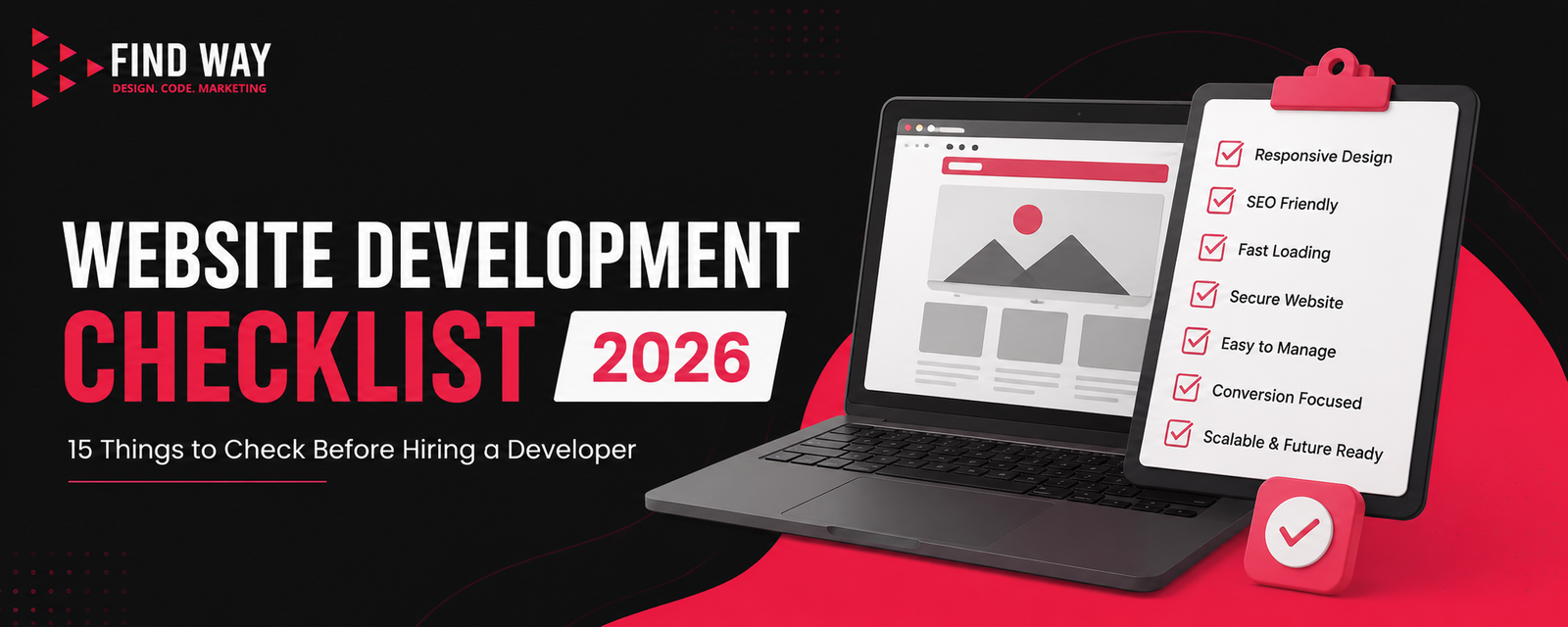
    Website Development Checklist for Small Businesses in 2026: 15 Things to Check Before Hiring a Developer

    Hiring the wrong web developer costs more than money—it can cost valuable leads, search visibility, and customer trust.

    After working with businesses across different industries, one common pattern stands out: many websites look visually appealing but fail to generate enquiries because critical elements like SEO, performance, user experience, and scalability were overlooked during development. Fixing these issues after launch is often more expensive than getting them right from the beginning.

    In 2026, a business website is more than an online brochure. It acts as your digital storefront, sales representative, and one of the strongest trust signals for potential customers. Whether visitors discover you through Google Search, AI-powered search engines like ChatGPT and Gemini, social media, or local search, your website needs to deliver a fast, secure, and seamless experience.

    Before hiring a developer, use this checklist to ensure your investment supports your business for years to come.

    1. Define Your Business Goals Before Development

    Every effective website starts with a well-defined business objective. Decide whether your primary objective is lead generation, online sales, appointment bookings, brand awareness, or customer support.

    Without clear goals, even a well-designed small business website can struggle to deliver measurable business results.

    Practical Tip: Document your top three business objectives before discussing design or technology.


    2. Review Portfolio and Industry Experience

    A developer's portfolio offers valuable insight into more than just visual design—it demonstrates how they've helped businesses achieve practical goals through effective website solutions.

    Explore live websites rather than screenshots. Check loading speed, mobile usability, navigation, and overall user experience.

    Experience within your industry is valuable because every business has different customer expectations and conversion goals.

    Practical Tip: Speak with previous clients to understand how the developer handled communication, deadlines, and post-launch support.


    3. Prioritize Mobile-First Design

    Mobile devices account for the majority of website traffic for most businesses. Google's mobile-first indexing also means your mobile experience directly influences search rankings.

    A responsive design is no longer enough. Developers should build the mobile experience first and then optimize for larger screens.

    Practical Tip: Review mobile wireframes before development begins.


    4. Focus on Website Speed and Core Web Vital

    Website speed has a direct impact on how visitors interact with your site, influencing both engagement and the likelihood of converting into customers.

    Developers should optimize:

    • Core Web Vitals
    • Image compression
    • Lazy loading
    • Browser caching
    • CDN implementation
    • Clean code structure

    Fast-loading websites improve both user satisfaction and SEO performance.

    Practical Tip: Ask which performance benchmarks the developer targets using PageSpeed Insights or Lighthouse.


    5. Ensure an SEO-Friendly Website Structure

    SEO starts during development—not after launch.

    Your website should include:

    • Clean URL structure
    • Proper heading hierarchy
    • XML Sitemap
    • Robots.txt
    • Canonical tags
    • Schema Markup
    • Optimized internal linking
    • Crawl-friendly navigation

    These technical foundations help search engines understand and index your website effectively.

    Practical Tip: Confirm that technical SEO is included in the development process rather than offered as an additional service.


    6. Verify Website Security Standards

    Website security protects both your business and your customers.

    Modern websites should include:

    • HTTPS (SSL)
    • Regular backups
    • Firewall protection
    • Malware monitoring
    • Secure login practices
    • Software updates

    Security also builds customer confidence and supports search engine trust signals.

    Practical Tip: Ask how security updates and backups will be managed after launch.


    7. Choose an Easy-to-Manage CMS

    Your website shouldn't require a developer for every small update.

    Whether using WordPress or another CMS, you should be able to:

    • Update content
    • Publish blogs
    • Add images
    • Modify contact information
    • Create new pages

    A user-friendly CMS reduces long-term maintenance costs.

    Practical Tip: Request a training session after launch so your team can confidently manage the website.


    8. Design for Conversions, Not Just Appearance

    An attractive website is only valuable if it encourages visitors to take action.

    Good conversion-focused design includes:

    • Clear calls-to-action
    • Simple navigation
    • Trust signals
    • Easy contact forms
    • Strategic button placement
    • Strong landing pages

    Every page should guide users toward a meaningful business goal.

    Practical Tip: Ask the developer to explain the customer journey from homepage to enquiry or purchase.


    9. Make Accessibility a Priority

    Accessibility benefits every visitor—not only users with disabilities.

    Modern websites should include:

    • Alt text
    • Keyboard navigation
    • Proper colour contrast
    • Readable typography
    • Accessible forms

    Accessibility improves usability while supporting broader compliance standards.

    Practical Tip: Ask whether the website follows current WCAG accessibility guidelines.


    10. Test Responsiveness Across All Devices

    Your website should work consistently across smartphones, tablets, laptops, and large desktop screens.

    Broken layouts, overlapping text, or inconsistent spacing create a poor first impression.

    Practical Tip: Test development versions on multiple devices before approving the final build.


    11. Build for Future Growth

    As your business grows, your website should be flexible enough to support new goals, services, and customer needs without requiring a complete rebuild.

    Plan for future additions like:

    • E-commerce
    • Online booking
    • Multiple service locations
    • Customer portals
    • Membership systems
    • Additional landing pages

    A scalable website prevents expensive rebuilds later.

    Practical Tip: Discuss future expansion plans before development begins.


    12. Check Integration Capabilities

    A well-developed website should connect seamlessly with the tools your business relies on, helping automate workflows and improve day-to-day efficiency.

    Common integrations include:

    • CRM software
    • WhatsApp Business
    • Google Analytics 4
    • Payment gateways
    • Email marketing platforms
    • Live chat
    • Booking systems

    Well-connected systems improve productivity and customer experience.

    Practical Tip: Prepare a list of business tools you currently use and verify compatibility.


    13. Request Transparent Pricing and Timelines

    Professional developers provide clear project scopes.

    Your proposal should explain:

    • Design costs
    • Development costs
    • Hosting
    • Domain management
    • Maintenance fees
    • Revision policy
    • Project milestones

    Transparency reduces misunderstandings later.

    Practical Tip: Request a detailed timeline with milestone-based deliverables instead of a single completion date.


    14. Understand Post-Launch Support

    Launching a website is only the beginning.

    Regular maintenance includes:

    • Plugin updates
    • Security patches
    • Performance monitoring
    • Backup management
    • Bug fixes
    • Technical support

    Reliable maintenance keeps your website secure and performing at its best.

    Practical Tip: Review the maintenance agreement before signing your development contract.


    15. Evaluate Reviews and Communication

    Strong communication often predicts a successful project.

    Look beyond testimonials on the company's website. Review Google ratings, case studies, and client feedback across trusted platforms.

    Notice how quickly the developer responds, explains technical concepts, and manages expectations.

    Practical Tip: Choose a development partner who communicates clearly and values long-term collaboration rather than simply delivering a website.


    Final Thoughts

    A business website is one of the few investments that works for your company 24/7. Choosing a developer based only on price can result in poor performance, limited scalability, and costly redevelopment.

    In 2026, businesses should expect more than an attractive website. It should be fast, secure, SEO-friendly, accessible, mobile-first, and ready for AI-powered search experiences. Features like structured data, strong technical SEO, privacy-conscious analytics, and excellent user experience are no longer optional—they're part of building a competitive online presence.

    Before signing any agreement, use this website development checklist to compare agencies, ask informed questions, and evaluate their long-term approach. If you need expert guidance, experienced agencies like Findway Digital can help you build a website designed not only to look professional but also to support sustainable business growth.


    FAQs

    1. What should I check before hiring a website developer?
      Review the developer's portfolio, SEO knowledge, mobile-first approach, security practices, pricing transparency, post-launch support, and experience building websites for businesses similar to yours.
    2. What is the average cost of developing a small business website in 2026?
      The cost of a professional website depends on your unique business requirements, including design complexity, custom functionality, third-party integrations, and post-launch support. Instead of focusing solely on price, choose a solution that provides a secure, fast, and SEO-friendly foundation that can grow with your business.
    3. Why is SEO important during website development?
      SEO should be built into the website from the start through clean code, fast loading speeds, mobile optimization, structured data, and a search-friendly site architecture.
    4. What are the must-have features of a small business website in 2026?
      Every modern business website should have responsive design, SSL security, fast loading speeds, clear calls-to-action, technical SEO, accessibility, analytics integration, and an easy-to-manage CMS.
    5. How do I know if a website developer is the right choice?
      Choose a developer who understands your business goals, communicates clearly, provides transparent pricing, demonstrates proven results, and offers reliable maintenance after the website goes live.

    18 June 26

    By Admin

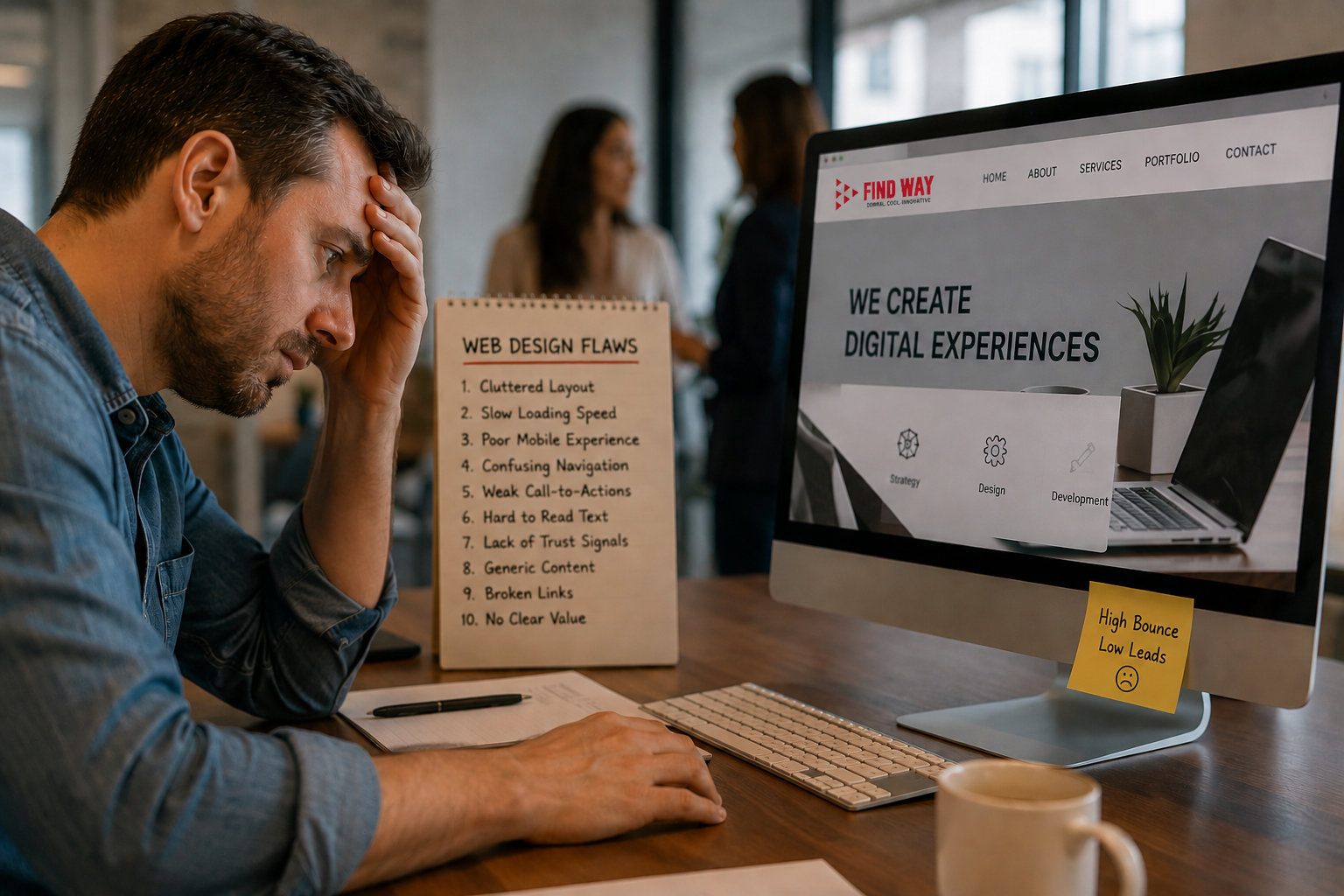
    10 Sneaky Web Design Flaws That Are Quietly Killing Your Inbound Leads

    The website that you create represents your company’s first impression to many potential customers. It is the digital version of your storefront, salesman, and customer support representative. A number of companies are expending great resources on digital marketing in order to drive traffic to their site; however, the majority of them do not consider that poor website design will cause visitors to leave without ever converting into a lead.

    In addition to overall design and layout of the website, there are other areas where poor website design will reduce the conversion rates of your website, increase bounce rates, as well as damage the user's confidence in shopping on the website. By understanding these common web design mistakes, businesses can provide a better user experience for their customers, generate more leads for their business, and maximize their return on investment for their marketing efforts.


    Why Web Design Matters for Lead Generation

    As consumers have become more acclimated to using the internet and have a greater expectation for websites to load quickly and provide an easy and intuitive navigation; as a result, if consumers have difficulty finding the information they need, or become frustrated with a website's design, they will leave the website and visit one of your competitor's websites instead.

    An effective website helps to support the following things:

    • Improved user experience
    • Increased customer trust
    • Higher conversion rates
    • Improved SEO performance
    • Stronger brand credibility
    • More qualified inbound leads 

    The following are ten web design errors that are often overlooked, and may be contributing to the underachievement of your website.

    1. Slow Website Loading Speeds

    For the past couple of years, one of the most critical components of website ranking, as well as conversion, has been website speed. The data consistently shows that consumers expect an individual web page to load within less than 2 seconds

    A slow website can lead to:

    • High bounce rate
    • Low visibility in search engines
    • Low customer engagement
    • Lost sales opportunities 

    Slow-loading pages are often caused by oversized images, excessive scripts, or low-quality hosting services.

    Optimizing images, using caching techniques and minimizing unwanted plugins can all help dramatically improve the performance of your pages.

    2. Confusing Navigation Menus

    Visitors will never know where to find information if you have very complicated navigation structures and they will be frustrated when they cannot easily find what they are looking for. Beyond frustration, many users tend to leave a site when navigation feels unclear or hard to find.

    Navigation should be simple and logical. Important information (e.g., the services, contact information or about us) should always be easy to access.

    Simple menus will allow visitors to smoothly move through your website and improve their overall experience on your site.

    3. Weak Call-to-Action Placement

    Calls to action (or CTAs) are critical for converting visitors into leads. Unfortunately, many websites place their calls to action where visitors can easily miss them or use messaging that lacks clarity.

    Some examples of good CTAs are:

    • Request a Quote
    • Book a Consultation
    • Contact Us
    • Get Started Today

    Well-positioned CTAs can gently guide users toward taking immediate action without feeling forced.

    4. Poor Mobile Responsiveness

    With mobile devices (smartphones and tablets) making up the bulk of global website traffic, websites that are not mobile friendly risk losing a significant amount of traffic.

    Some of the most common mobile issues are:

    • Difficult-to-read text
    • Buttons that are too small
    • Broken layouts
    • Slow mobile performance

    Responsive web design allows for a uniform experience across all devices.

    5. Overcrowded Page Layouts

    Visitors may feel overloaded when a single page tries to hold too many details at once.

    Large blocks of text and pop-ups can distract visitors from performing any action.

    Clean designs with adequate spacing improve the readability of text, and also allow visitors to concentrate on significant information.

    Simple and organized designs frequently work more effectively than those filled with unnecessary complexity.

    6. Lack of Trust Signals

    Before giving personal information or inquiring about products or services, visitors may want proof that the business they are dealing with is reliable.

    Trust-building factors can include:

    • Customer reviews
    • Testimonials
    • Industry credentials
    • Security seals
    • Case studies 

    Such elements create confidence in new visitors and naturally improve the brand’s credibility.

    7. Generic Stock Photography

    Images greatly affect user perceptions of a business.

    Overly used stock images can lead to isolation and disengagement with the business website.

    When possible, businesses should use:

    • Photos of their staff
    • Photos of their offices
    • Photos from previous projects
    • Photos of behind-the-scenes 

    Authentic images frequently create stronger emotional connections between your company and prospects.

    8. Inconsistent Branding

    Your website should provide a clear representation of your company's brand identity.

    Inconsistencies in fonts, colors, messaging, and visual design may confuse visitors and decrease trustworthiness.

    Strong branding facilitates recall of your business and lends a more professional appearance.

    Consistency across all pages reinforces brand recognition.

    9. Ignoring SEO Fundamentals

    If your beautiful website cannot be discovered, it won’t produce any leads.

    A lot of websites ignore key elements of SEO, including:

    • Optimized page title
    • Meta description
    • Heading structure
    • Internal linking
    • Keyword placement
    • Image optimization 

    Should you target relevant keywords such as: "web design services", "responsive website design", "conversion optimization", "SEO-friendly websites" and "lead generation strategies", your search visibility will increase as well as your ability to attract qualified traffic.

    SEO and web design should complement each other instead of being separate entities.

    10. Complicated Contact Forms

    Visitors tend to avoid filling out forms that appear lengthy or take too much effort.

    Requiring too much information may reduce the amount of completed forms submitted.

    In most cases, a name, email address, phone number and inquiry message are sufficient to start the conversation.

    Reducing friction in the contact process can greatly increase your number of leads.

    The Importance of Continuous Website Improvement

    Websites should never be considered a finished product. User expectations, technology, and search engine algorithms constantly change.

    By regularly performing website audits, broken links, slow pages, user behaviour, and design improvements will be obvious.

    Companies that continue to optimize their websites see long-term increases in the overall effectiveness of their marketing efforts.

    Small continuous adjustments can create noticeable increases in the quality of your traffic and the number of leads you generate.

    Final Thoughts

    Most businesses concentrate primarily on their website's traffic while failing to resolve underlying design problems that are preventing that traffic from turning into customers. Resolving hidden issues like slow page loads, poor navigation, weak calls-to-action, and usability issues on mobile devices can significantly improve conversion performance.

    A website should not only be visually appealing but also provide an intuitive flow that leads users towards conversion.

    Fortunately for businesses looking for website design solutions, FINDWAY DIGITAL can provide web design solutions that focus on improving user experience, search engine visibility, and lead generation to help develop websites that promote long-term success. 

    Frequently Asked Questions (FAQs)

    1. How does web design affect lead generation?

    Web design impacts user experience, trust, navigation, and conversion rates, all of which directly determine how many inbound leads a company generates.

    2. What is the biggest web design mistake businesses make?

    Among the most common design flaws that negatively impact a website's overall performance are slow loading pages and poor mobile device responsiveness.

    3. Why is mobile-friendly web design important?

    Since the majority of people surf the web using their mobile devices, a poor mobile experience will lead to increased bounce rates and decreased conversion rates.

    4. How often should a website be updated?

    To keep their websites performing well and meeting changing expectations of users, businesses should evaluate and update the design of their sites on a regular basis (approximately every 2-3 months).

    5. Can good web design improve SEO rankings?

    Yes, the use of fast-loading pages, responsive page layouts, easy-to-use navigation, and optimized content all improve the visibility and subsequent ranking of a website in search engines.


    15 June 26

    By Admin

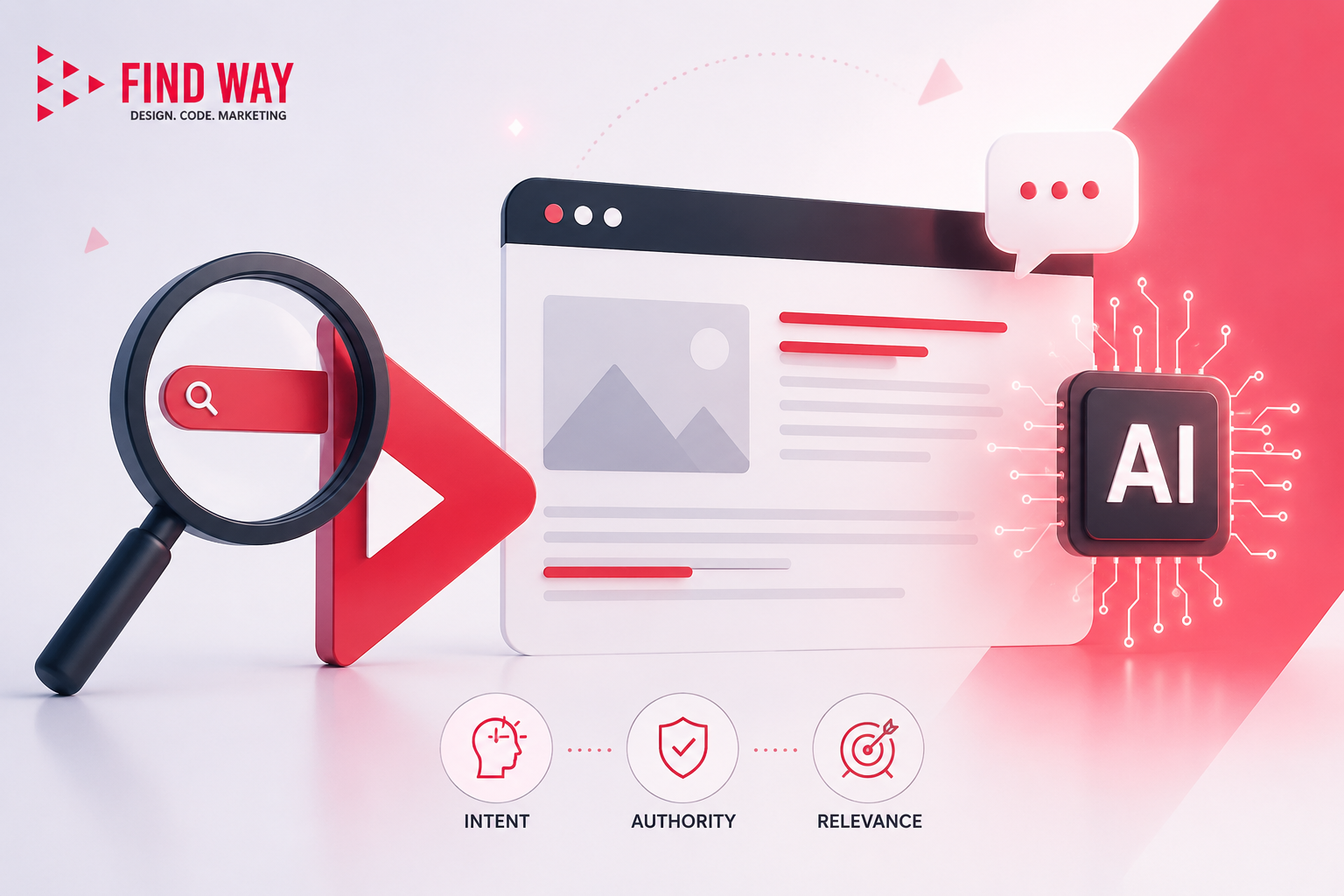
    Beyond Keywords: How to Optimize Your Custom Website for AI Search Engines

    Search has changed — and if you're still optimizing purely for keywords, you're already playing catch-up.

    Today, millions of people get answers from AI-generated summaries before they ever click a link. Google AI Overviews, ChatGPT Search, Gemini, and Perplexity are now the first stop for countless queries. If your website isn't built for this shift, you're invisible to a growing slice of your audience.


    Why AI Search Engines Think Differently

    Traditional search engines ranked pages. AI search engines understand them.

    When someone asks ChatGPT "best practices for small business websites in 2026," it doesn't scan for keyword density. It looks for context, authority, and genuinely useful answers — then synthesizes a response from trusted sources.

    Google AI Overviews works similarly, pulling structured, credible content to surface at the top before organic results. Perplexity and Gemini prioritize sources that demonstrate clear expertise and answer questions directly. The result? Conversational search has fundamentally changed what "ranking" even means.


    Key Elements of an AI-Friendly Website

    Create Content Around Questions

    AI search engines are built on question-answering. If your content doesn't address what real users are asking, it won't be cited.

    Write pages that directly answer "how," "why," and "what" questions in your niche. Think in terms of user intent — what problem is someone trying to solve? Lead with the answer, then support it with detail.

    Build Topic Authority

    A single great article won't cut it anymore. AI systems favor websites that demonstrate depth across a subject — not just one-off posts.

    Build content clusters: a core pillar page supported by related subtopics that link to each other. This signals topical authority and helps AI engines understand that your site is a reliable resource worth citing.

    Improve Website Structure

    Clear, logical structure makes your content easier for AI to parse and recommend.

    Focus on:

    • Intuitive navigation so both users and crawlers can find content easily
    • Internal linking that connects related pages with descriptive anchor text
    • Schema markup (FAQ, Article, Organization, and LocalBusiness schemas) to give AI engines structured data they can extract
    • Semantic HTML using proper heading hierarchies (H1, H2, H3) that reflect content organization

    Optimize for User Experience

    AI search engines don't just read your content — they evaluate how users experience it.

    Ensure your website is fully mobile-responsive, loads in under 2.5 seconds, and passes Core Web Vitals benchmarks. Slow, clunky websites rarely get cited in AI Overviews, regardless of content quality.

    Demonstrate Trust Signals

    AI systems prioritize credible sources. Trust signals tell them your site is worth recommending.

    Include visible author bios with credentials, client reviews and testimonials, case studies with real outcomes, and clear contact information. These EEAT (Experience, Expertise, Authoritativeness, Trustworthiness) signals directly influence whether AI tools surface your content.


    Why Custom Websites Have an Advantage in AI Search

    Off-the-shelf website builders have limits — and those limits show up in AI search performance.

    Custom-built websites can be engineered from the ground up for speed, semantic structure, and advanced schema implementation. They scale cleanly as your content strategy grows, and they give developers precise control over technical SEO elements that templates simply can't match.

    That's where Findway Digital comes in. As a Madurai-based custom website development agency, they build sites optimized not just for traditional search, but for the AI-driven search landscape businesses are navigating right now.


    Future-Proofing Your Website for AI Search

    Here are practical steps you can take today:

    1. Audit your content for question-intent alignment — reframe pages to directly answer user queries.
    2. Add structured schema markup across all key pages.
    3. Build internal links between related content to establish topical depth.
    4. Run a Core Web Vitals check and fix speed or layout issues.
    5. Create or update author pages with real credentials and experience.

    If your current site makes these upgrades difficult, it may be time for a rebuild. Findway Digital specializes in custom website development designed to perform in both traditional and AI-driven search environments — helping businesses in Madurai and beyond stay visible as the search landscape evolves.


    Conclusion

    The era of keyword stuffing is over. AI search engines reward websites that are structured, authoritative, fast, and genuinely helpful. User intent optimization isn't a future strategy — it's what you need now.

    Businesses that invest in AI-friendly websites today will hold a significant advantage as conversational search becomes the default. Start with your content, build your structure, and make sure your website is ready to be cited — not just crawled.


    Frequently Asked Questions

    What is AI search optimization?

    AI search optimization is the process of improving your website so AI-powered platforms like Google AI Overviews, ChatGPT Search, Gemini, and Perplexity can understand, trust, and cite your content. It focuses on user intent, content quality, structured data, and topical authority rather than keyword density.

    How is AI SEO different from traditional SEO?

    Traditional SEO aims to improve rankings in search results through keywords, backlinks, and technical optimization. AI SEO focuses on helping AI systems understand your content, answer user questions accurately, and recognize your website as a trustworthy source for generated responses.

    Why does website structure matter for AI search engines?

    A clear website structure helps AI search engines understand your content and relationships between pages. Proper headings, internal links, semantic HTML, and schema markup make it easier for AI systems to extract information and present it accurately in search results.

    Can a custom website perform better in AI search results?

    Yes. Custom websites offer greater control over page speed, user experience, schema implementation, and content organization. These factors help AI search engines understand your website more effectively and improve the chances of your content being cited in AI-generated answers.

    How can I improve my chances of appearing in Google AI Overviews?

    Create content that directly answers user questions, organize information clearly, implement relevant schema markup, and build topical authority around your industry. Websites that provide accurate, helpful, and well-structured information are more likely to be featured in Google AI Overviews.


    Opting for Findway Digital, a top mobile app development company in India, gives you access to a team committed to innovation and excellence. Our developers lead the way in creating mobile solutions that redefine user engagement and showcase technological expertise.
    Let's Launch Your Business.

    Your unique concepts will be crafted into a remarkable end result by our team.